
While on her first deployment with Australian Red Cross, Anne-Maree Furner knew she’d found her calling. It was 2001, and the emergency nurse from Sydney was deployed into Lokichogio near the border of Sudan and Kenya.
At the time, the area served as a humanitarian hub during the Second Sudanese Civil War. The International Committee of the Red Cross (ICRC) field hospital there was accepting influxes of up to 60 patients at once – most were flown in from villages near the frontline with bullet, burn and shrapnel wounds.
“It was such a good grounding because it was so busy. We didn’t actually see any of the action, but we received the patients,” she recalls.
“You felt like you could really have an impact. After that, I would deploy whenever I could. I would use my annual leave, or whatever leave I could, and sometimes I'd be gone for six months. I’ve worked in Sudan, Myanmar, Syria… I always think of the need that exists in these countries, and I always feel I have what it takes to go there, to give what I've got to the people in need.”
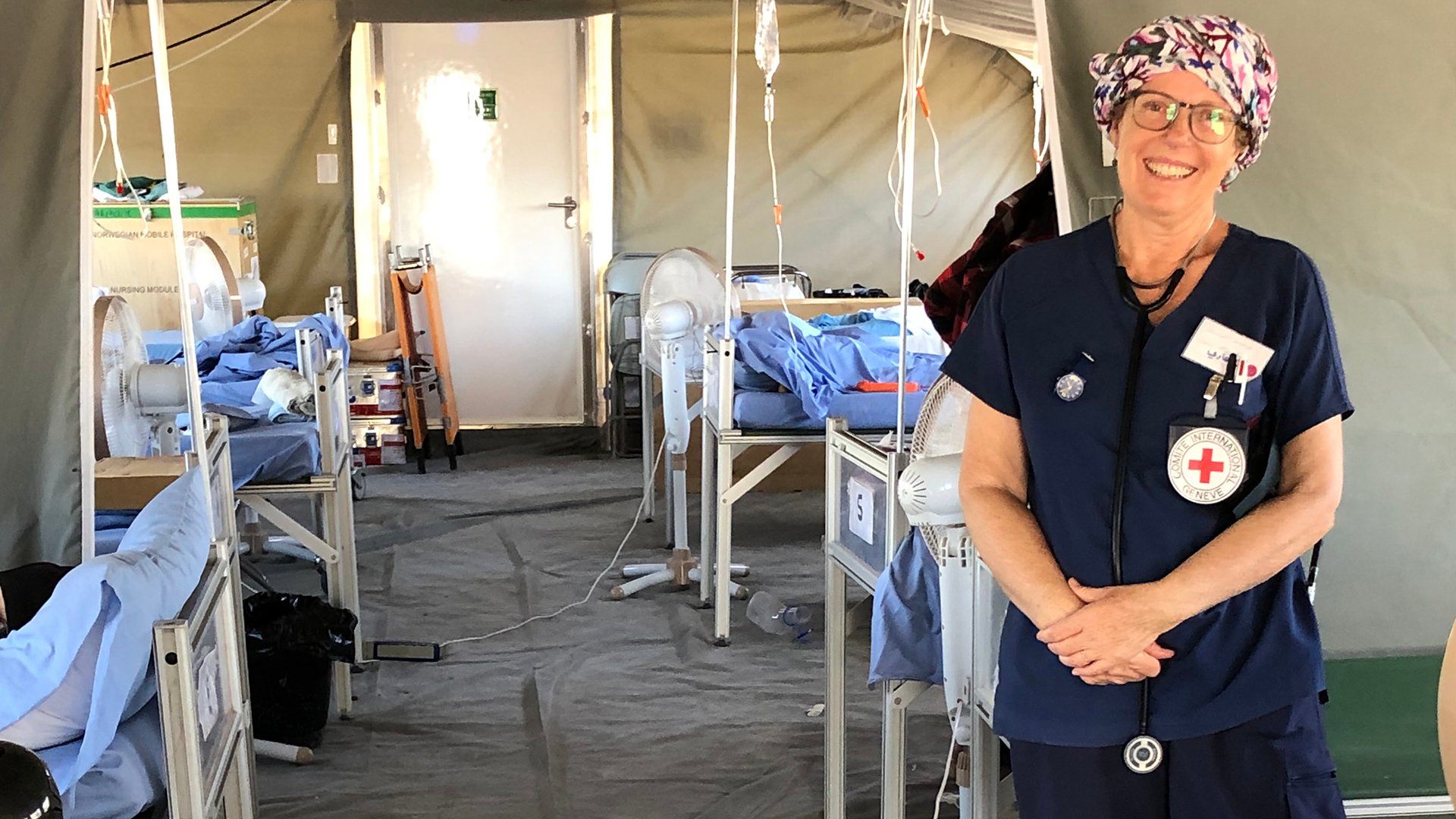
In November 2023, Anne-Maree received a call from Australian Red Cross asking if she was available to deploy into Gaza. As part of our international delegate program, Australian Red Cross deploys specialist humanitarian aid workers into conflict and disaster zones all over the world where their skills and expertise is needed most.
The European Gaza Hospital near Khan Yunis in the southern Gaza Strip required nurses to help care for the vast uptick in patients that were being admitted, and as a trained emergency nurse with decades of experience, Anne-Maree received the call up.
"I was given the ‘you might go to Gaza’ on the Monday, and then it was confirmed on the Wednesday. By Saturday I was on the plane,” she recalls.
At the European Gaza Hospital, Anne-Maree was working alongside local teams to care for those that had been wounded in the conflict, as well as women giving birth and those who were sick or undergoing surgery. Arriving so soon after conflict in Gaza escalated, she recalls walking into a hospital that hadn’t had time to set up for what was unfolding beyond its walls.
“Nine of us nurses slept on the floor in a small corridor. It was right next to a door in this makeshift wall. The bombs would go all night, and every time there was one nearby it would blow the door open, so I'd have to shimmy down in my sleeping bag to close it,” says Anne-Maree. “We didn’t really sleep because you’re on such high alert. But we’d try to get snippets. In addition to the bombs going off, everyone is snoring. The snoring was just atrocious,” she adds with a chuckle.
Despite the challenging circumstances, Anne-Maree and her colleagues at the hospital worked around the clock while making do with the limited medical supplies they had access to – fentanyl was just one essential resource the nurses had to work without because the aid truck carrying it was held up at the border.
Dressing supplies were also scarce. “When I got there, we didn’t have any dressings for wounds, but for some reason we had boxes and boxes of slings. So, we ended up using the slings as dressings, because so many of the patients had such big wounds,” she remembers. “We made do with what we could.”
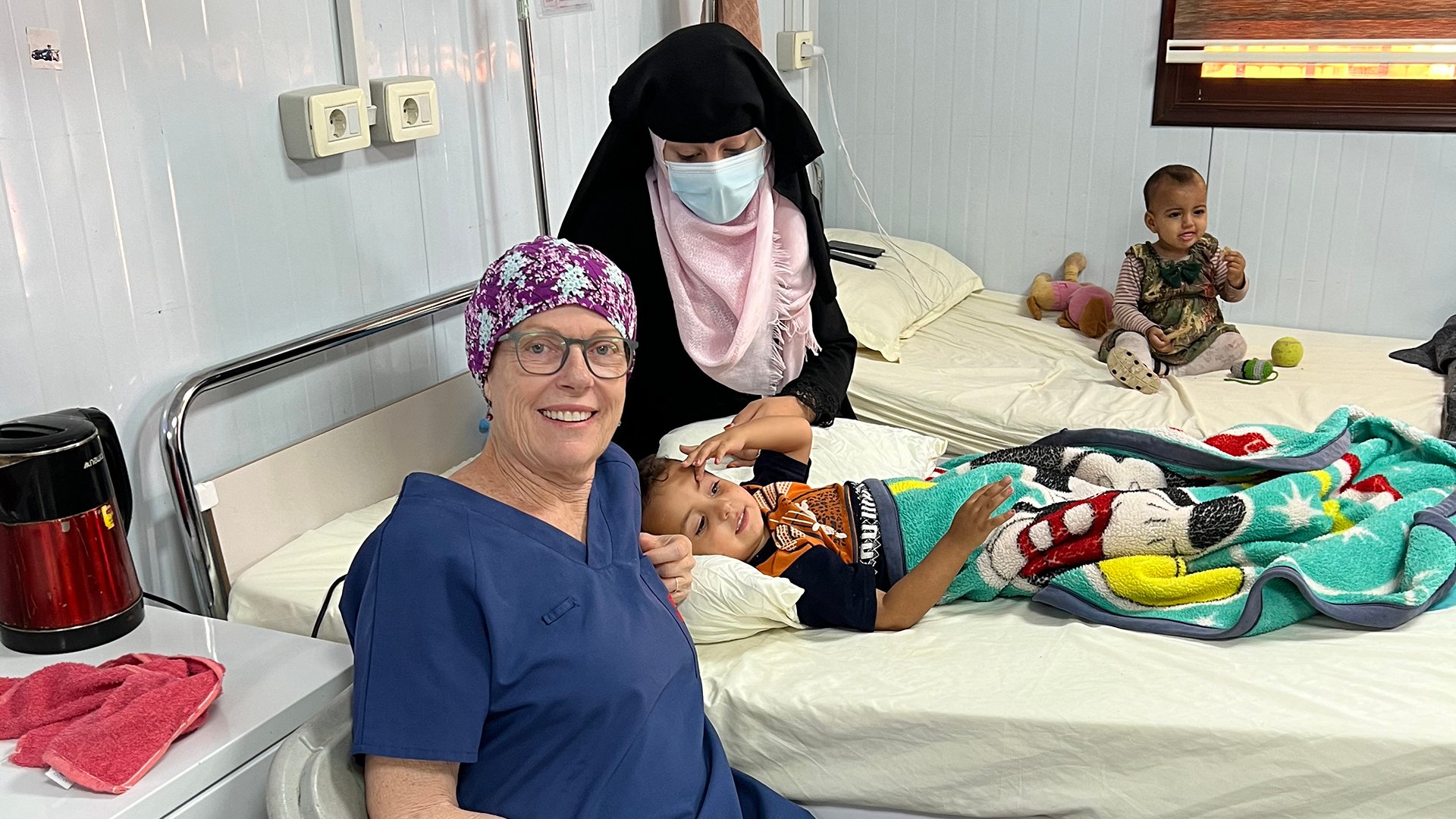
During her six weeks in Gaza, Anne-Maree cared for many patients who didn’t make it through. But she also witnessed the impact her team – which was made up of mostly local Palestinian health professionals – had in a situation where access to appropriate care could mean the difference between life and death.
Many of her colleagues risked their own lives each day, as they continued to turn up to work so the hospital could continue to operate.
“I remember there was a baby who was born a week after October 7 – she was born into the war. She had been caught under the rubble with her mother and family and had quite extensive head wounds and back burns. And to see the resilience of that mother and her kids – she had four more, the eldest was eight – it was just remarkable. She was breastfeeding, and over the six weeks I was in Gaza the baby just thrived and grew, and her wounds healed. Her husband was in another ward, and every night he would bring the plate of food he got to his family, and they would share two plates between them. I think about that family often.”
As 2023 transitioned into 2024, Anne-Maree watched on as the hostilities drew closer and buildings in the area were reduced to dusty piles of rubble.
“Towards the end of my time there, those of us in the hospital used to watch the windows being blown forwards and back. And we would look at each other and say, ‘well, that was close’.”
Fear that the conflict would reach the hospital boundary was ever present, and she worried about what would happen to the patients if it did. “They’re bed bound. They can't even get up and walk. The kids have got amputations and burns all over their bodies, and even if their family members carried them, they’re often uncles and aunties with six other kids to look after.”
On May 13, 2025, over a year after Anne-Maree’s deployment there, airstrikes hit the compound of the European Gaza Hospital, forcing it to go out of service two days later, with all remaining patients transferred to the nearby Nasser Hospital.
“Before the war, it was a very well-maintained, well-run hospital. It specialised in cardiology and obstetrics, and the doctors were brilliant,” reflects Anne-Maree. “It’s just devastating.”
Not long after returning home, Anne-Maree discovered she had been awarded the Florence Nightingale Medal, alongside fellow Australian Red Cross nursing delegate Jean Philippe (JP) Miller.
The medal, which was presented by the Governor General in Sydney in April 2026, is the highest international distinction a nurse can receive. It was established by the International Committee of the Red Cross in 1912 to recognise exceptional courage, dedication and service, particularly in areas of conflict and disaster.
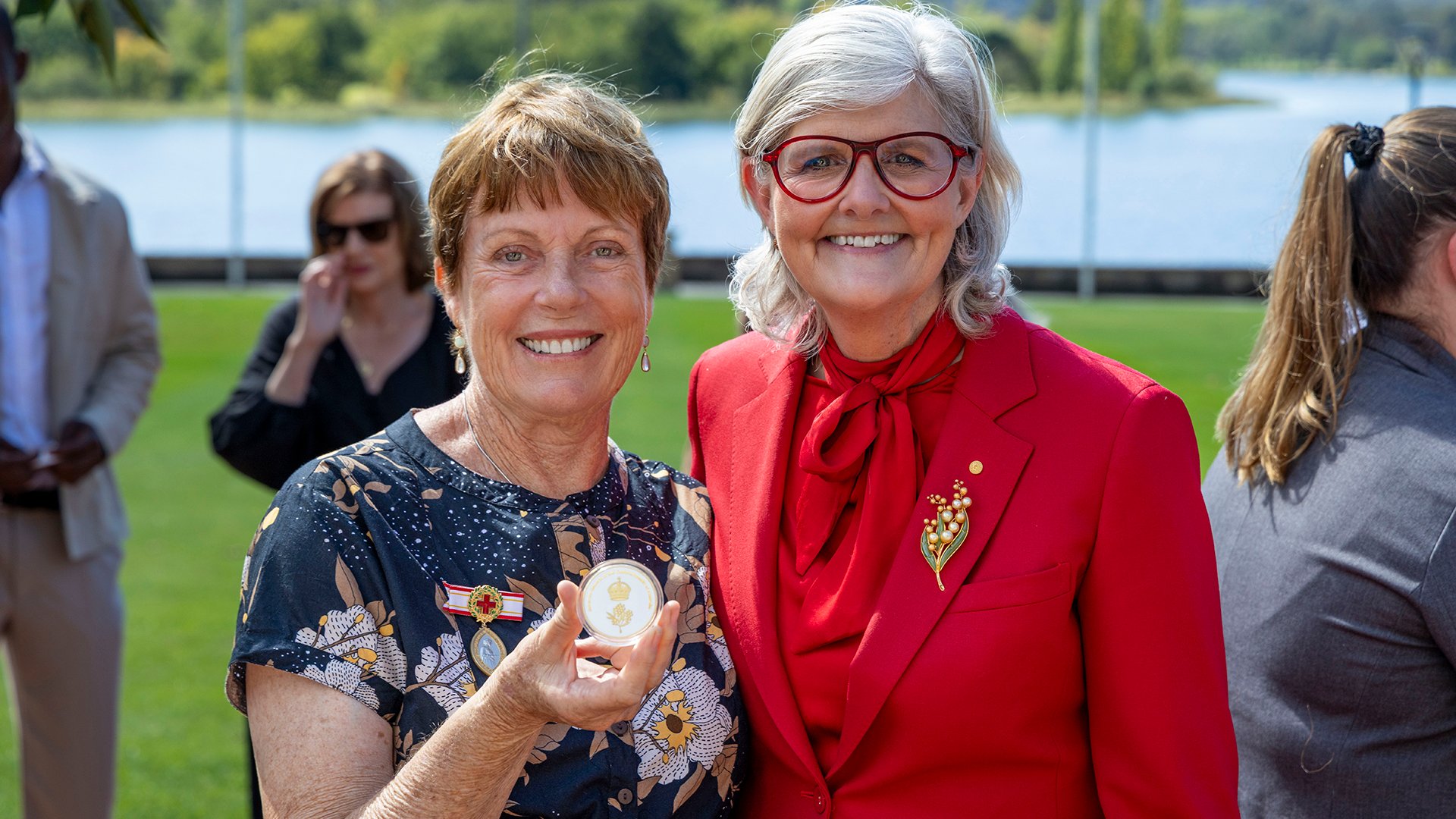
Both JP and Anne-Maree were awarded the medal for their work in Gaza, as well as the devotion and care they have shown in challenging humanitarian contexts throughout their careers.
Now retired from her nursing career in Sydney, Anne-Maree is determined to deploy overseas once more – knowing just how great the need for medical support in areas of conflict and crisis globally is, she feels compelled to help.
“I’m prepared for it,” she says. “I just feel this is what I was born to do.”
Our delegates support local teams to provide critical care in areas of conflict, crisis and disaster.

deployments have been carried out by Australian Red Cross delegate between July 2025 and April 2026.

of those deployments have been to active areas of conflict, from South Sudan to Venezuela and Ukraine.
of those deployments are to assist in hospitals and public health settings.
Your donation will help us and Red Cross and Red Crescent partners address immediate and long-term needs from the crisis across the Middle East region.

Australian Red Cross acknowledges the Aboriginal and Torres Strait Islander peoples as the Traditional Owners and Custodians of this land, their ancestors and Elders, past and present.
Learn about our Reconciliation Action Plan and how we can all make reconciliation real.
This website may contain the images, voices or names of people who have passed away.
All donations to Australian Red Cross are tax-deductible in Australia. Site protected by Google Invisible reCAPTCHA. © Australian Red Cross 2026. ABN 50 169 561 394