
Community-led Resilience Teams (CRTs) help communities to prepare for, respond to, and recover from emergencies - together.
As the climate changes, wild weather is becoming more frequent and affecting more people than ever. When disaster strikes, we often rely on our neighbours, friends and local businesses for support. In moments like these, the strength of a community can make all the difference.
Following the devastating floods caused by Tropical Cyclone Debbie in 2017, Australian Red Cross established the CRT model. Thanks to funding from the Australian Government in 2023-25, Australian Red Cross has supported thousands of community members in New South Wales to become more resilient.

activities delivered

community members involved

satisfaction rate from participants

communities connected through the CRT network
A Community-led Resilience Team is a flexible, all-hazards approach to ensuring local communities are prepared for emergencies.
Created by Australian Red Cross, the CRT program allows community members to connect with one another and to learn vital preparedness skills as a team, allowing them to build resilience before, during and after an emergency.
Thanks to funding from the Australian Government in 2023-25, this program has already supported thousands of people in NSW and will be rolled out nationally in 2026. You can read our handbook to learn more about how CRTs are created and supported by Australian Red Cross in partnership with local communities.
CRTs are:
With the support of Australian Red Cross facilitators, CRT leaders establish a local network that can be activated around an emergency. This network allows information from local councils, emergency services and Australian Red Cross to be shared quickly and easily with households.
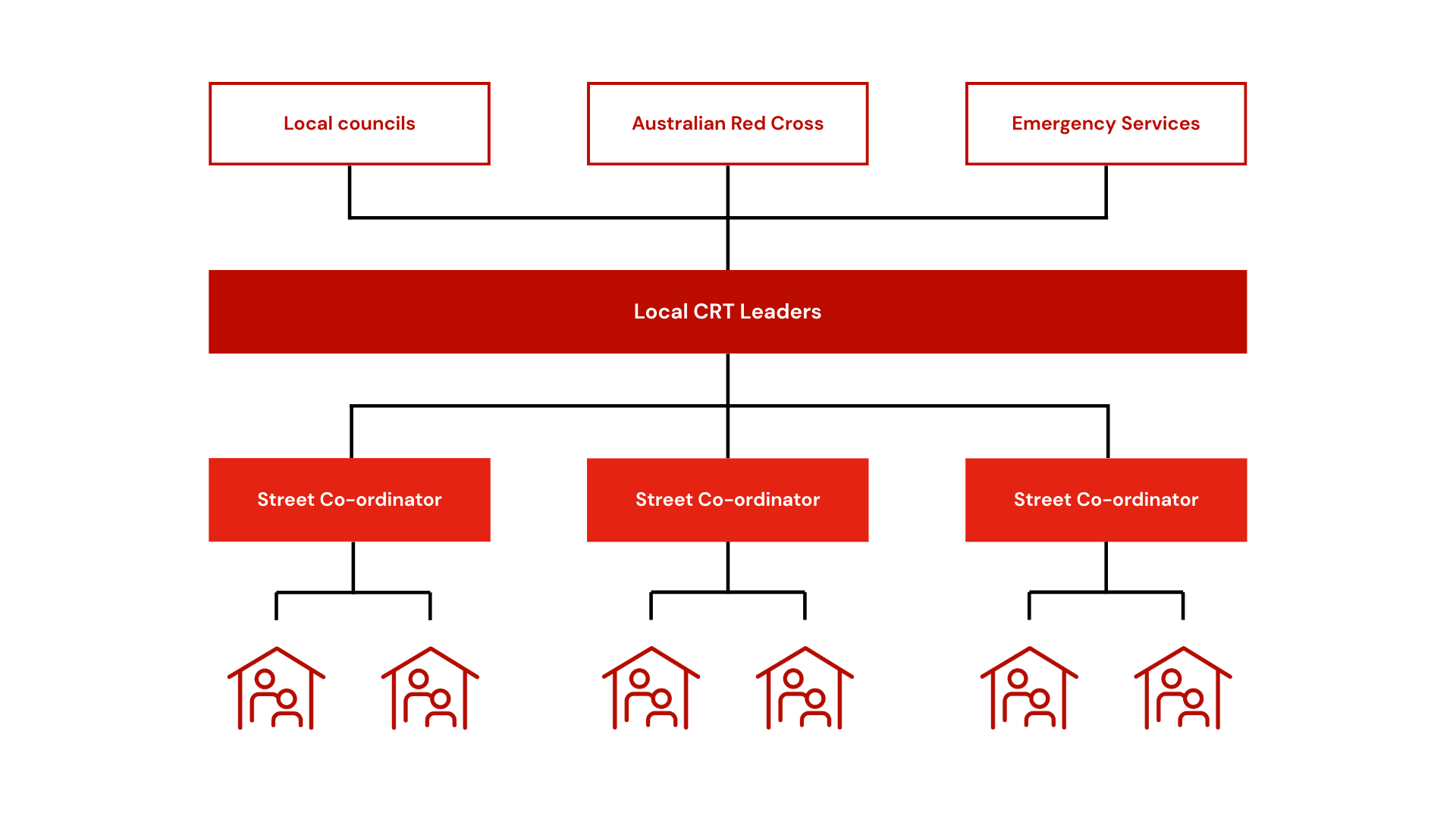
Outside of emergencies, the CRT allows communities to come together and get to know one another through social connection events like BBQs, ping pong, community hall nights and storytelling evenings. This is just as important as practical emergency preparedness as tightly-knit communities are more resilient to disasters.
Every community in Australia is different, so our CRT offering is flexible to fit your needs. Our showcase below highlights the activities carried out with our incredible CRTs, which range from preparedness training to community-building events. If you’re interested in setting up a CRT in your local area, contact us, as we can work with you to determine what will benefit your community the most.
During 2024-25, we worked with almost 100 communities to establish grassroots networks that can be activated to support each other and share information in times of crisis.
Wardell is a small community of around 600 residents, living near the Richmond River on low-lying floodplains in Northern NSW. Ballina Shire is one of the highest disaster risk areas in NSW and has experienced catastrophic flooding in recent years. The Wardell community has been active in leading its own recovery from recent emergency events, and as part of this community-led recovery, community members have come together to train and connect via Red Cross events. In this video, Wardell and surrounding community members participate in emergency communications training with Red Cross and Marine Rescue and talk about the benefits of community-led resilience.
Australian Red Cross is dedicated to ensuring that First Nations communities are well prepared for wild weather and other emergencies. Due to the remote location of many First Nations communities, as well as cultural barriers to inclusion, it is essential that resilience training and information sharing is built with First Nations people who know the unique needs of their communities. The CRT model supports this engagement.
Malabuglimah is a small First Nations community that has been affected by floods, bushfires and cyclones. We worked with their community to deliver training that would build preparedness skills, develop an emergency communication network and also strengthen connections with local emergency services.
The Bulga Community-led Resilience Team links the communities of Bulga, Milbrodale and Fordwich in the Upper Hunter Valley in NSW. The CRT formed after the 2019/20 bushfires and has become a local hub for information and support through recent flood and bushfire events. As for other CRTs, the Bulga CRT operates on a voluntary basis, with each member contributing in the way that suits them best – whether as a Designated Communications Volunteer, a member of the Bulga CRT Committee, or by using their local knowledge to support the community’s understanding of risks, like Frank’s Flood Meter.
To watch them, open our video showcase.
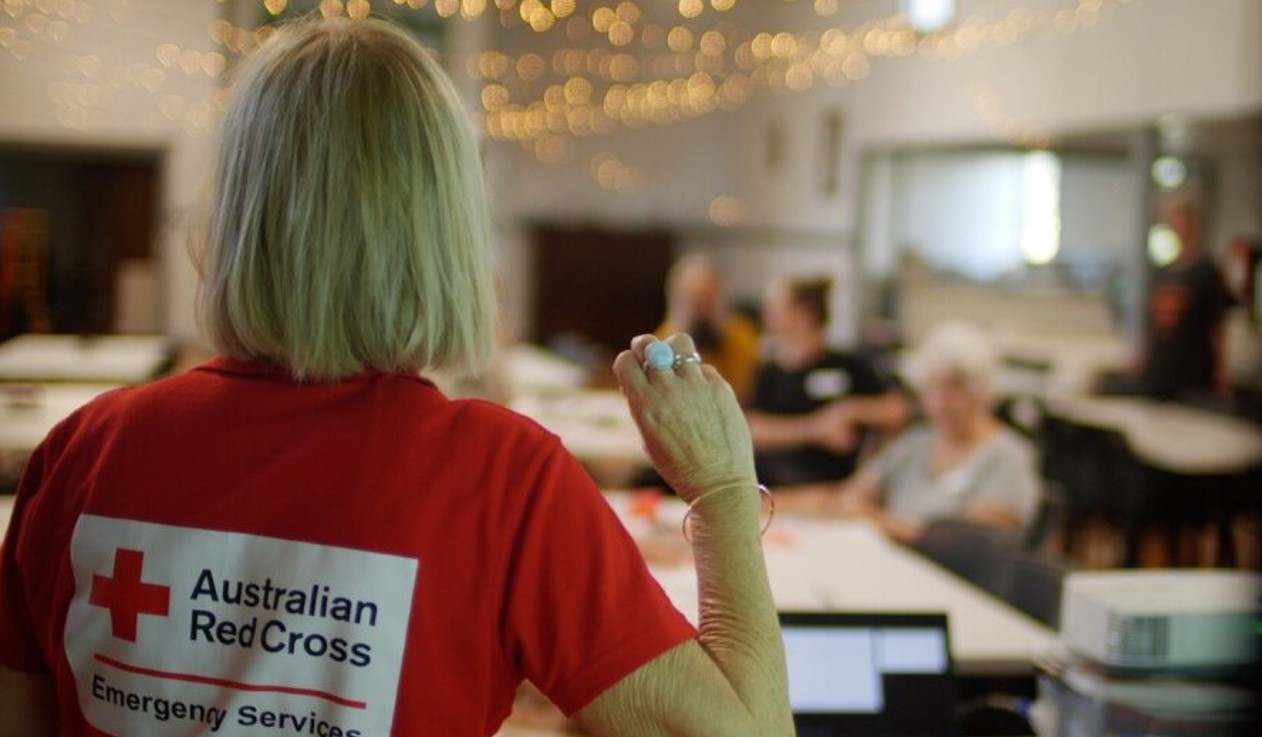
Whether you’re a local community member, a business owner, a community service provider – or just someone who wants to be better prepared – there’s a place for you in a Community-led Resilience Team. By coming together, we can strengthen our connections, share our knowledge, and build the kind of resilience that carries us through disasters as safely as possible.
If you’d like to request a CRT workshop, form a CRT in your community or ask any further questions contact us using the form below or at nswcrt@redcross.org.au.

Australian Red Cross acknowledges the Aboriginal and Torres Strait Islander peoples as the Traditional Owners and Custodians of this land, their ancestors and Elders, past and present.
Learn about our Reconciliation Action Plan and how we can all make reconciliation real.
This website may contain the images, voices or names of people who have passed away.
All donations to Australian Red Cross are tax-deductible in Australia. Site protected by Google Invisible reCAPTCHA. © Australian Red Cross 2026. ABN 50 169 561 394