

When people think of Australian Red Cross, they often picture volunteers responding to disasters, helping communities recover from crises, running first aid training, or supporting blood donation services. These are the most visible and familiar parts of the organisation's work and they are essential.
But there is another side that is less known, yet just as fundamental to its mission and identity.
From the very beginning, the International Red Cross and Red Crescent Movement (the Movement) - of which Australian Red Cross is a part – has been closely tied to the development of international humanitarian law (IHL), also known as the laws of war.
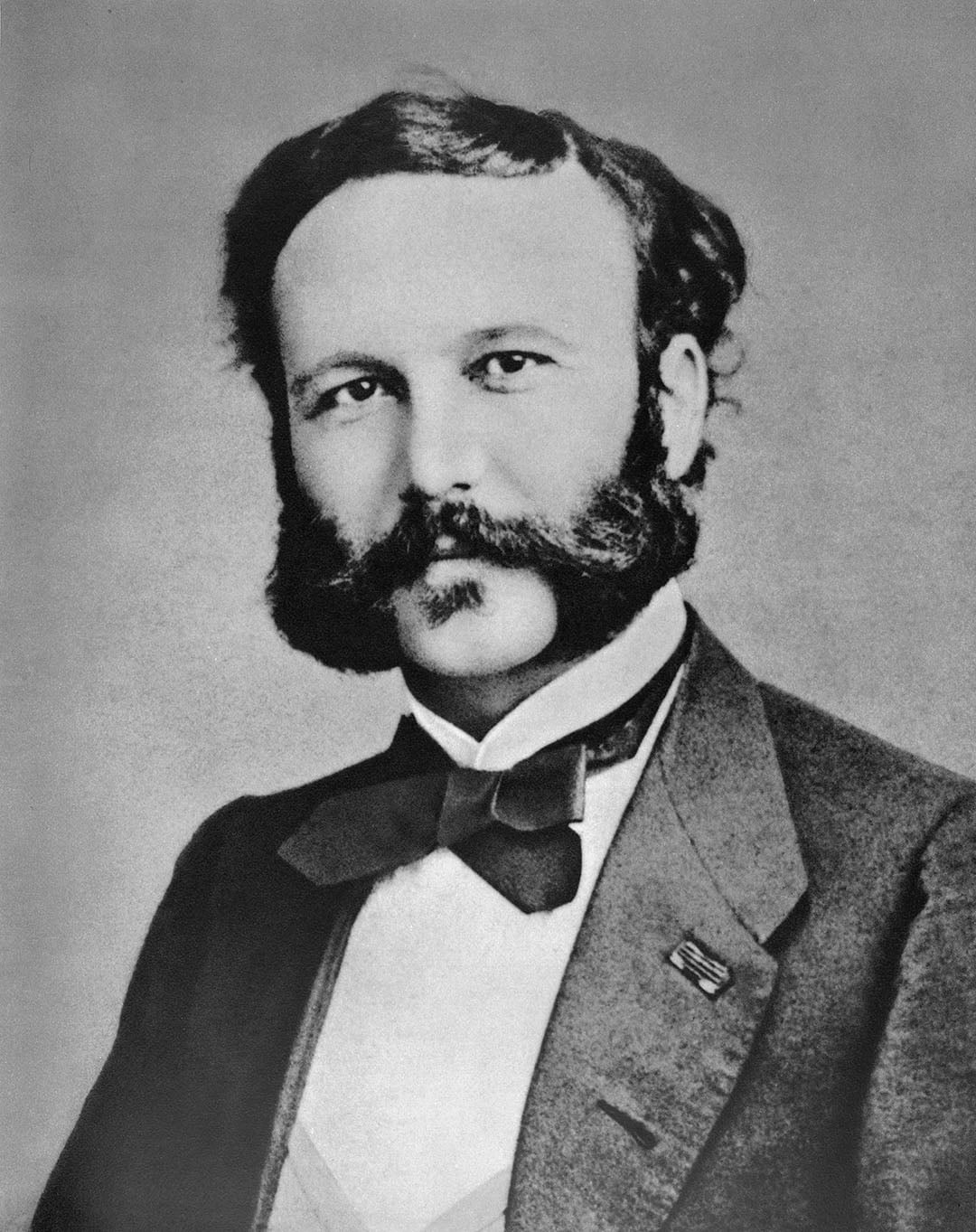
The origins of the Movement can be traced back to 1859, when a Swiss businessman named Henry Dunant travelled to northern Italy and arrived in the aftermath of the Battle of Solferino1. What he witnessed was confronting. Around 40,000 soldiers had been killed or wounded in a single day. This was before antibiotics, before modern medical evacuation systems, and before organised humanitarian relief as we know it today. Many of the wounded were left untreated for days.
Dunant was struck not only by the scale of the suffering, but also by how unprepared armies were to respond to it. There were more veterinary surgeons2 around to look after the horses than doctors available to treat the soldiers. Medical services were quickly overwhelmed and civilians from nearby towns stepped in to help, treating wounded soldiers from both sides without distinction. One phrase came to symbolise these efforts: “Tutti fratelli” or “we are all brothers.”
When Dunant returned to Geneva, he wrote a short book, A Memory of Solferino3, describing what he had seen and experienced. In this book, Dunant proposed two ideas that would go on to transform humanitarian action during war. First, he argued that every country should establish voluntary relief societies trained to care for the wounded in conflict. Second, he wrote that States should agree on international rules to protect wounded soldiers and those caring for them.
At the time, these ideas were radical. While local traditions and customs governing warfare4 had long existed across cultures, there were no universally accepted rules protecting wounded soldiers during war, and there was no permanent international humanitarian organisation dedicated to assisting victims of conflict.
Within a few years, these ideas began to take shape. In 1863, a committee that would become the International Committee of the Red Cross (ICRC)5 was established in Geneva. In 1864, States adopted the first Geneva Convention6. With just ten articles, this treaty was significantly shorter than the modern Geneva Conventions of 19497, but it introduced a powerful and lasting principle: even in war, there are limits to what you can do.
This history is important because it challenges a common assumption. The Movement is well known for the work it does to respond to suffering after it occurs. From its earliest days, however, it has also been about preventing and limiting suffering through the development and promotion of legal rules.
Today, IHL is built around the four Geneva Conventions of 1949 and their Additional Protocols. These treaties protect people who are not—or are no longer—taking part in hostilities, including civilians, prisoners of war and the wounded and sick. They also protect medical personnel, hospitals and humanitarian operations.
The Movement has a unique role within this framework. The ICRC has a formal mandate8 under the Geneva Conventions to assist during armed conflicts, which includes visiting detainees, reconnecting separated families, and engaging with parties to conflicts to encourage respect for and compliance with the law.
Just as importantly, the Movement has a recognised role in promoting knowledge of IHL.
The idea that the law must be widely known is built directly into the Geneva Conventions themselves. States are required to disseminate the rules as broadly as possible, both in peacetime and during conflict. The underlying logic is simple: the law can only work if people know it exists.
Soldiers need to be trained before they are deployed. Political leaders and military commanders need to understand their legal obligations. Humanitarian workers need to operate within a framework of recognised protections. The broader public needs to understand why these rules matter.
This is particularly important in today’s information age, where conflicts are highly visible and widely discussed. Public understanding of IHL helps support informed debate and reduces the risk of misinformation9, especially when complex issues like alleged war crimes come into focus.
At its core, dissemination is about reinforcing a basic but powerful idea: even in war, humanity must be protected.
In Australia, Australian Red Cross continues this work through its IHL Program10. The work of Australian Red Cross in disseminating IHL is recognised internationally11 as a success story that can serve as an example for others seeking to do the same.
The program delivers training and education12 across a wide range of audiences, from students to government officials, members of the Australian Defence Force, humanitarian practitioners, and the broader community. It also develops practical resources13 and teaching materials that help make IHL accessible and relevant in different contexts.
The program liaises closely with key stakeholders14, including government, defence, academia, and civil society as well as with other National Societies and international components of the Movement, to support IHL implementation and compliance.
The program is also engaged in research and innovation. Australian Red Cross are supporting researchers at Adelaide University as they explore the rules and customs of Australian First Nations in regulating conflict. Other initiatives, such as work on a digital emblem15, aims to explore how the red cross and red crescent emblems that signify protection during armed conflict can be applied to protect humanitarian assets in cyberspace.
A part of this dissemination work is supported by state and territory IHL Advisory Committees (IHLACs), which are groups of volunteers who help bring IHL into public conversation. Through Community Speakers’ Networks, volunteers deliver talks and presentations to schools, community groups, and other audiences. IHLACs run workshops at universities, often using interactive scenarios to help participants engage with the practical application of the law. They also organise public events, such as film screenings followed by panel discussions, providing accessible entry points for people to explore the issues in a more informal setting.
In addition, volunteers contribute to media engagement and develop short, accessible explainers on IHL. These are particularly valuable when issues related to armed conflict are in the news. At those times, there is often strong public interest but also a risk of misunderstanding or misinformation.
Here, Australian Red Cross has a distinctive role. As a neutral and independent humanitarian organisation with a long-standing global reputation, it is well placed to provide clear, trusted and non-partisan information about the laws of war.
Dissemination, in that sense, is not just about education. It is also about maintaining space for informed, principled discussion about armed conflict and reinforcing the idea that even in the most difficult circumstances, there are laws that should be upheld. It is also about fostering a broader understanding that even during conflict, humanity matters, and that there are limits on violence and suffering.
That can sound abstract until we remember that the protections contained in IHL relate to very concrete human realities: the protection of civilians, the treatment of detainees, the protection of medical workers and hospitals, access to humanitarian aid, and the ability of families to find missing relatives during war.
While Australia may feel geographically distant from many current conflicts, these issues are not distant in human terms. We live in a society shaped by global events, global media, migration, and international engagement. Many people in Australian communities have direct personal or family connections to armed conflicts around the world. Humanitarian principles continue to matter here as well.
That is why local dissemination matters. Most people will never read the Geneva Conventions, nor do they have to. Their understanding of humanitarian principles is far more likely to come through education, public discussion, community engagement and the work of volunteers.
In many ways, that reflects the origins of the Movement itself. The International Red Cross and Red Crescent Movement did not begin as a large international institution. It began with ordinary people recognising suffering and deciding that it was not inevitable—that something could be done to reduce it and even prevent it.
More than 160 years later, that idea still sits at the heart of the Movement. Even in the darkest moments of conflict, there must remain space for humanity, protection, and dignity.
The work of promoting and understanding the laws of war helps ensure that this idea endures.

Australian Red Cross acknowledges the Aboriginal and Torres Strait Islander peoples as the Traditional Owners and Custodians of this land, their ancestors and Elders, past and present.
Learn about our Reconciliation Action Plan and how we can all make reconciliation real.
This website may contain the images, voices or names of people who have passed away.
© Australian Red Cross 2026. ABN 50 169 561 394