
Steve Pascoe and Sabrina Davis are both bushfire survivors, but their experiences are unique. Steve lived through the Black Saturday fires of 2009, which destroyed his home and devastated his small community of Strathewen, near Kinglake in Victoria.
“My family lost their home, and everything we owned. We walked away in the clothes we were wearing,” reflects Steve.
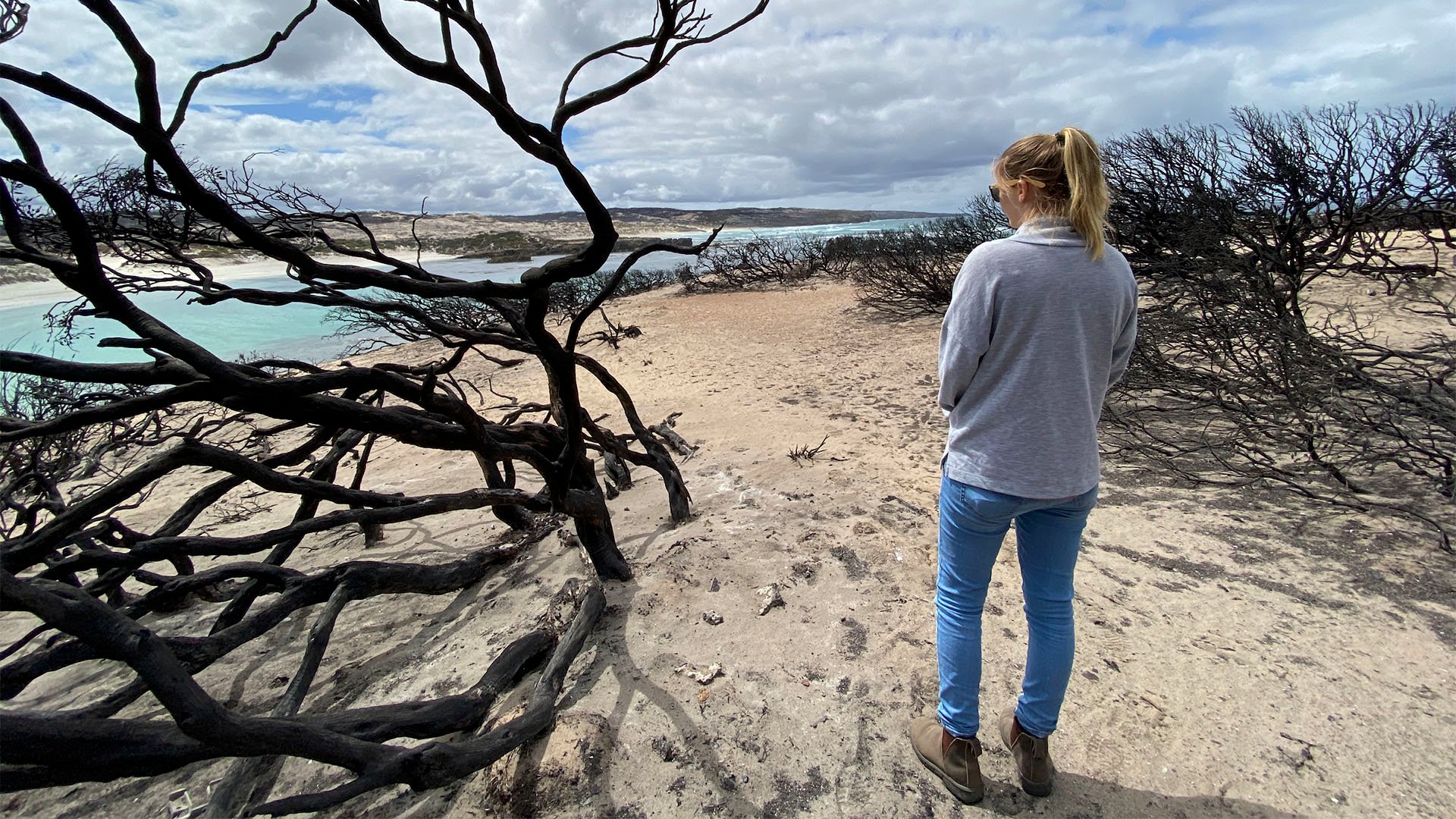
Ten years later, Sabrina’s home and sheep property on the remote western end of South Australia’s Kangaroo Island was reduced to rubble in the Black Summer bushfires.
“You never really get over that,” says Sabrina. “That survival brain takes a long time to recover from."
As they moved through their respective recovery journeys, both Steve and Sabrina felt their experience could be helpful to other people living through disaster. Unbeknownst to them at the time, there were people with lived experience all over Australia who felt compelled to do the same.
“I had seen things I wasn’t really aware of before. I couldn’t unsee them,” explains Sabrina. “And I wanted to make sure that the experience I had – as terrible as it was – wasn't useless. I wanted to help others with what I have learned as part of the journey.”
In Strathewen, Steve was part of a team of locals who came together to lead their community’s bushfire recovery.
“We started down this path of forming a community-led recovery association. It was a fairly new idea, and we were making it up as we went along, but we knew we had to be very clear about our purposes: that it was to be very transparent, very democratic and representative of our community needs,” he says.
Two years later, when the nearby town of Carisbrook was hit by a record-breaking flood, someone there raised the question: ‘There must be someone who’s been through this before. Maybe they could help us?’
“And that started the idea around perhaps there could be such a thing as Disaster Recovery Mentors,” says Steve.
Following discussions around viability, and how the collective of volunteer mentors might organise and operate, it was decided there needed to be a central team to bring everything together and coordinate the group.
In 2017, Australian Red Cross became that central point for the Disaster Recovery Mentors, helping to facilitate connections between mentors and communities in need, while ensuring the team of mentors have access to the practical and wellbeing support they need to carry out their duties effectively.
“The support from Australia Red Cross has been critical in getting Disaster Recovery Mentors off the ground and in making it into a valuable tool for the recovery of communities,” says Steve.
Steve explains that the Disaster Recovery Mentor program has three main goals.
“The first is to normalise the recovery experience for communities, community leaders and disaster recovery practitioners,” he explains. “It’s saying, ‘I went through it and I'm still standing up and I can still smile and I can still be happy and it's okay’. So, it’s showing that they will get through it and it'll work out.
“The second one is that we should be able to assist them to not make any mistakes that we may have made in our own experience. So ‘this worked for us, this is how it worked out, these are some things we learnt, these are the things that didn't work so well’,” continues Steve. “The third one is to give folk like me who have experienced disaster and have learnt a lot something useful to do with that knowledge.”
"A lot of my friends and family and community members just wanted to move on, and make sure life went back to normal,” recalls Sabrina, who now works as a National Resilience Officer with Australian Red Cross, helping communities to better prepare for disasters. “When I started volunteering with the Disaster Recovery Mentors group in June 2023, I realised there are other people who can’t go back to the old, and so you find work in that space because you want your experience to have meaning, and you want it to help others.”
Informed by the strength of recoveries like Strathewen and Kangaroo Island’s, another main objective of the Disaster Recovery Mentors is to encourage communities to lead their own journeys.
“Communities are really well placed to know their own strengths and their weaknesses, where the resources are, who can provide what, who is vulnerable,” says Steve. “They know the culture of their community. And they're there for a long time, so they want a great future for their community.
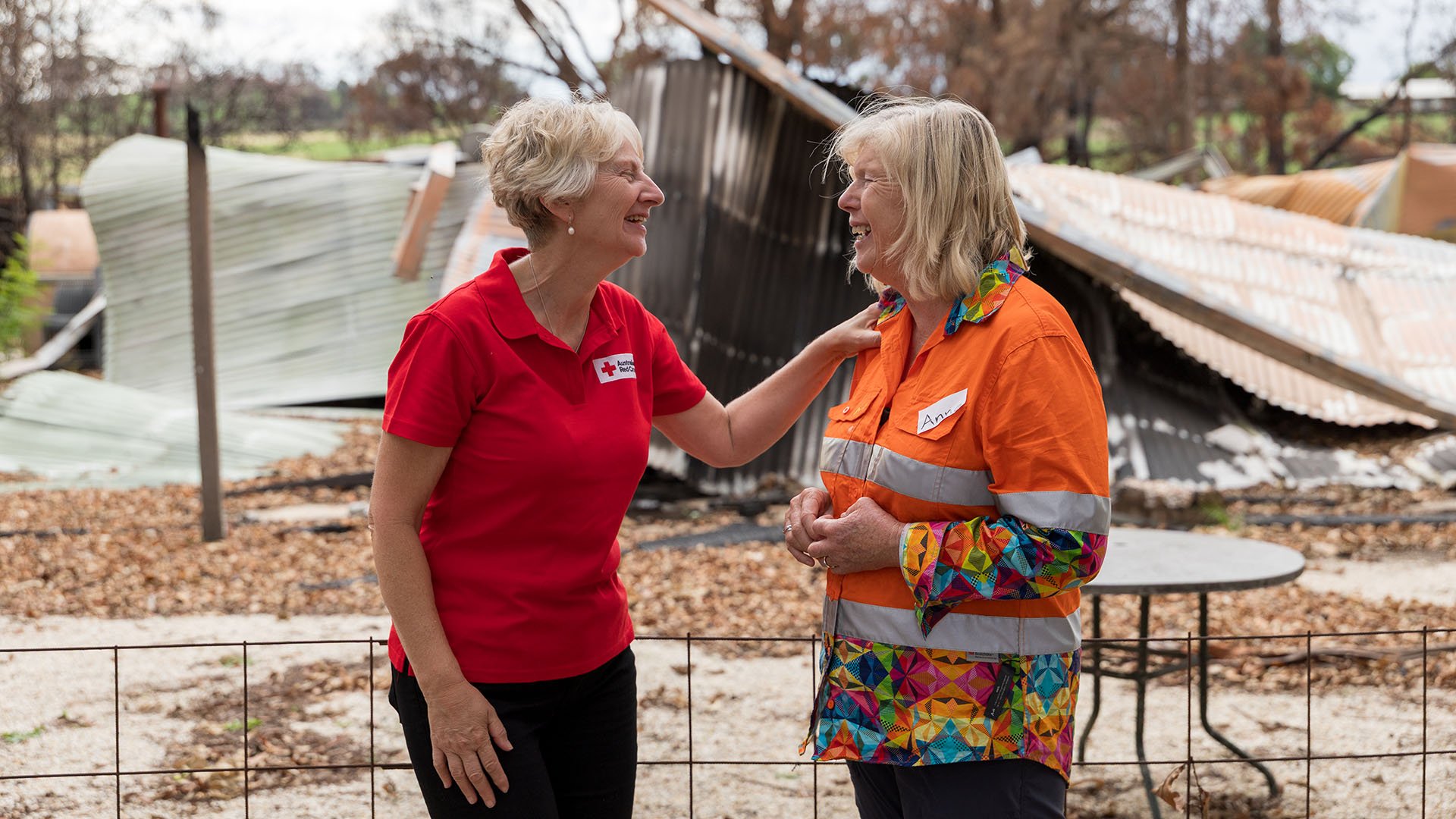
In January 2026, the small farming community of Ruffy was devastated in the Longwood fire, which burned over 130,000 hectares and destroyed more than 500 structures. Almost immediately, a small team of locals established a community-led relief hub in the township’s hall, serving meals and providing essential supplies like clothing and feed for stock.
The hub also became a place for people who had lost so much to gather, share experiences and support one another.
When Australian Red Cross emergency services volunteer and Disaster Recovery Mentor Jessica Davison first arrived in Ruffy, she met a community that was still numb with shock – but one that was leading its own recovery with strength. After providing support in the community and getting to know the hub leaders, including local schoolteacher Anne, Jessica asked whether working with the Disaster Recovery Mentors is something they might benefit from.
Shortly after, those leaders were introduced to Steve and a small team of fellow Disaster Recovery Mentors, who offered to support the community – and those leading its recovery effort – as it transitions from relief and into longer term recovery.
“The team from Australian Red Cross have been very supportive,” says Anne. “They've reaffirmed that what we are doing is part of the process. That we are doing okay, that we are supporting the community, and we'll have those ebbs and flows. They've given us confidence in what we're doing.”
Today, there are over 20 Disaster Recovery Mentors across Australia, with vital professional and lived experience in emergency management and recovery. As disasters grow more frequent and severe, the team’s skills, experience and unique approach to disaster recovery are increasingly vital.
Learn more about the Disaster Recovery Mentor program, and meet the mentors supporting people through their recovery journeys.

Australian Red Cross acknowledges the Aboriginal and Torres Strait Islander peoples as the Traditional Owners and Custodians of this land, their ancestors and Elders, past and present.
Learn about our Reconciliation Action Plan and how we can all make reconciliation real.
This website may contain the images, voices or names of people who have passed away.
All donations to Australian Red Cross are tax-deductible in Australia. Site protected by Google Invisible reCAPTCHA. © Australian Red Cross 2026. ABN 50 169 561 394