

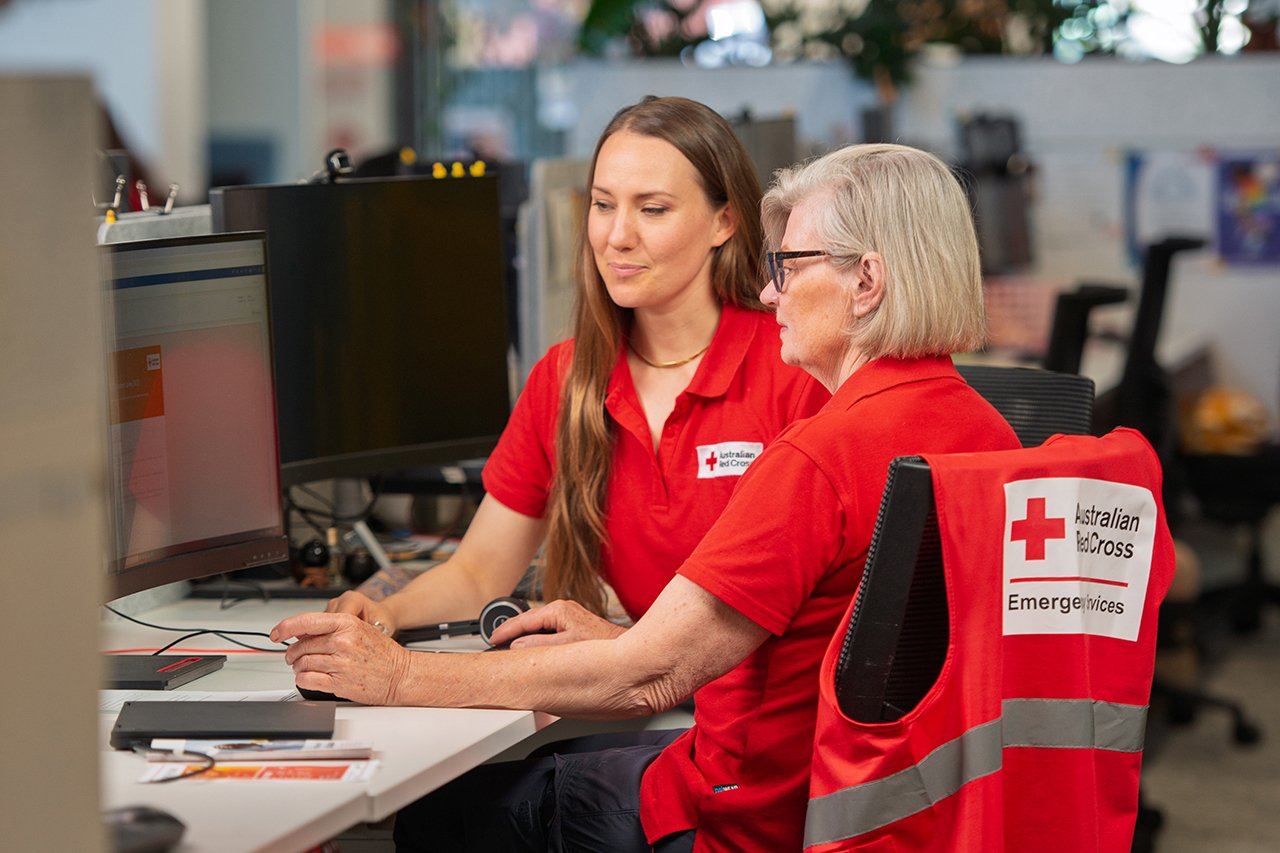
Australian Red Cross Emergency Services volunteer Peg knows what heat stress sounds like. “You're listening for cues about how well they sound, what their conversation is like... because disorientation, mental confusion and feelings of weakness are common signs,” she says. “Somebody can say, ‘oh, I'm fine’. But when you start having a conversation, you realise that they're not picking up on things very well, so there might be some confusion, some distress. And we log that.”
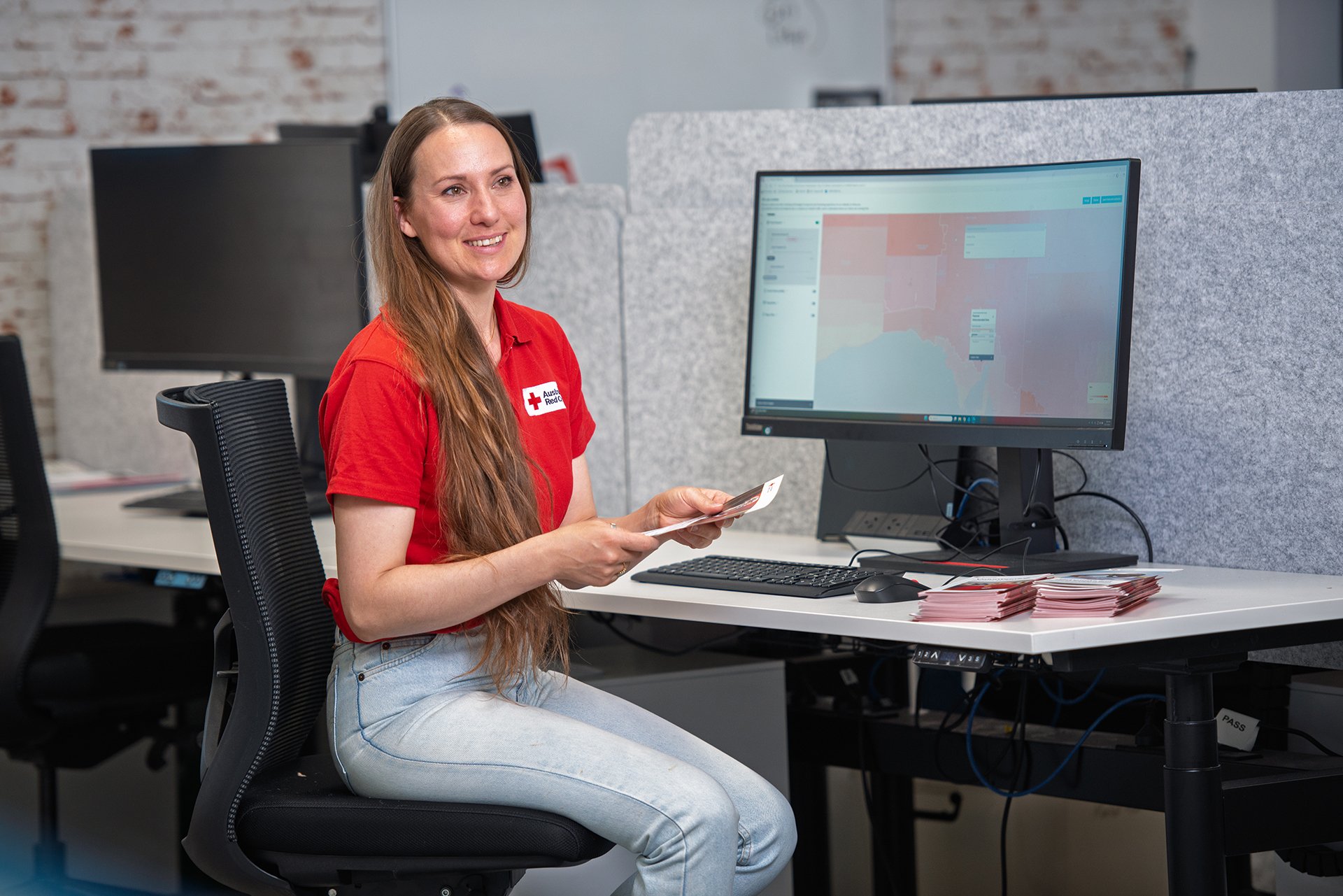
In addition to travelling across the country to support people in evacuation centres who have been driven from their homes by disaster as an Australian Red Cross Emergency Services Volunteer, Peg also volunteers with Australian Red Cross TeleRedi.
TeleRedi is a phone call service that provides vital support to those who may be at risk during extreme weather events, from older people to anyone who is socially isolated, as well as those living with an illness or disability.
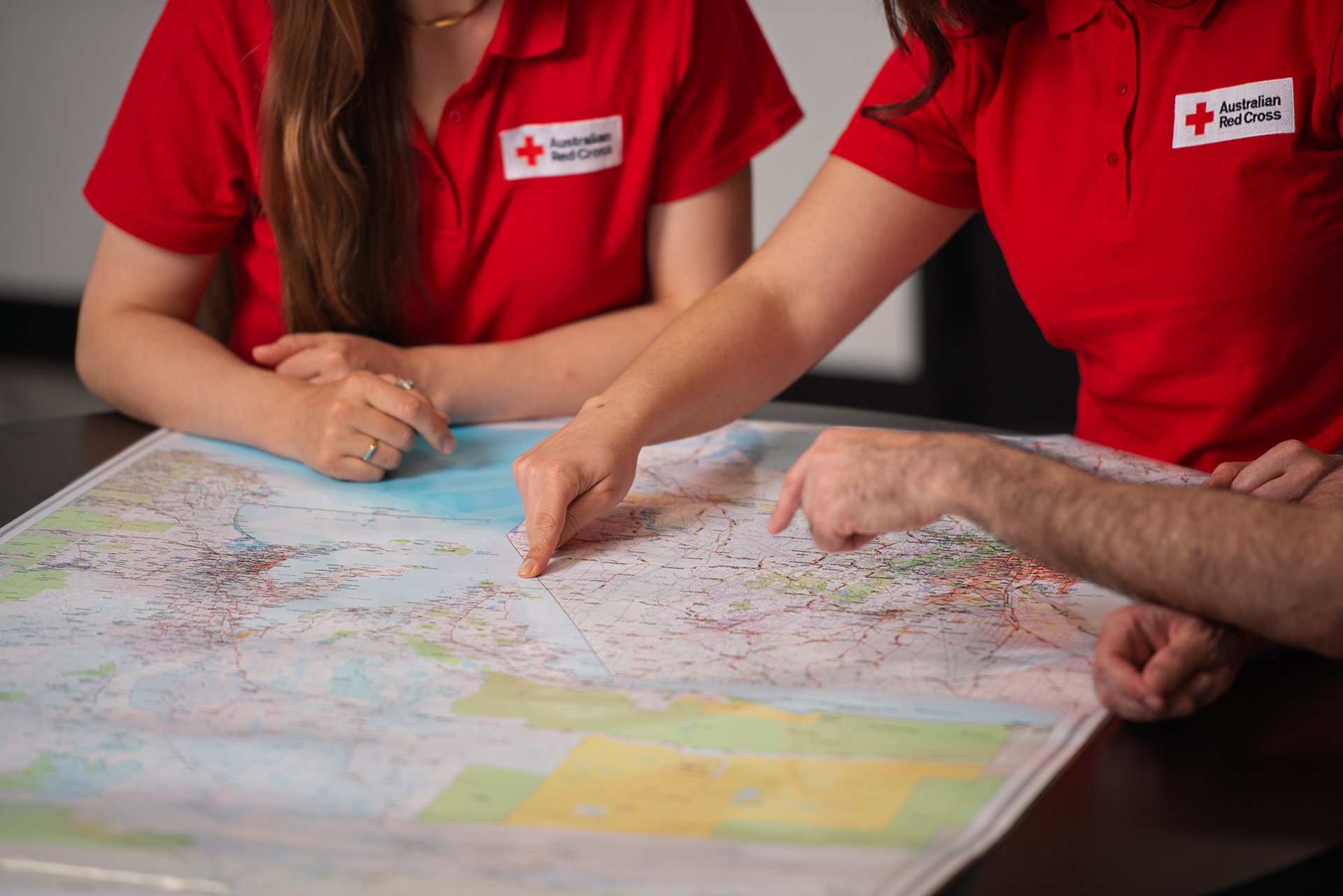
Using climate risk analytics platform ClimaSens, Australian Red Cross teams are constantly monitoring for developing storms, floods and heatwaves. When extreme weather events are forecast, those registered with TeleRedi will receive a call from a friendly Australian Red Cross volunteer who checks in on their wellbeing, provides helpful advice and reminders about how to stay safe, and connects them with additional support services if needed.
The goal is to reach these people early – if we can help them to prepare for the approaching weather, critical situations are less likely to arise, which lessens the strain on emergency services like hospitals.
“I always recommend that people fill a big jug of water first thing in the morning and leave it somewhere they're walking past all the time, like the kitchen bench or beside the TV, and every time they go past, have a drink,” says Peg of staying well during extreme heat.
“It’s so important to stay hydrated... thirst doesn't often register as a sign of extreme heat stress, even though [dehydration] may be a real factor.”
Most of the time, the calls Peg makes are routine check-ins that end in a friendly chat. “I really enjoy those conversations because we're often talking to people who have really interesting lives, and it’s a privilege to hear their stories,” smiles Peg. “For me, a good day is when nothing ‘exciting’ happens. To get to the end of my shift and know that everybody on my list is safe and well is the most important thing.”
But every now and then, Peg and her team will reach someone who does need assistance. Sometimes, it’s simply about sharing advice and calling back later in the day to see if they’re feeling better. But there are also times when the person on the other end of the phone requires urgent medical attention. For these people, TeleRedi can become a lifeline.
“One day, I was working as an escalation officer, and a call came in from one of our volunteers. She said, ‘we need an ambulance here!’ She had a man on the phone who was in a great deal of pain and was barely conscious,” Peg recalls. “She kept him talking – they talked about dogs, actually – just to keep him going. Another of our escalation officers was on the phone to the ambulance, and I was in touch with his emergency contact to ask what medications he might have taken that day, and if she’d seen him earlier in the day.
“That all came together with the ambulance arriving. And once the ambulance arrives, our job is done. He certainly had symptoms of a potential heart attack – he was severely distressed and unable to sit upright,” she adds.
Peg doesn’t know what would’ve happened to the man had the TeleRedi volunteer not reached him at that critical point in time. “I don't think he would have asked for help because it would’ve been too difficult for him at that stage. We don’t know what would have happened, but it's quite possible that he would not have survived.
“TeleRedi is a really, really valuable service in terms of connecting with people, making them feel that they're not alone and helping them to make wise choices during extreme weather.”
For our TeleRedi volunteers, checking in on a person’s physical wellbeing during extreme weather is the priority. But for members of the community who live alone, without family or friends to call on, extreme weather can heighten feelings of social isolation. Time and time again, Peg has seen the difference a friendly conversation and moment of connection over the phone can make to someone in this situation.
“I am often talking to people and they will say, ‘You're the first person I've talked to in the last two days’,” says Peg. “It's heartbreaking the number of people that we speak to who have nobody to talk to. When we register them for the program and we ask for their emergency contacts. I talk to so many people who say, ‘I haven’t got anybody’.
“So it’s really important that we have these chats, because we understand the social connection means as much to people as the physical advice we’re giving – social connection can assist people in both their physical health and their mental health,” she adds. “I actually believe that simply having somebody who cares enough to phone – I think that makes a huge difference to people, to just know they’re not alone.”
Peg’s observation is echoed in the feedback left by Jane* following a recent period of extreme heat: “Mentally, [the call was] very reassuring. Thank you so much for this service, as I have no family and most of my friends have passed.”
Indeed, the impact TeleRedi has on communities is profound.
“Since 2016, we've made almost 20,000 phone calls to vulnerable members of the community during extreme weather events. During an extreme heatwave in South Australia in March 2024, we made over 600 phone calls to at-risk members of the community, with 99 percent of clients saying they found the calls helpful.”
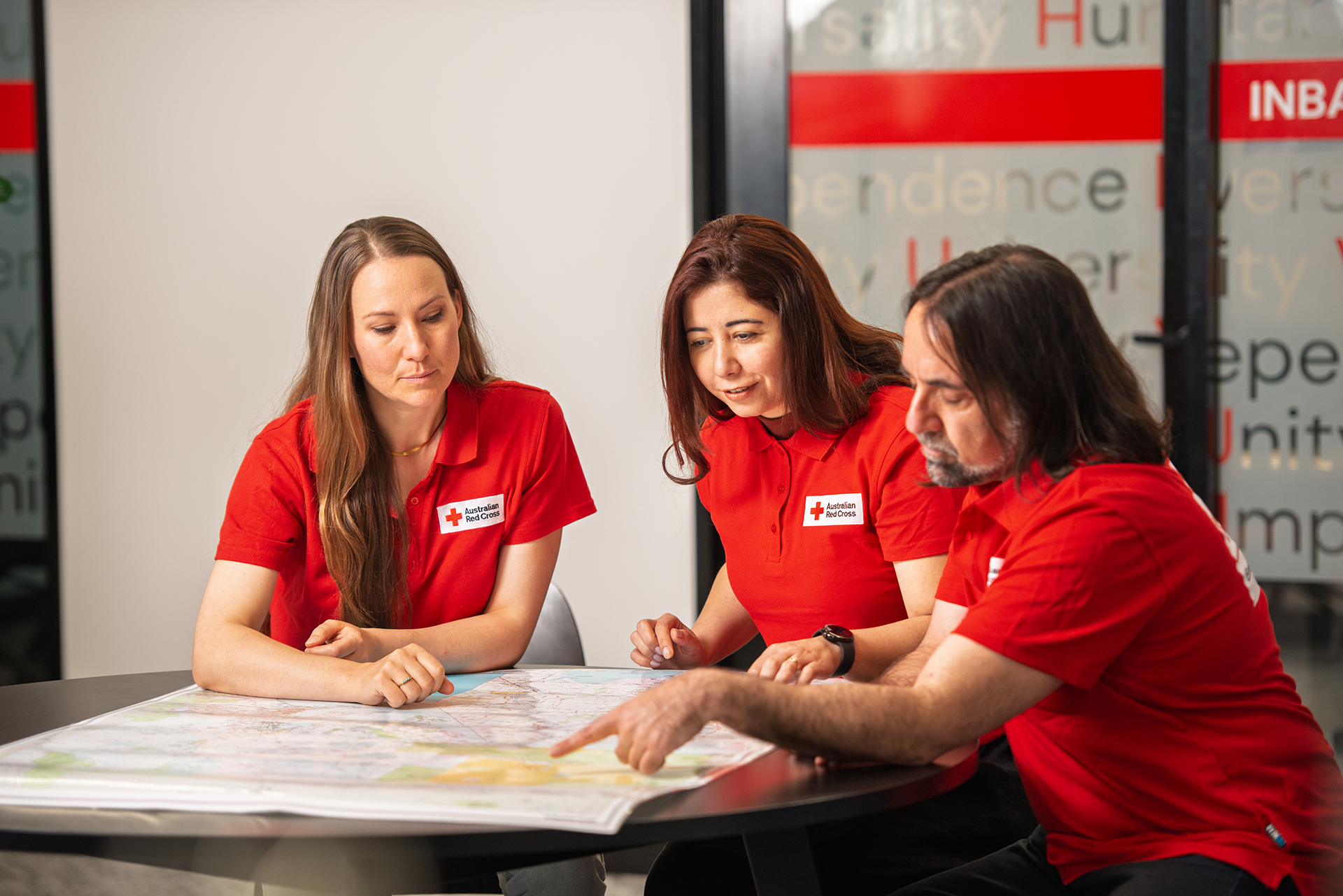
Phoebe points out that extreme heat is a growing concern for older Australians especially. “We have an aging population, and older people might also have co-existing factors like chronic illness. There might be financial pressures, which means things like turning on the air conditioner isn’t something they will consider. And extreme weather events are only happening more frequently,” she adds, underscoring the growing need for a service like TeleRedi.
“It’s about encouraging people to take care of themselves, to look towards their own resources and their own social connections,” says Peg. “That's why Australian Red Cross TeleRedi is so important. We are checking on their physical welfare, but it's the social connection, being able to speak to somebody and know that they care enough to call and have a fairly ordinary conversation about life and day-to-day things... That makes all the difference in the world.
“Almost everybody I speak to says, ‘Thank you for calling. It's nice to know somebody cares’.”
Having seen just how crucial a phone call to an at-risk person during times of extreme weather can be, Peg often encourages others to check in on those around them. “Whenever I’m talking to people about the program, I say, ‘If you know somebody who is elderly, living alone, perhaps has health conditions that are affected by heat – just give them a phone call. You never know the difference it can make.”
TeleRedi is currently available in South Australia and Western Australia.

Red Cross pays our respects to the Aboriginal and Torres Strait Islander custodians of the country where we work, and to Elders, past, present and emerging.
Learn about our Reconciliation Action Plan and how we can all make reconciliation real.
This website may contain the images, voices or names of people who have passed away.
© Australian Red Cross 2026. ABN 50 169 561 394