
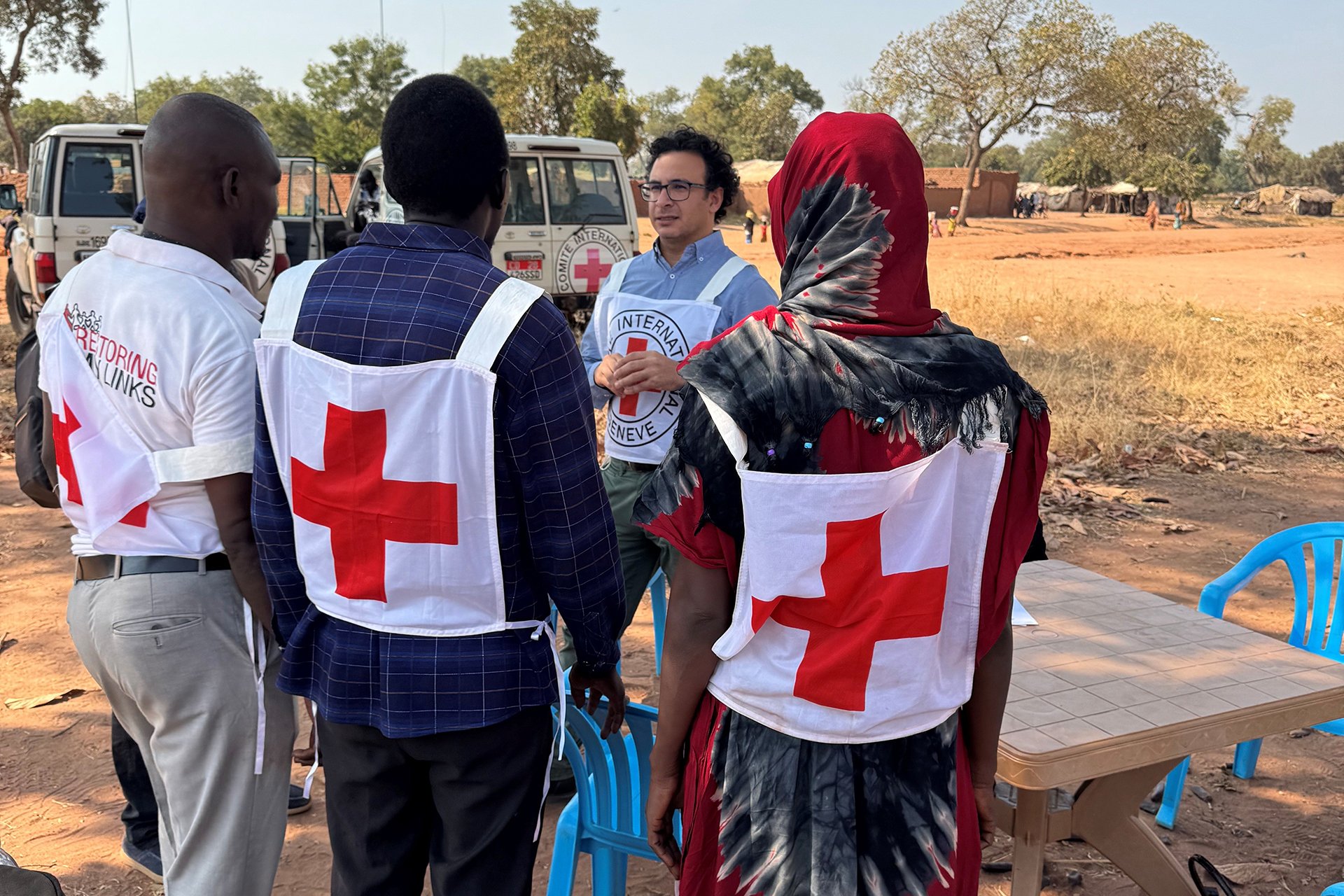
After a short flight in the Red Cross aircraft, Hakim and his team arrive at a refugee camp near the South Sudanese town of Renk. Here, they are greeted by a sight that’s become sadly familiar since internal conflict erupted in neighbouring Sudan in April 2023, forcing nearly 12 million people to flee their homes in search of safety, according to UNHCR. It is currently the largest and fastest-growing displacement crises in the world.
“We see many people at the camps - lots of families - living under trees for weeks because there’s no tents to accommodate them,” says Hakim, who is an Australian Red Cross Protection Delegate currently stationed in the South Sudanese capital city of Juba. “It’s raining, and it’s hot,” he adds. “It’s a tough experience... the humanitarian situation is very dire.”
Recently, up to 1,500 people have been arriving daily at transit centres in Renk, which is located approximately 40 kilometres south of the Sudanese border. Many are Sudanese refugees who have fled violence in their homeland. Over 40,000 people have been killed since the beginning of the hostilities (yet that number is estimated to be much higher), many as a direct result of the violence, while preventable diseases and malnutrition are also claiming the lives of thousands as conditions continue to deteriorate.
Also arriving in Renk are South Sudanese ‘returnees’, or internally displaced people – those who fled to Sudan as a result of their country’s long history of civil war – and, due to the worsening hostilities there, are now desperately trying to return home.
For the next three days at the camp, Hakim and his team will meet with both refugees and returnees who have been separated from loved ones as a result of the conflict. As a Protection Delegate, it is Hakim’s role to tell these people about the ways Red Cross can support them.
“In the first half an hour [of arriving at the camp], there will be hundreds of people surrounding the team because they want support,” says Hakim of the urgent need he and his colleagues witness on a regular basis. “They say, ‘We have been waiting patiently for you to come back and help us.’”
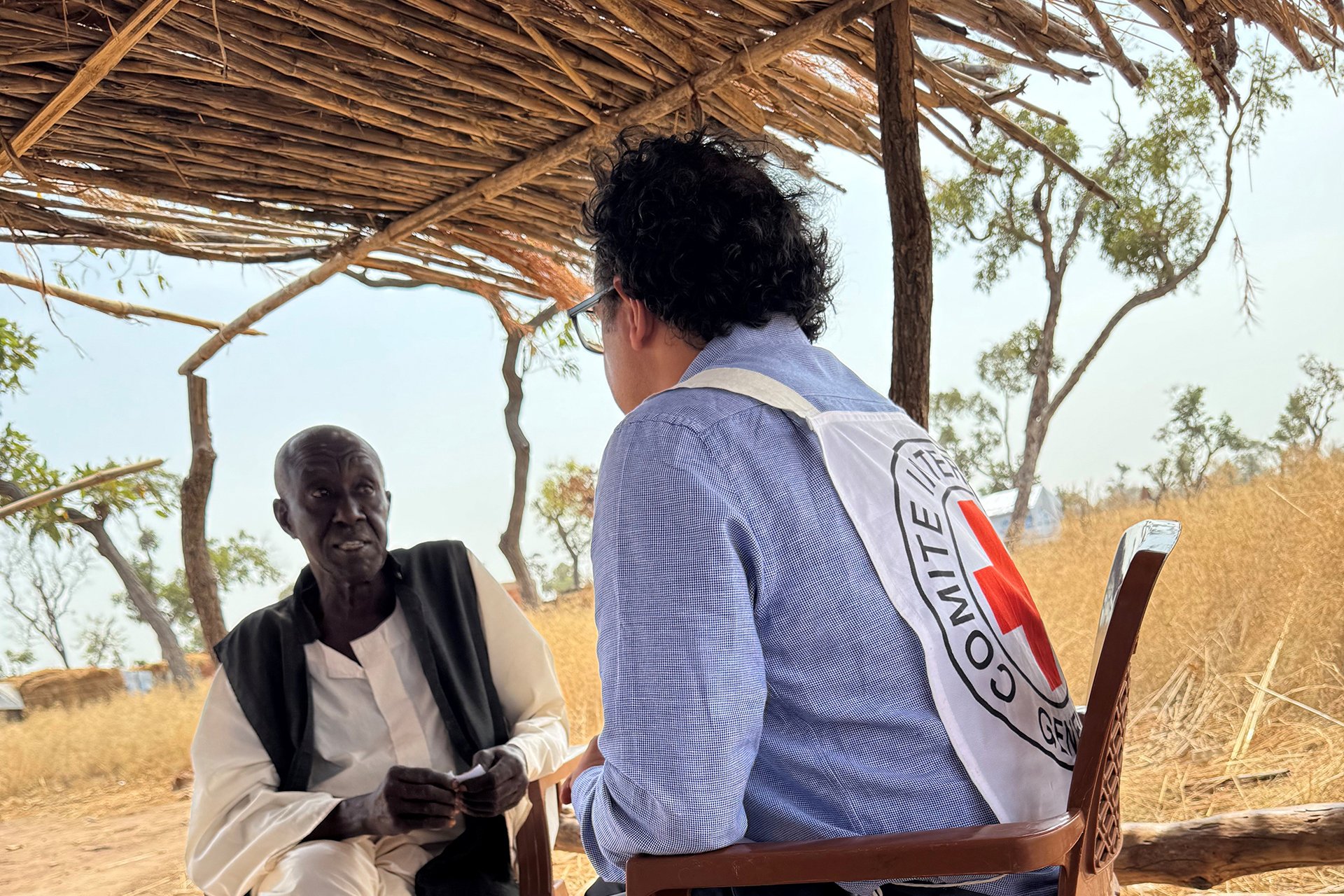
Sadly, family separation during moments of conflict is extremely common. “When there is an attack on a village or a town, everyone runs in a different direction. They could end up in a completely different country, if they manage to make it out alive,” says Hakim. “I've met some people who don't know anything about whether their family member is still alive or not, and if they are alive, they don't know where they are.”
One of Hakim’s major focuses in South Sudan is helping families to reconnect with missing loved ones. When visiting the camps, he always carries a mobile phone with him. This is because some people have the phone numbers of missing family members but don’t have any way of contacting them, so he helps them to make calls. Often, a regular mobile phone won’t work - power outages occur frequently because of the hostilities, meaning communities are often without phone and internet reception. To ensure people can still reach their loved ones if this happens, Hakim also brings a satellite phone with him.
It’s a simple act - giving a phone to someone so they can try and reach a loved one. And with so much displacement and upheaval, there’s little guarantee the call will be answered. But time and time again, Hakim has watched as a missing brother, sister, mother, father, cousin or other family member has picked up the phone, putting an end to the dreaded question of whether they are safe, or even alive.
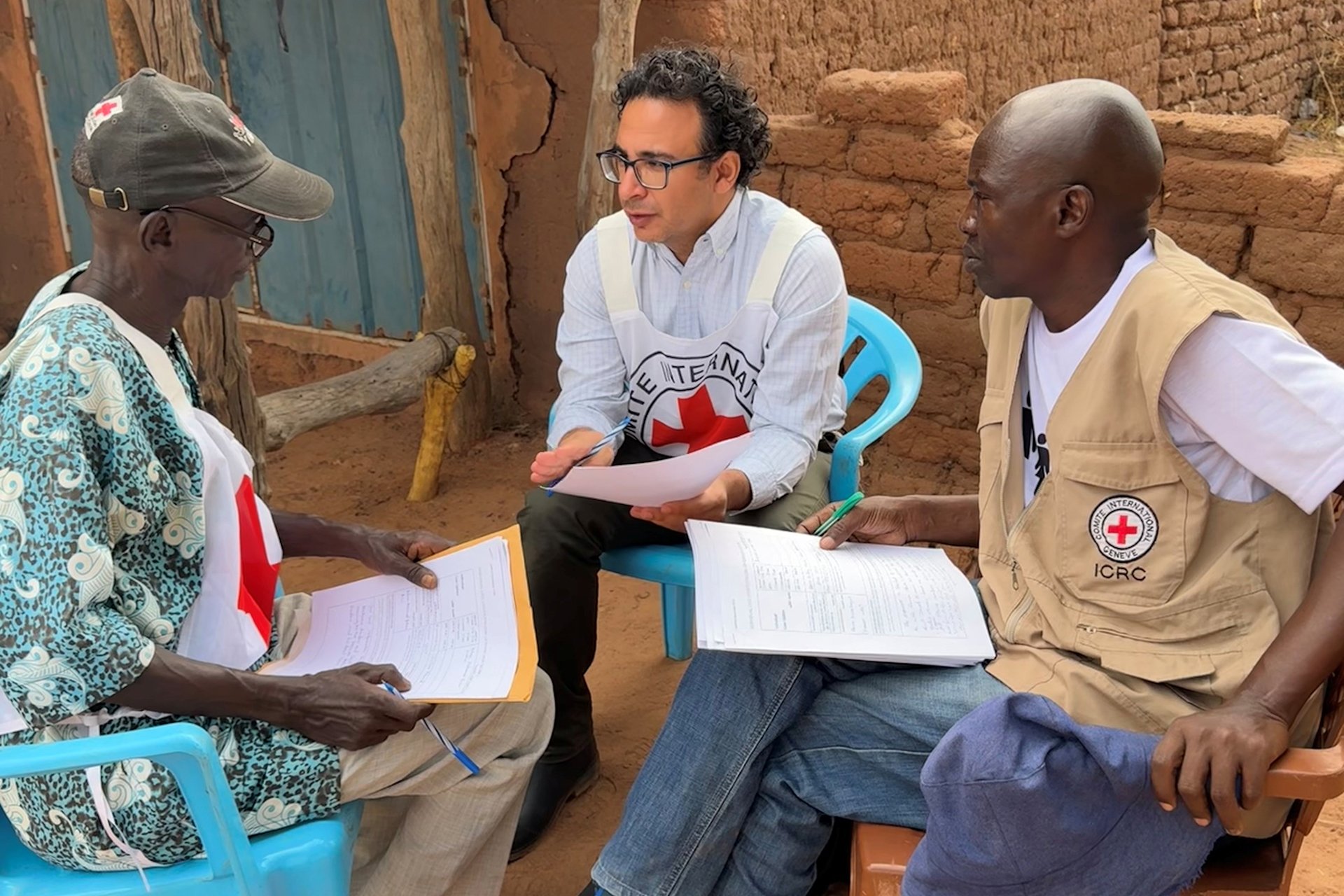
Recently, while Hakim was visiting a refugee camp in Makpandu, South Sudan, which hosts refugees from the Democratic Republic of Congo, Central African Republic, Rwanda, and Sudan, he witnessed just how much impact helping someone to call a loved one can have.
“There was a Sudanese lady making a call. She tried on the first day with the normal phone, it didn’t go through, and then we offered for her to call with the satellite phone - it also didn’t connect. She came back the following day to try again - because we’re usually there for three or four days - and the second day with the satellite phone, her mother picked up.
“Usually, the calls are just for three minutes, because we have to limit the time so everyone can get a go. The whole of the three minutes, I think she was crying, just knowing she was talking to her mother.”
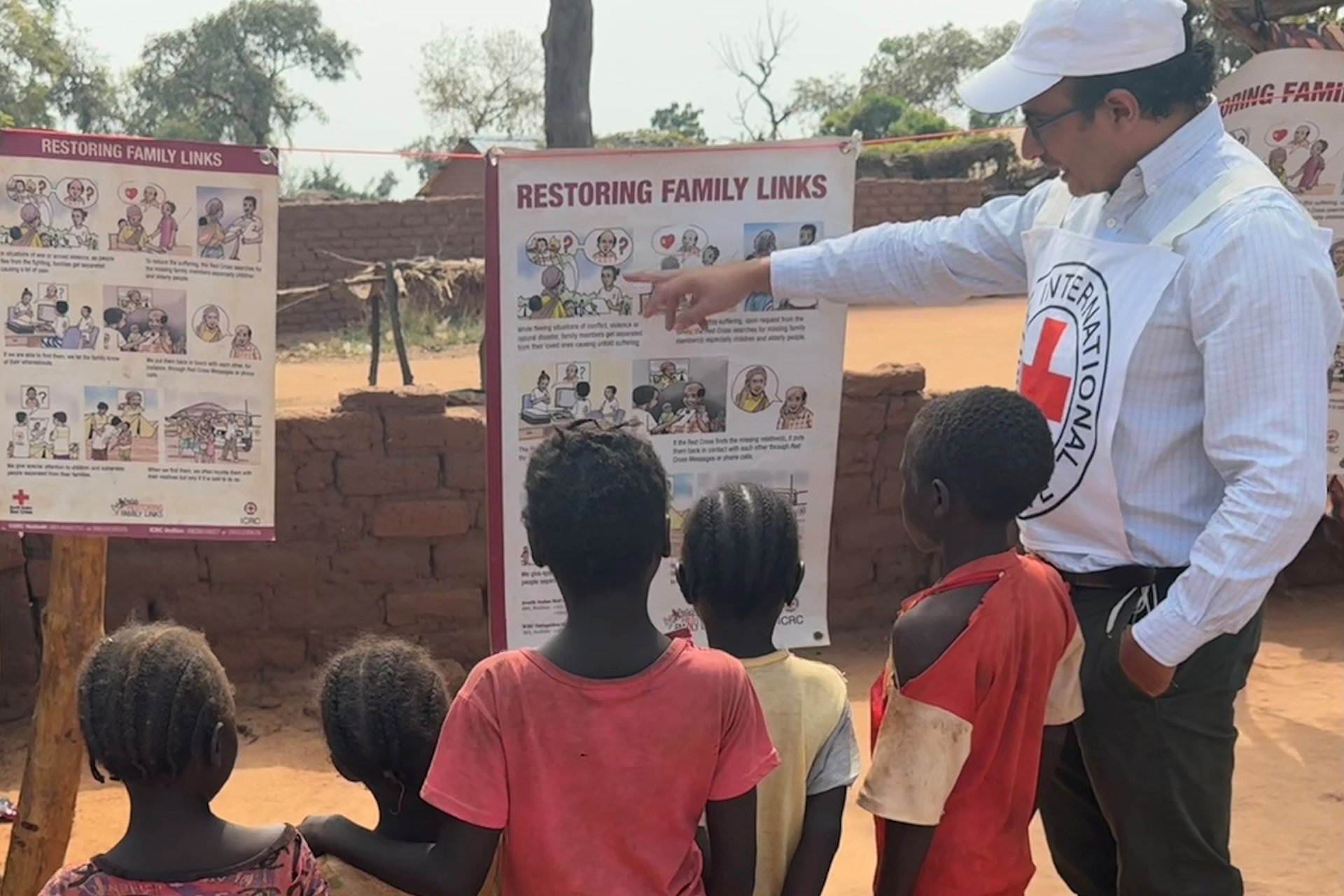
When a loved one can’t be reached by phone call, Hakim and his team help the person to open a tracing request through the Red Cross Restoring Family Links network. “We sit with them, take all the information about the missing person and the circumstances that led to the separation,” he explains. That information is then sent to the Red Cross delegation in the country (or countries) the missing person is thought to be, so the process of searching for them can begin.
“The Restoring Family Links program - it's very well known,” he says.
“People will know that if they have someone missing somewhere, they can go and speak to the Red Cross.”
After a tracing request has been opened, he continues to check in on the wellbeing of the person who is looking for their missing family, as for so many, the uncertainty can feel impossible to cope with. “While they are waiting, we also have a responsibility towards them, to help them,” says Hakim. “The need to know about the fate and the whereabouts of their loved ones that they are missing - this is one of the greatest humanitarian needs here in South Sudan.”
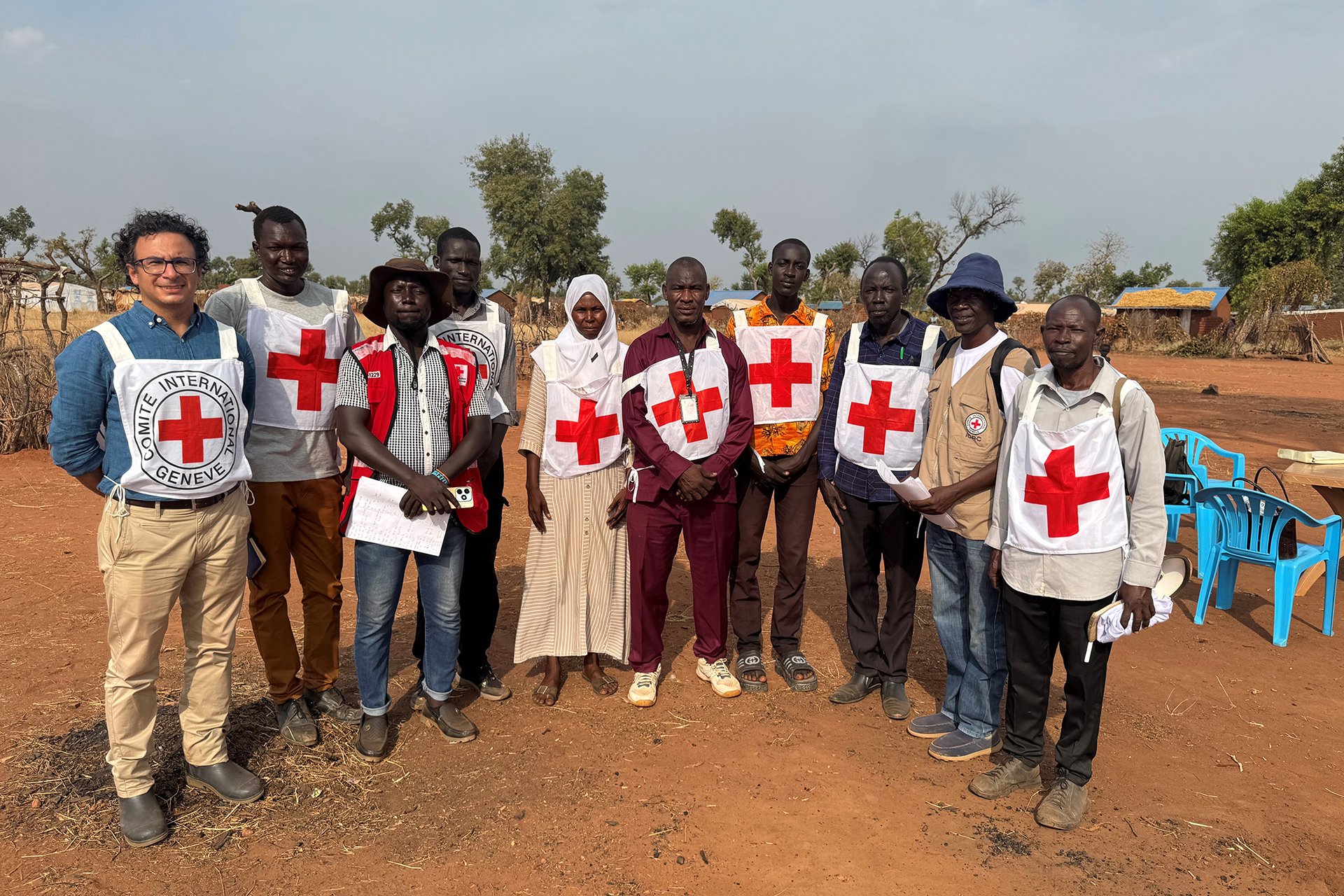
The number of people flocking to refugee camps in South Sudan because of the war over the border exposes a fact that isn’t widely spoken about: Sudan is currently experiencing one of the most acute and complex humanitarian crises globally. Because of the war, Sudan and neighbouring countries are also experiencing economic collapse and disease outbreaks, resulting in severe shortages of vital resources such as medicine, fuel, food and water.
“It's a forgotten international humanitarian crisis, even though it’s one of the biggest in terms of the scale, and in terms of the number of people who have been internally displaced or who have had to flee the country,” acknowledges Hakim. This is why it's so important for Red Cross to be there, he says. And while the extent of the crisis is overwhelming, with each phone call made, family tracing request opened, and person supported, Hakim and his team can make a difference to the lives of those who have lost almost everything.
“We will keep following up with them and support them in other ways, like providing mental health and psychosocial support as well,” says Hakim of the support Red Cross provides those who are searching for family. “And vulnerable cases like a single mother with lots of kids or a sick person – we can also provide them with cash assistance to buy the things they need [and] refer them to other organisations if what they need is not provided by Red Cross.”
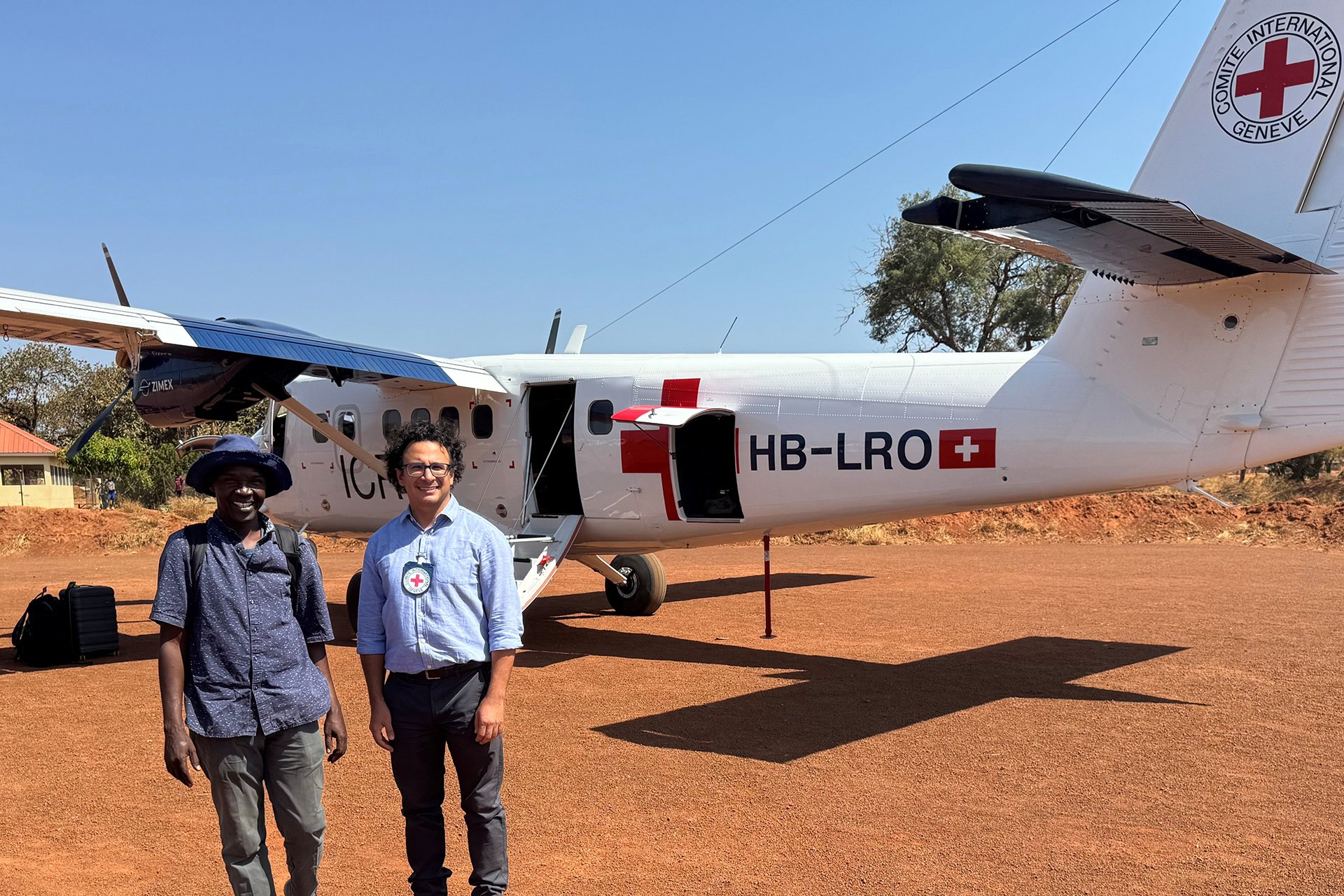
He leaves Renk having sat with many people, hearing stories of their loss and pain. But he also heads back to Juba knowing he’s helped to connect people with missing loved ones - family members they lost while fleeing violence, not knowing whether they would ever see or hear from them again.
“You see how they are crying out of happiness, that they finally managed to hear their voice on the phone, and they’re still alive. That’s a great moment I always like. And it was just a phone call. But for them, it’s everything.”
To help those impacted by the conflict in Sudan and other international crises and disasters.
ICRC 2025^ & Australian Red Cross 2023*

Red Cross pays our respects to the Aboriginal and Torres Strait Islander custodians of the country where we work, and to Elders, past, present and emerging.
Learn about our Reconciliation Action Plan and how we can all make reconciliation real.
This website may contain the images, voices or names of people who have passed away.
© Australian Red Cross 2026. ABN 50 169 561 394