

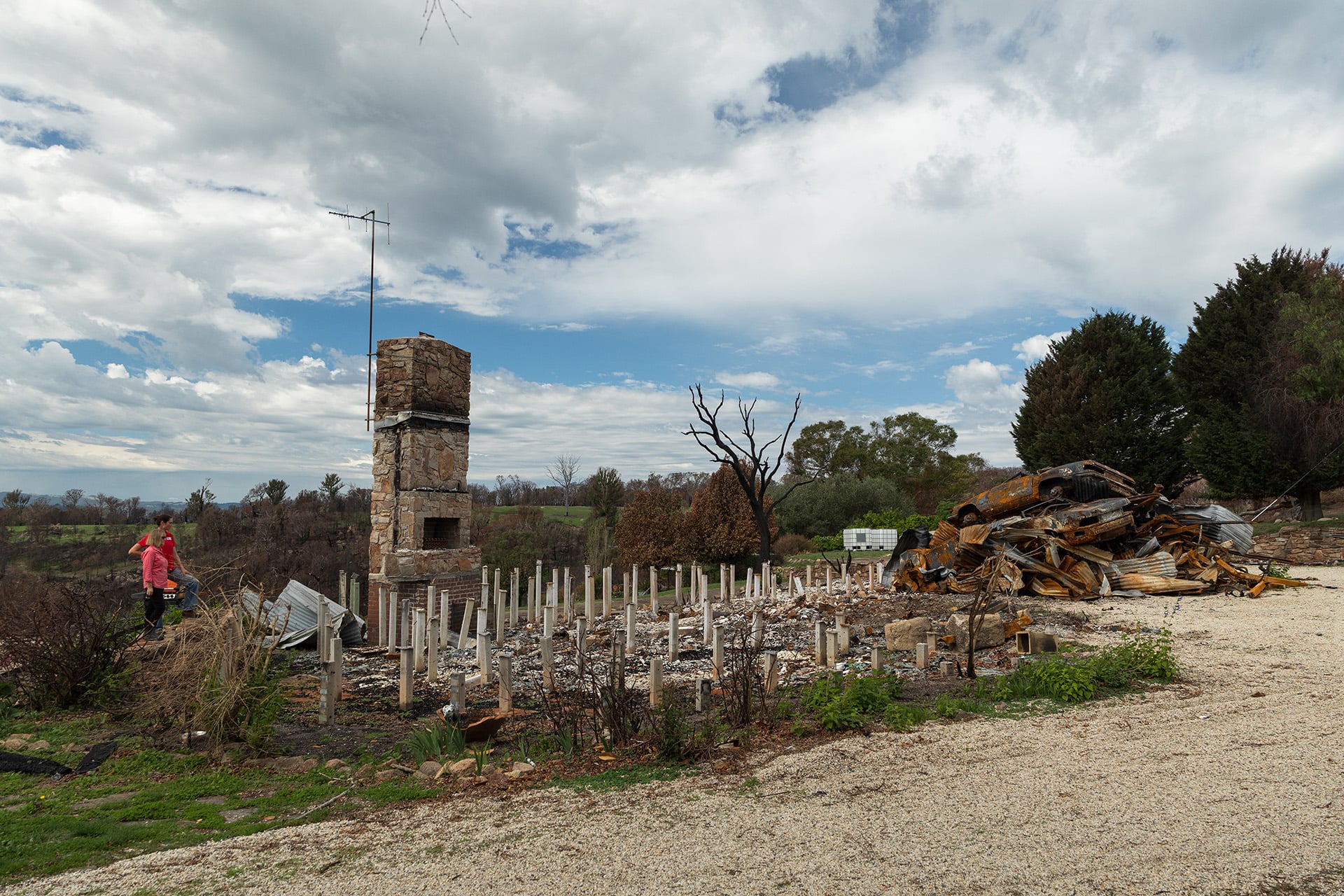
Three days after the Longwood bushfire burned through the small community of Ruffy in January, Lee and her husband John returned home to their property of 25 years.
“We pretty much knew, but you always hope, maybe by some miracle it’s jumped over your place,” says Lee.
But their home hadn’t survived the blaze. All that remained was the brick chimney, parts of the vegetable patch and, remarkably, their 28-year-old Shetland pony Mr. Pickles.
“We've all seen those photos of a house with just the chimney standing. And you think, ‘my god, how do those people feel?’ I know how they feel,” she says. “They’re heartbroken.”
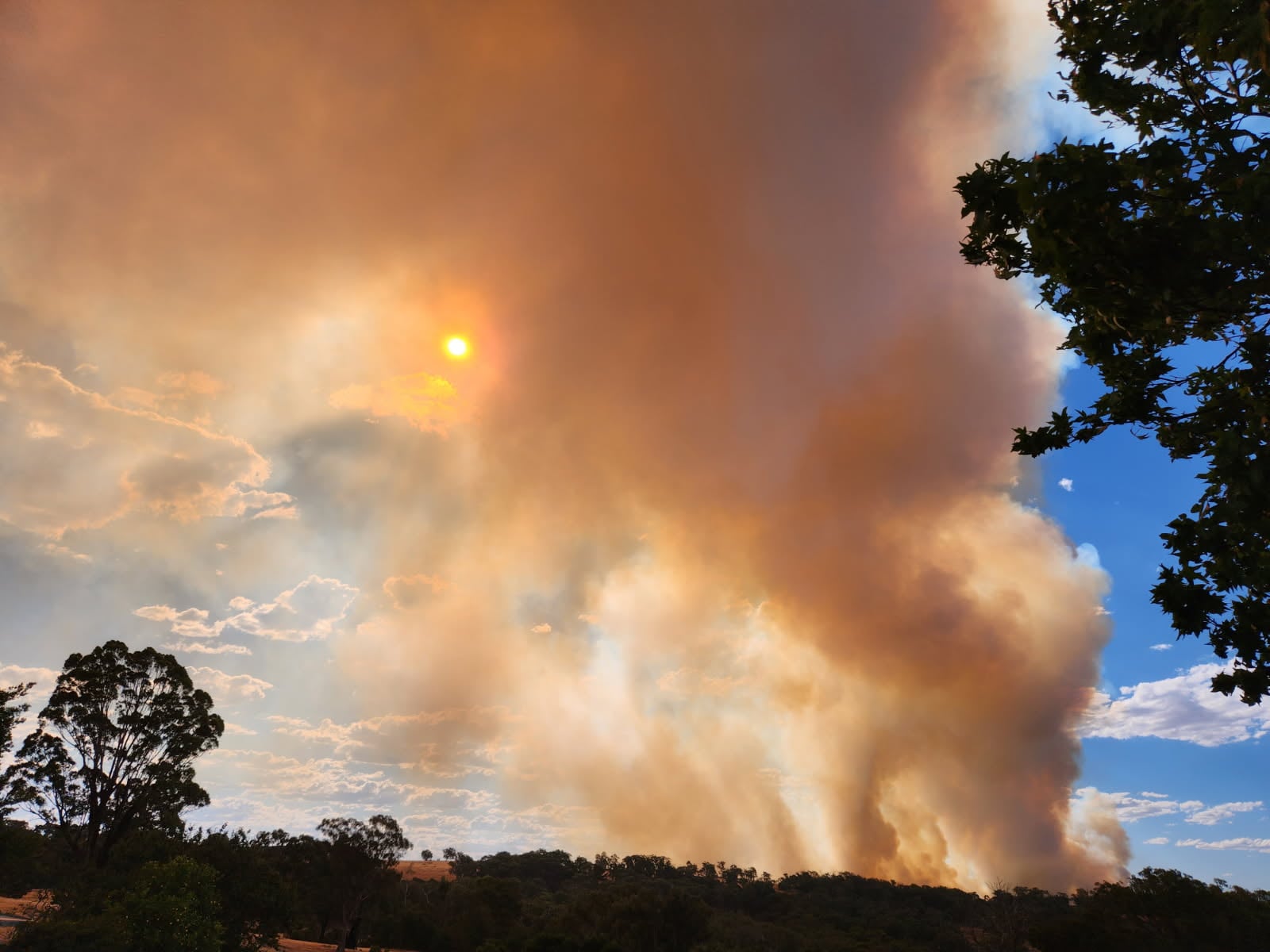
In January 2026, several fires tore through the state of Victoria, burning over 400,000 hectares and destroying up to 1600 structures in total. Lee and John’s home was lost in the Longwood fire, which started in mid-January and burned for nearly two weeks. Ruffy was among the hardest hit areas, with over 43 homes reduced to rubble in the space of a weekend.
“You're devastated because it's your memories, your treasures and all your hard work is just gone,” says Lee.
“Having spent nearly 25 years here, of course, there’s been so many celebrations, parties, weddings – you name it. It's been a very special place for a lot of people. So yeah, it was devastating to see what it was reduced to.”
Those first few days and weeks were a blur. Without the structure and routine that comes with managing a working farm, Lee and John navigated decisions – where to stay, how to get fences back up – while feeling overwhelmed with grief and loss.
“You're brought back down to base. You haven't got anything anymore. But John and I, were still alive. And as one of my grandchildren said, ‘Nanny, we could build a new farm, but we can't build a new Nanny and Grandpa’. So that's true.”
Once a quaint tree-lined street with cafes and an old schoolhouse, the only buildings left standing in the Ruffy township were the fire station and the community hall. In the immediate aftermath of the fire, a group of locals came together and set up a relief centre inside the hall. They cooked meals, handed out essential supplies and created a place for people to simply be.
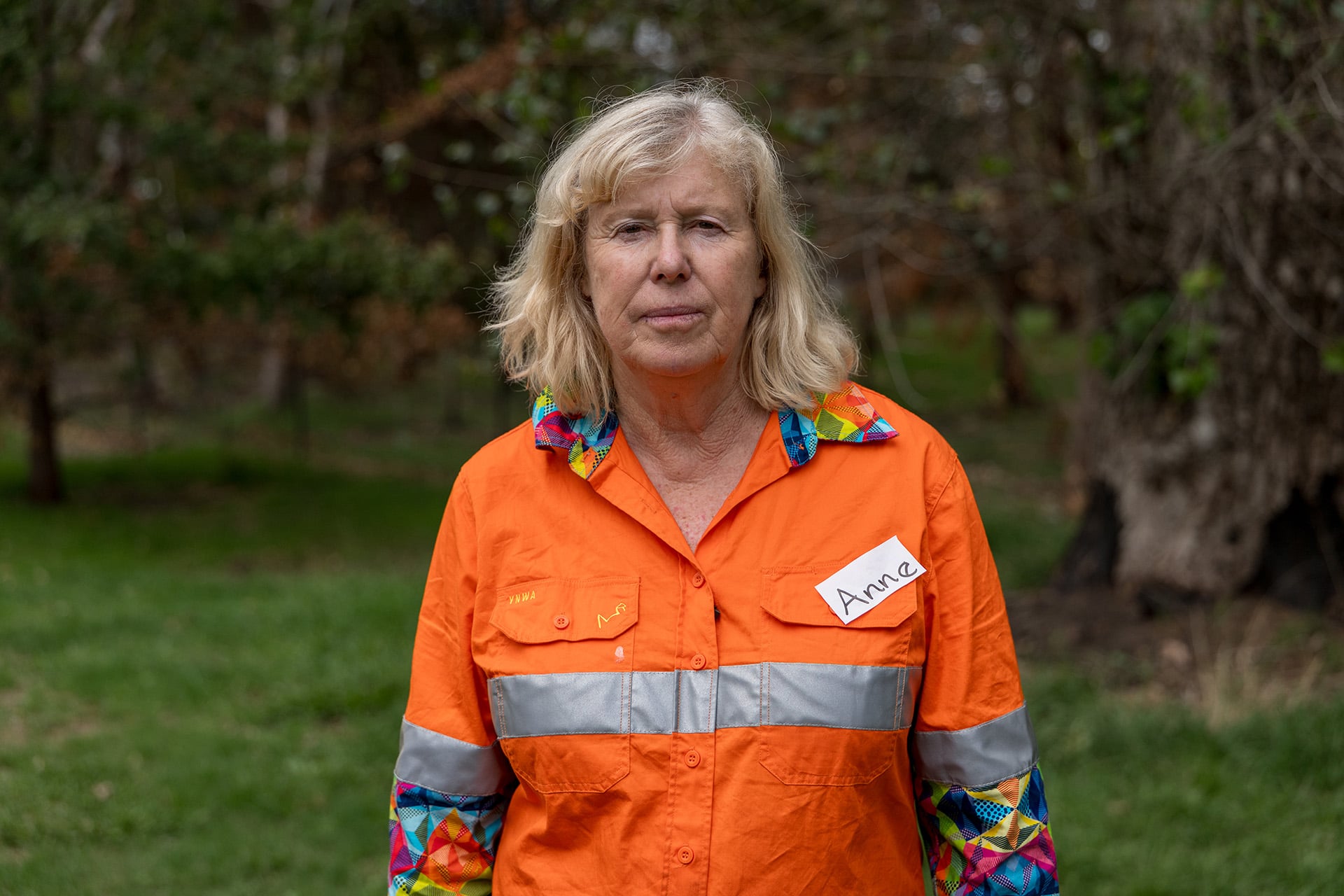
“After the initial fire, the hub was operating within a couple of days,” says Anne, a local who was among those running the hub.
“People came together, bringing in what they could for the people that had lost their homes, because a significant number of people have lost their homes in this area.”
Run by locals who know their community best, the hub became a lifeline for people who didn’t know where to turn; a steady presence when everything felt uncertain.
“We made sure that it’s a secure, safe space,” Anne continues. “A lot of people sat in the tables and chairs, found a quiet spot down the back. Then they'd just go off again. They'd keep coming back, though. That was the important thing.”
Lee and John visited the community hub a number of times in those first weeks. “It was a good thing to do because everyone was just suffering,” Lee recalls. “Just to hug and cry and just look at each other and think, ‘how are we going to get through this?’”
It was at the hub that Lee and John first met Australian Red Cross. “John and I were probably just sitting there and Lea from Australian Red Cross came over and introduced herself to us. She asked us what our story was, and of course, she could see the vulnerability of what we’d been through. She gave us a cuddle, and she wasn't in any way forceful. She was just there to listen to us.”
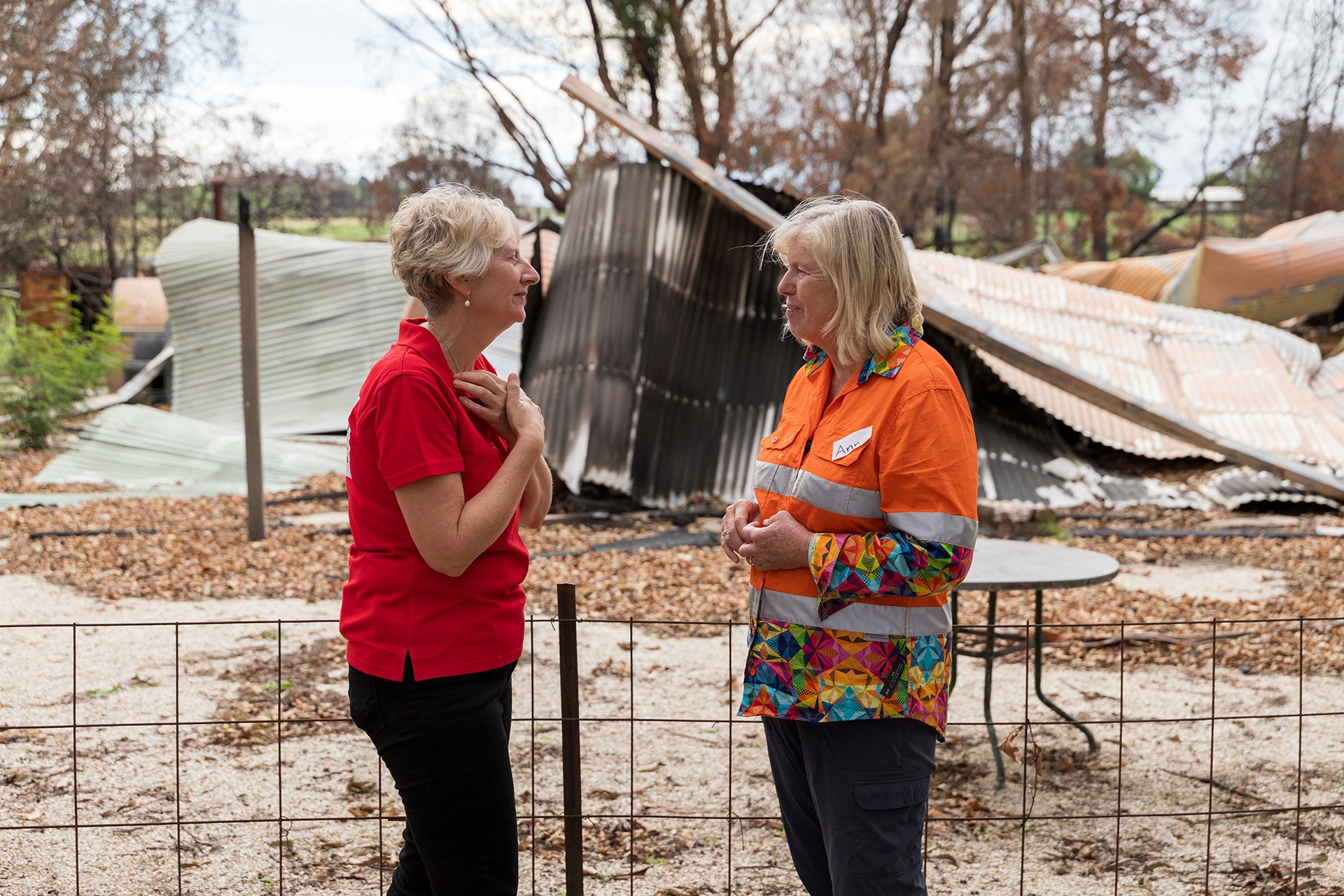
When Australian Red Cross arrived at their property to offer emotional support while the local council carried out an impact assessment – where the extent of damage is evaluated to assist with the planning of clean-up efforts – Lee was comforted to see Lea’s familiar face.
“Australian Red Cross volunteers play a really important role [during impact assessments], because they will be with those residents as they’re going through that process with the council, which can be incredibly confronting,” says Australian Red Cross emergency services volunteer Jessica, who arrived in Ruffy the day after Lea.
“Just to be there with people to provide that reassurance and emotional comfort,” adds Jessica. “It’s the human-to-human connection with people through these processes that’s so important.”
Across Australia, Red Cross staff and volunteers have spent over five times as many hours on the ground this summer compared to the previous summer, reflecting an increasing need for wellbeing support as disasters become more frequent and severe.
During the devastating January 2026 bushfires in Victoria, 180 Australian Red Cross staff and volunteers spent approximately 3,896 hours on the ground – a figure that continues to grow as our long-term support in these communities expands.
With extensive experience in bushfire recovery, Jessica has seen what it takes for a community to recover with strength and a sense of togetherness. Rather than being dictated by external agencies, what the strongest recoveries have in common is they’re led by the community itself.
“Encouraging and supporting a community-led approach to recovery is key,” says Jessica. “It’s very important the community stays strong and can set its own goals and its own direction. It knows best what it needs to recover, and by walking alongside communities, Australian Red Cross is there to help that process evolve.”
That support isn’t one-size-fits-all. It’s shaped alongside the community and can range from connecting people with services to helping relief hubs evolve into longer-term support structures. It also includes offering wellbeing support to leaders, who are often carrying the weight of other peoples’ experiences as they process their own.
“People who are supporting other people can unfortunately be subject to vicarious trauma – if you're hearing other people's stories of grief and loss, it's almost as though you're going through it yourself,” acknowledges Jessica. “One of the really great things Australian Red Cross can do is support those people who are supporting others. Sometimes, the most important thing we can do is remind them to take a break, step away for a moment and look after themselves too.”
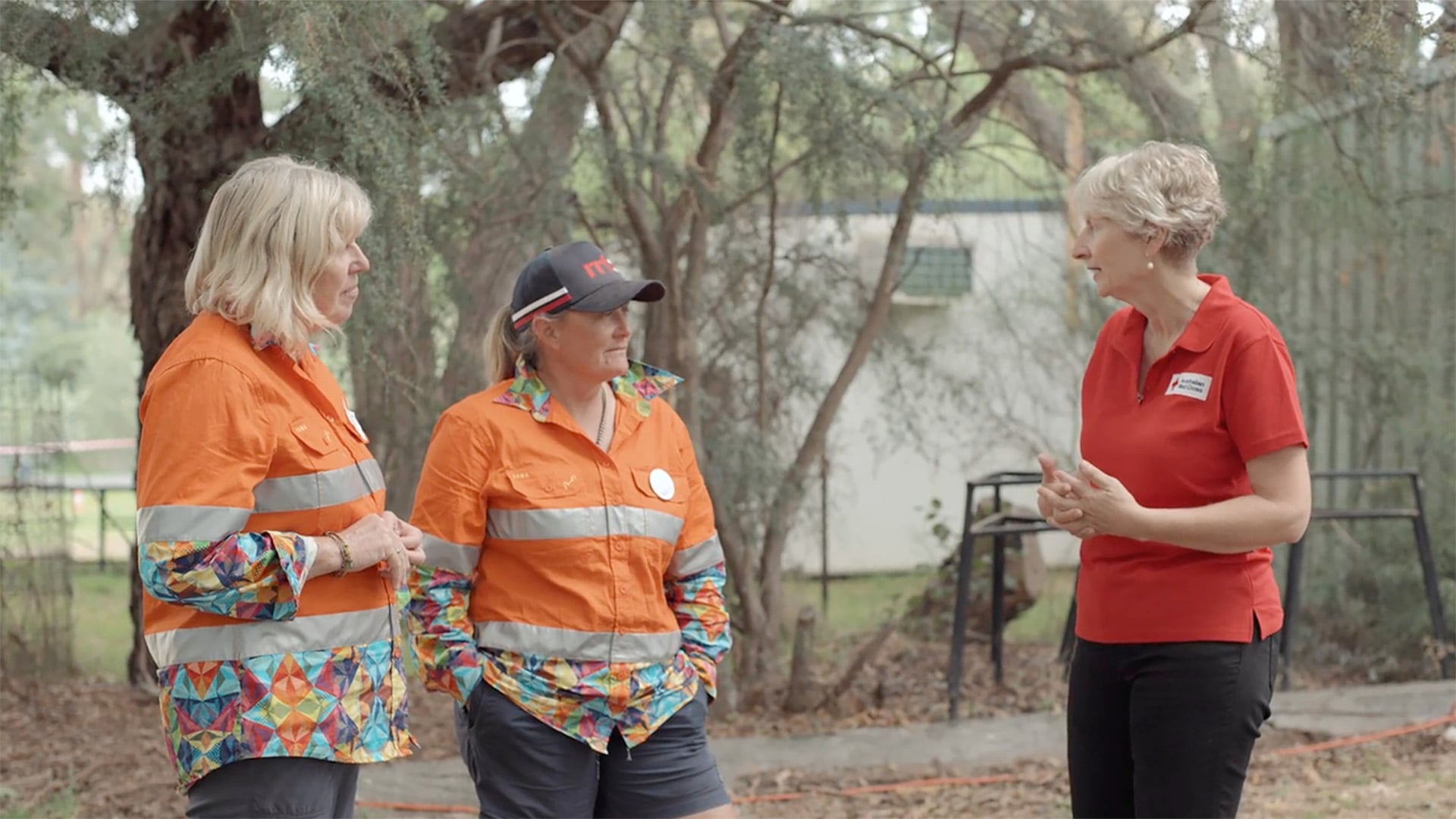
For hub leaders like Anne, who have been working tirelessly to support those who have lost so much, this support has provided reassurance at a challenging time.
“The team from Australian Red Cross have been very supportive,” says Anne. “They've reaffirmed that what we are doing is part of the process. That we are doing okay, that we are supporting the community, and we'll have those ebbs and flows. They've given us confidence in what we're doing.”
To make sure the needs of communities like Ruffy continue to be heard as recovery continues, across the next 12 months, Australian Red Cross will be visiting affected communities to meet with locals and understand what people need most. This allows communities to advocate for their own recovery priorities, while providing information that shapes crucial support from government agencies.
As the paddocks around Ruffy turn from black back to green, residents like Lee and community leaders like Anne are continuing to move forward. And while the future is uncertain, they know they’re not alone.
“I think everybody in Australia knows about the Red Cross,” says Lee as she reflects on the steady presence of Australian Red Cross, at both the community hub and her property. “I think it's just lovely that they are part of these communities and coming to give support and care and, should I say, love.”
Make a donation today.
How Australian Red Cross help reached people hit by disaster this summer
disaster-affected people were provided with psychological first aid
hours were worked by Australian Red Cross volunteers supporting 12 disaster responses across the country
fire-affected local government areas across Victoria will receive ongoing support from Australian Red Cross

Australian Red Cross acknowledges the Aboriginal and Torres Strait Islander peoples as the Traditional Owners and Custodians of this land, their ancestors and Elders, past and present.
Learn about our Reconciliation Action Plan and how we can all make reconciliation real.
This website may contain the images, voices or names of people who have passed away.
All donations to Australian Red Cross are tax-deductible in Australia. Site protected by Google Invisible reCAPTCHA. © Australian Red Cross 2026. ABN 50 169 561 394