

For many residents of a Northern New South Wales caravan park, a familiar feeling of unease sets in when the clouds gather and rain begins to fall. This is because the beloved holiday park, which is situated in a low-lying area near the border of New South Wales and Queensland, was hit badly during the record-breaking Northern Rivers floods of 2022.
“There’s a lot of PTSD in the park from it,” acknowledges Rachel, the park manager, who joined the park a year after the floods hit. “A lot of the homes went under. There was a lot of devastation. A lot of people lost everything and they're still recovering from that, getting back on their feet... the community has been on a real healing journey.”
When those storms arrived in 2022, the park's 114 residents had little time to prepare. They did their best to save what they could before they were forced to leave; locals in kayaks helped them to reach dry ground as the water continued to rise. Those who made it out in time sought refuge in nearby evacuation centres while other residents sheltered in the park’s recreation room for days, living off food and drinks from the vending machines.
For Linda, February 2022 is a time she’ll never forget. Born in nearby Tweed Heads, she’s lived at the park with her son since 2018. “It was like a tidal wave; it just came from the ocean and the ocean met up with the river, and we’re right in between that at the park,” she recalls. “The gentleman two doors up from us got us in a canoe – three cats, my son and I – and he took us through the park. The water was just like rapids.”
For 10 days, they sheltered at a nearby evacuation centre and waited for news of when they could return home to survey the damage.
“I got to the front door, and I just lost it. I just had a nervous breakdown. I couldn't do it. The whole place was just mud everywhere,” says Linda. “I lost every single thing that you could possibly need in a house,” she adds. “Before the 2022 flood, we had no plan... so we lost everything. We had no paperwork, no birth certificates, absolutely nothing.”
“It tore the community to bits,” adds Rachel. “A lot of people left in fear, some just couldn’t move back into their homes.”
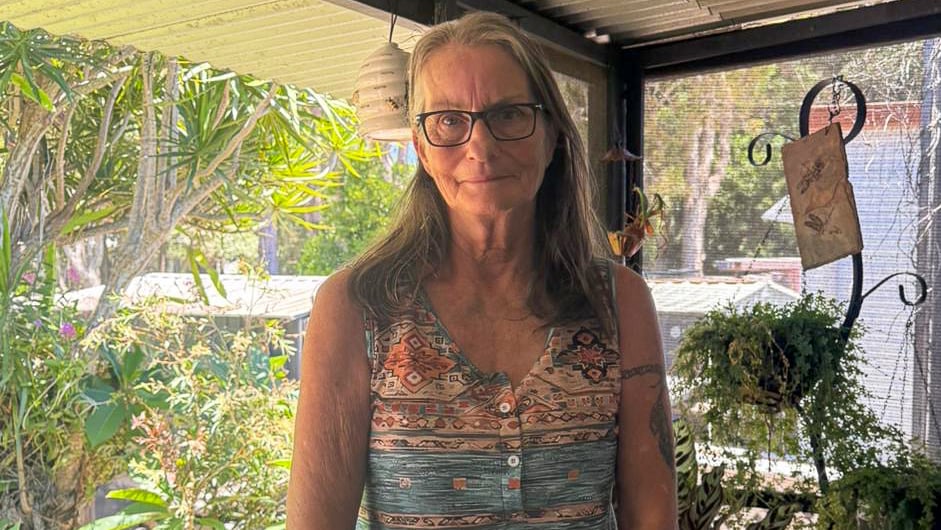
As Linda and her neighbours began to rebuild, they were offered the support of Australian Red Cross, which had set up alongside other emergency services in the hall across the road from the park. It wasn’t the first time Linda had seen Red Cross volunteers handing out supplies and helping those in need: “I went through the 1974 floods in Brisbane, and the Red Cross was coming around in a little dinghy, giving everyone tetanus shots because of how dirty the water was,” she remembers.
Australian Red Cross was there offering practical and emotional support to the residents of the holiday park in the days and weeks following the floods, but our support didn’t end there. When the immediate devastation subsided in October 2022, Red Cross worked with the park to establish its own Community-led Resilience Team (CRT) with Australian Red Cross training and support.
A practical, grassroots way for communities to prepare for, respond to, and recover from emergencies together, the CRT model was developed by Australian Red Cross in response to the devastating floods that hit the Northern Rivers after Tropical Cyclone Debbie in 2017. Recognising the crucial role community connections play in building community resilience, CRTs empower residents to identify their own preparedness priorities and develop bespoke communication networks that can be activated during emergencies, while identifying the best ways to support each other throughout the recovery journey.
Australian Red Cross works with CRT members to deliver tailored support and training, while linking the CRTs to local emergency service managers. Since 2017, more than 120 Community-led Resilience Teams have been established in Northern New South Wales, with over 35,000 people engaged through 565 Australian Red Cross CRT-run community activities between 2023 and 2025.
For the residents of the holiday park, which sits in a low-lying, flood-prone area, the CRT became a way to build back confidence in the wake of immense destruction and heartbreak, while fostering a greater sense of community among those who call the park home.
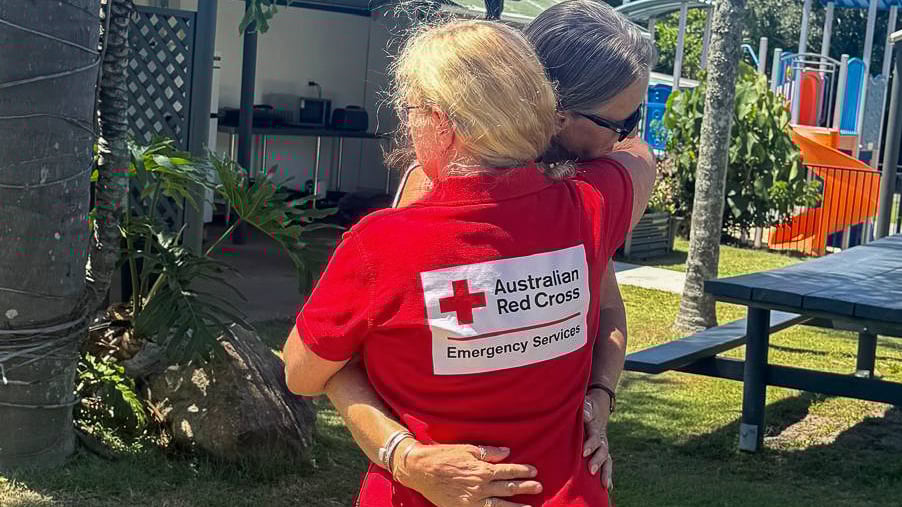
“What Red Cross has done in the past few years has been amazing. They make sure we’re ready for anything. They keep us refreshed with courses, and even three years down the track they’re still helping us to secure practical resources like lifejackets.”
Australian Red Cross also provided the CRT with A-frame notice boards displaying a QR code to the Register.Find.Reunite service – in the event of an emergency evacuation, residents can scan the code and register themselves as being safe before they leave.
“Red Cross also helped us to make an emergency map. They helped us identify who our vulnerable residents are, and we’re all connected by walkie talkies,” adds Rachel. “It's about keeping us in the loop, keeping the community talking and helping each other with our challenges. Now, there’s a sense of confidence that we have a plan.”
Linda is one of the park's eight wardens. She says training done with the CRT has given her the confidence needed to help her older neighbours when disaster strikes.
“The education Australian Red Cross has given us, and the support and help after the floods – I can't fault it, seriously,” she says. “It gives me a lot of confidence. A lot of confidence to be able to settle people down and say, ‘It's okay, it's all right, we're going to be okay’. I’m calmer in that situation now. I know how to approach it.”
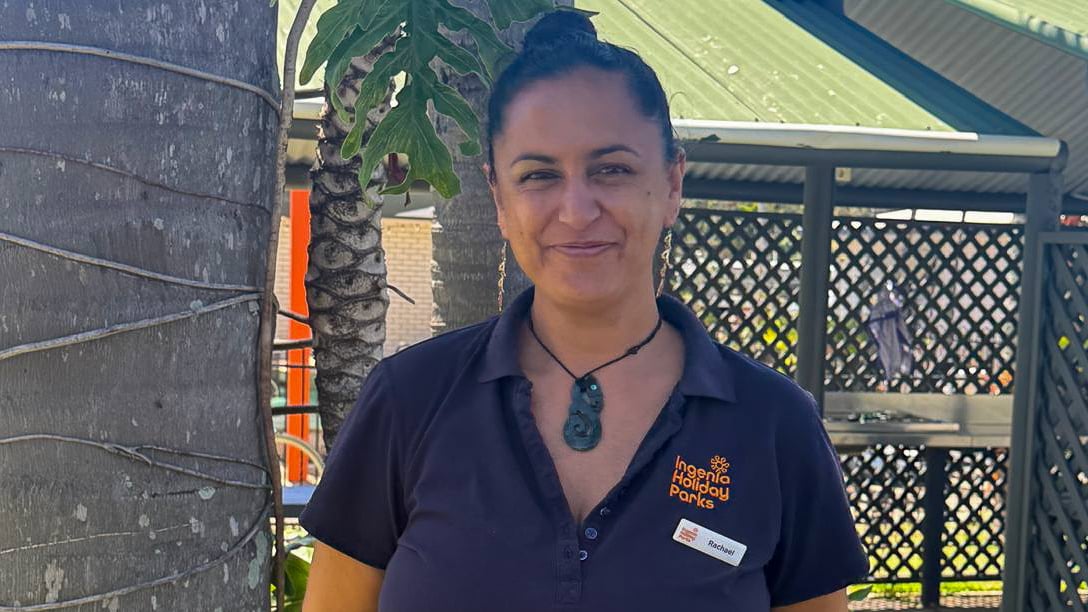
In early 2025, the holiday park faced the ultimate test. Cyclone Alfred was building off the coast, and the park was set to be impacted by heavy winds and rainfall. But instead of feeling frightened and unprepared, thanks to the resilience-building work they had done with Australian Red Cross, the residents knew exactly what they had to do to remain safe.
“We really pulled on the experience they had in 2022 and looked at the facts: what parts of the park didn't go under? If the cyclone was to blow anything away, what would that look like and where would we go?” Rachel explains.
“We were just ready. We were so prepared. We had all our generators going. We had power. We had gas so we could cook on the barbecues, and we set up a part of the park that didn’t flood in 2022 so there was a safe place for everybody if they wanted to stay.”
Just like they learned in the Australian Red Cross training, the residents “used the resources of the park and bound together”. “Our plan is specific to the area, specific to our residents, and specific to their experience in 2022,” says Rachel, highlighting a core component of the CRT model – every CRT’s emergency plan is tailored to the needs of the community.
“We made it happen and we got through, and we came out the other side really strong.”
“I was calm as anything,” says Linda of the difference working with the CRT made to the way she responded to the approaching cyclone. “For a lot of people, some PTSD flared up when they heard the cyclone was coming. But the training we did with Red Cross taught me to just talk to them in a calm voice, just be calm. We have a good structure. We have a plan in place.”
As the cyclone passed, not only was physical damage kept to a minimum – the emotional impact on residents was far less severe. “People just had peace of mind that someone had their back. They didn’t have to fend for themselves. And we knew that if anything went wrong, we [had the support of] Australian Red Cross,” says Linda, adding the work they’ve done with Australian Red Cross, including social events aimed at helping residents connect and get to know each other, has “brought the whole community together – everyone knows everyone now.”
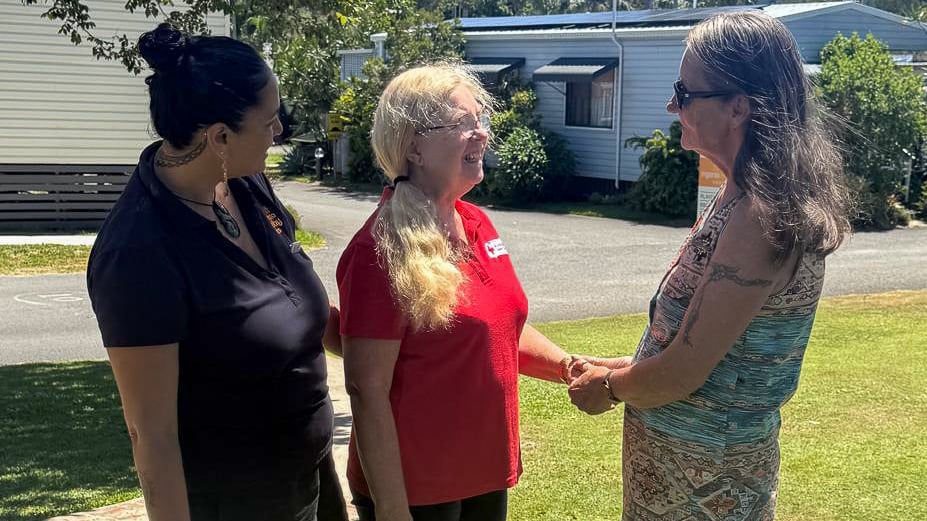
“What I feel now is resilience,” adds Rachel. “I can see that change in the residents. They’re strong. And they’ve really reshaped who they are – who we are as a community.”
When heavy rain is forecast these days, Linda, Rachel and other members of the holiday park CRT take the opportunity to connect with those who still experience feelings of anxiety. “Me and my children will cook a batch of biscuits, and we’ll drive around and go and see the ones that we know are not going to be doing well in that situation,” says Rachel.
“I'll just go down and sit with them and say, ‘it's all right, it's okay, everything's good.’ I'll check their house and make sure everything is tied down. I give them the list of contacts that they can ring for emergencies, which I got from Red Cross,” explains Linda.
“I just think it just made us stronger,” says Rachel with a resilient smile. “You can’t look back, right? You’ve got to just keep moving forward, keep growing, keep healing – that's where we’re at.”
* CRT Workshop Participants Survey, July 2023 - September 2025, n=1519
If you’d like to request a CRT workshop, form a CRT in your community or ask any further questions, contact us at nswcrt@redcross.org.au.

Australian Red Cross acknowledges the Aboriginal and Torres Strait Islander peoples as the Traditional Owners and Custodians of this land, their ancestors and Elders, past and present.
Learn about our Reconciliation Action Plan and how we can all make reconciliation real.
This website may contain the images, voices or names of people who have passed away.
All donations to Australian Red Cross are tax-deductible in Australia. Site protected by Google Invisible reCAPTCHA. © Australian Red Cross 2026. ABN 50 169 561 394