
Sabrina still struggles to recall the exact events of the day bushfires destroyed her family’s home and property on Kangaroo Island. “It was a blurry period of my life,” she says. “A lot of days and moments have merged together.”
But she does remember hugging her husband goodbye as he stayed to defend their farm on the remote western end of the island, in tears as she drove her two children and three dogs to the main town of Kingscote. When she arrived, she realised others from the community had found themselves in a similar state.
"Many of the women that had escaped with their children probably assumed that they were going to be widows the next day, me included,” says Sabrina.
Growing up in Germany, bushfires weren’t a disaster Sabrina thought she’d ever have to face. “I was as unprepared as they come,” she admits. But that summer, as she watched news reports of fires burning through Victoria and New South Wales, Sabrina began to feel like it was something she needed to prepare for. That threat became harder to ignore when fires sparked in the nearby Flinders Chase National Park.
“It was a really hot, eerie season,” Sabrina recalls. “Every day felt uncertain.”
The day they evacuated, Sabrina packed what she could and bundled her kids into the car. As she drove away from her home, she realised she’d forgot to pack a bag for her husband. “And I didn’t know if I’d ever see him again,” she says. “That period of not knowing… that’s what stays with you. Your mind just goes everywhere.”
Thankfully, her husband survived, but everything else was gone. Their home, sheds, livestock and beloved bee hives. Ninety-six percent of the national park burned. The toll on native wildlife was immense. In front of Sabrina and her young family lay a long and challenging road to recovery.
The day after the fire, Sabrina walked into the local emergency relief centre. She didn’t know what to expect. She had never needed help like this before. “When you walk into a place like that, you don’t know what you need,” she says. “You just feel lost.”
“The very first people I met were two Australian Red Cross volunteers,” she says. “They were standing at the door... When I saw Australian Red Cross, I instantly felt safe.”
The volunteers greeted her with warmth and steadiness, as they began to guide her through what came next. They handed her a care pack filled with essentials she hadn’t thought to bring – a small gesture that said someone had thought about her and what she might need, and that they were here to help.
“It felt like a warm hug without receiving a hug,” she says.
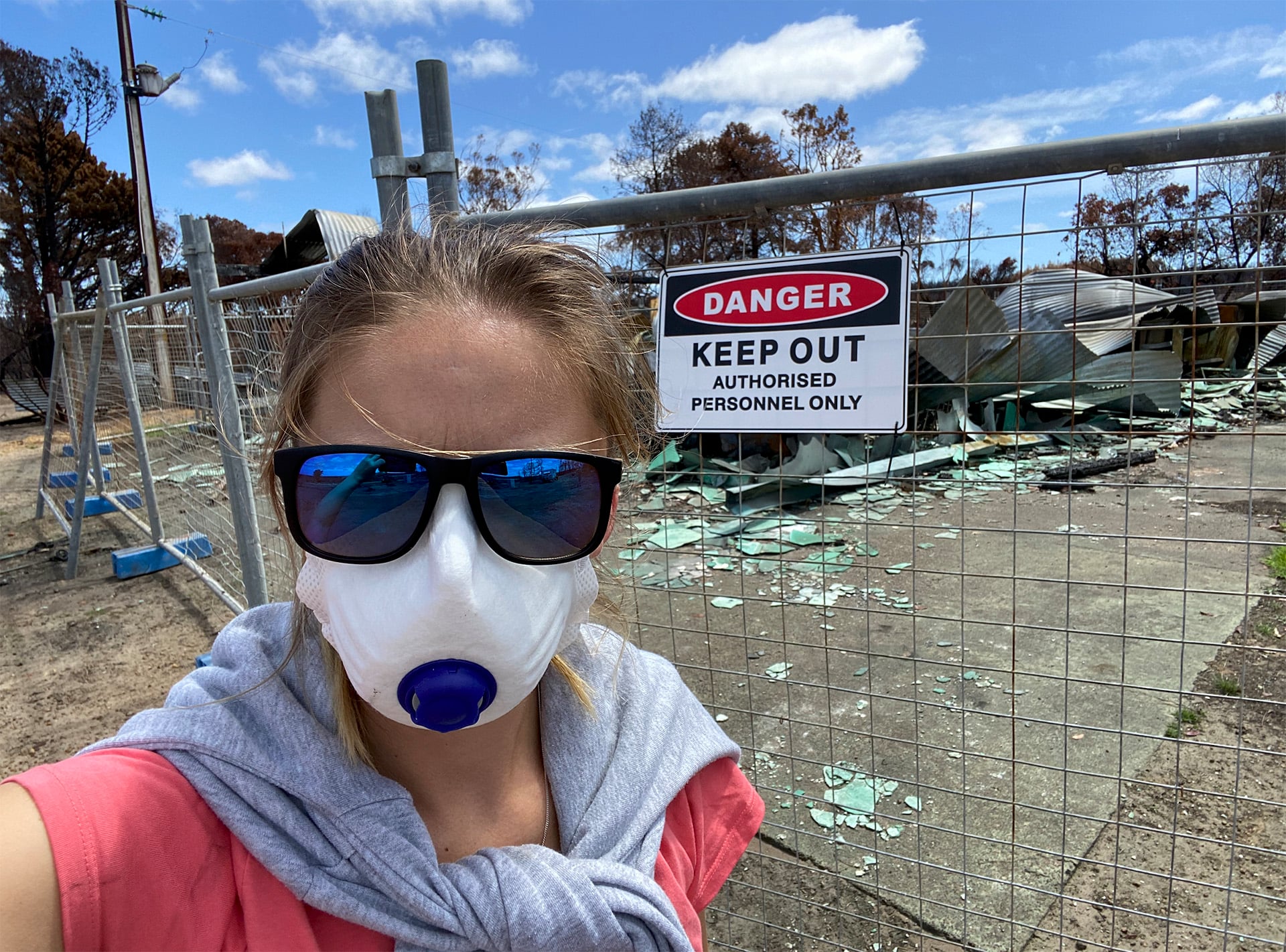
In the months and years that followed, as the news headlines moved on, that steady presence and sense of support didn’t go anywhere. An Australian Red Cross Disaster Recovery Officer – who was also local to the area – remained on Kangaroo Island, supporting the community to recover in ways that worked best for them.
“The Disaster Recovery Officer understood without having to say the words. He would understand if you didn’t want to talk about it; he understood what worked for you... it was different to any other service, because he just got it.” says Sabrina.
Sabrina had already become an unofficial community leader, organising BBQs and mental health conversations, running fundraisers and becoming the spokesperson for the local farm firefighters, all while rebuilding her farm and home. As time went on, she felt a pull towards sharing her experience in ways that could support others going through a similar thing.
“You've seen things you weren’t aware of before, and you can’t unsee them,” she says. “I wanted to make sure that the experience I had, as terrible as it was, wasn’t useless. I wanted to help others with what I had learned.”
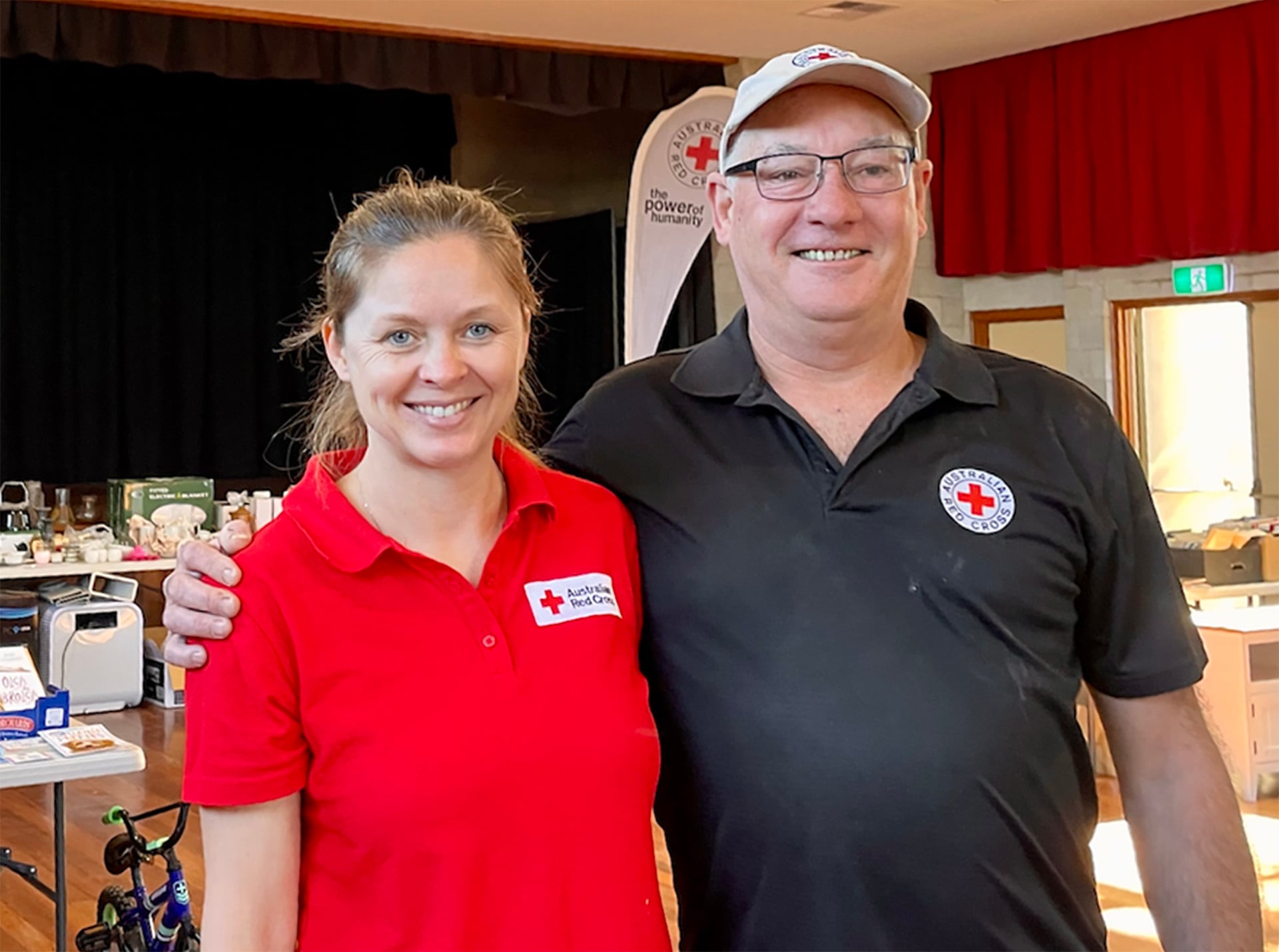
As she moved forward, what stayed with Sabrina was the warmth of the volunteers who greeted her at the relief centre, and the steady, collaborative support that followed.
In June 2023, she began volunteering as a Disaster Recovery Mentor, part of an Australian Red Cross-coordinated program made up of people with lived and professional experience who support communities as they find their way through recovery.
One year later, she joined Australian Red Cross as a full-time Disaster Recovery Officer. Working alongside the very organisation that had supported her community for such a long time, Sabrina felt like she could apply what she had learned in ways that made a difference.
Another of the most profound lessons of Sabrina’s experience was how deeply preparedness can shape recovery. Recently, she moved into the Australian Red Cross Resilience Team, where her work focuses on helping individuals and households prepare for emergencies before they happen. From delivering workshops to developing accessible resources, Sabrina works to ensure more people feel equipped to face uncertainty.
“Preparedness isn’t just about packing a bag,” she explains. “It’s about preparing your mind – understanding how you might feel, and how to respond... Preparedness saves lives.”
But beyond the practical, Sabrina has seen how preparation can also build connection. She’s seen how communities that prepare together recover better. On Kangaroo Island, where just 4,500 people live across a vast landscape, those connections became the foundation for recovery.
“We were already close,” she says of her community. “But after the fires, we became even closer. Connected communities don’t have to rely on external support forever. They know they have each other.”
“Recovery is a long journey,” she says. “Emotionally, it took us years.”
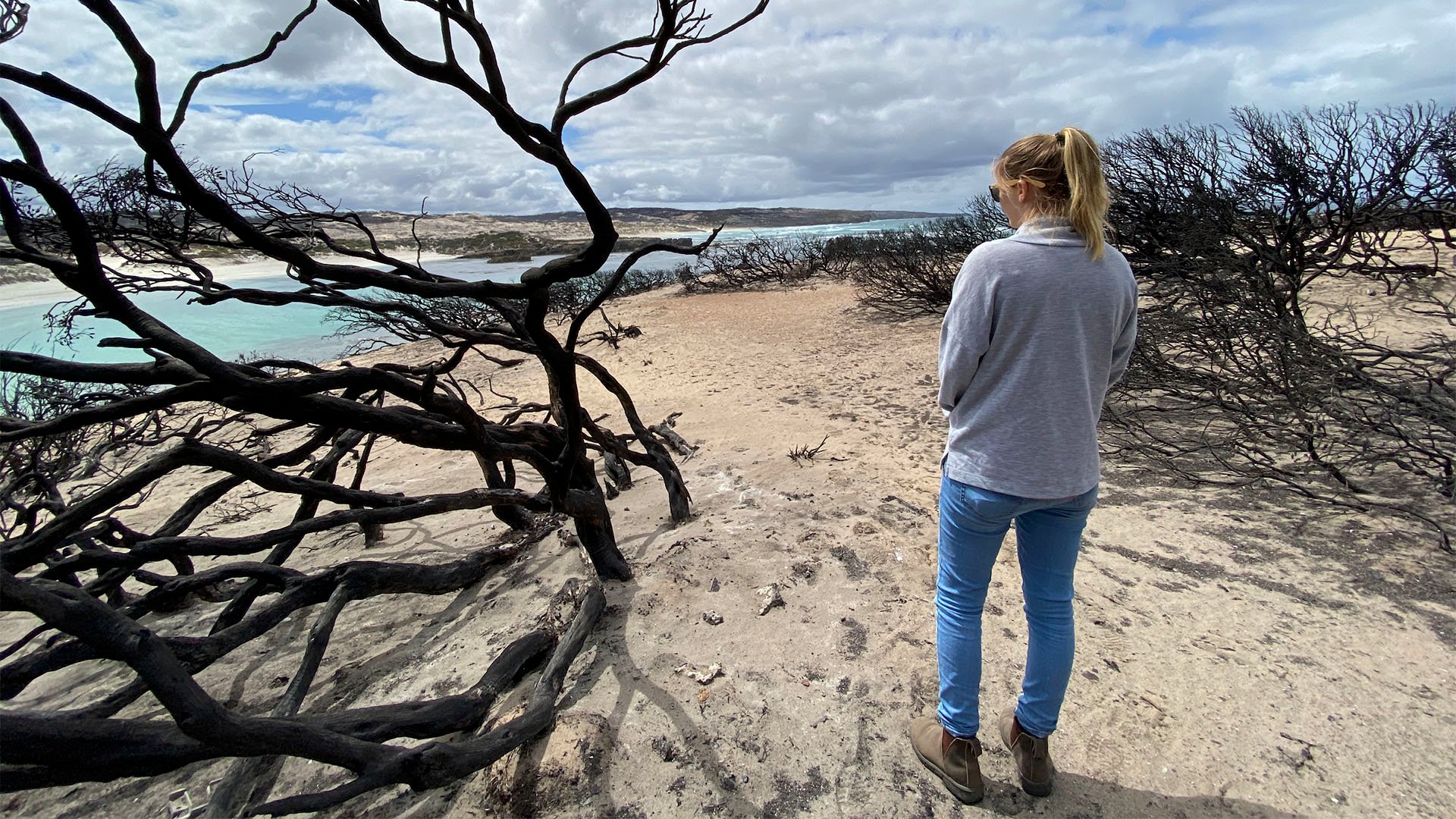
Six years on from the fires, and Sabrina is still recovering. She’s no longer rebuilding what was lost in a physical sense, but the emotions still linger.
Meanwhile, what began with receiving support from Australian Red Cross has come full circle, as she works alongside those who were there for her, helping others be ready for disaster when it strikes.
Between August 2025 and March 2026
disaster-affected people were supported by Australian Red Cross.
disasters nationwide were responded to, from floods to bushfires, storms and cyclones.

238 days were worked by our Emergency Services volunteers in areas of disaster across the country.
Make a tax-deductible donation before the end of the financial year.

Australian Red Cross acknowledges the Aboriginal and Torres Strait Islander peoples as the Traditional Owners and Custodians of this land, their ancestors and Elders, past and present.
Learn about our Reconciliation Action Plan and how we can all make reconciliation real.
This website may contain the images, voices or names of people who have passed away.
© Australian Red Cross 2026. ABN 50 169 561 394