

For weeks, a wagon packed with essential items and cherished belongings has sat by the door of Bec’s family home on South Australia’s Yorke Peninsula, ready to be loaded into the car at a moment’s notice, as a stretch of high fire danger days keeps the family on high alert.
“It’s a harsh reality, and I honestly dread preparing, but I know it’s necessary,” says Bec, who is a mother of three. “Unpacking is sometimes the hardest part – seeing what we consider necessary for survival and comfort is a reality check.”
This process of packing and unpacking is something Bec and her family have had to go through multiple times over the years. They live in a farming district where paddocks dry off in the summer, and catastrophic fire weather is common. In 2019, a grassfire sparked by a power network fault came frighteningly close to the family’s sheep and crop property, forcing them to evacuate.
Bec grabbed what she could before bundling her kids into the car and leaving. She anticipated they’d be gone a few hours, but they couldn’t return home for days.
“I hadn’t thought to grab my kids’ precious teddies, pyjamas, drink bottles and soft blankets. It hadn’t crossed my mind until we were in such a precarious situation, that they would be distraught having left them behind,” says Bec. “To my children, those things felt irreplaceable and safe. Not having them caused trauma and anxiety.”
Thankfully, they returned to find their home and property unscathed, but the emotional toll of such a close call stayed with Bec and her children long after the fire was brought under control. “We still have our triggers,” says Bec, noting faulty power lines in the district are a continued source of anxiety for many, especially on high fire danger days. “It can be all consuming.”
After the 2019 fires, which damaged 11 properties and burned through 5000 hectares, an Australian Red Cross Recovery Officer was based in the Yorke Peninsula, supporting the community to recover and move forward together. Alongside the resilience-building activities Australian Red Cross held in the area, a Pillowcase Workshop was identified as something that could help local children process the fire while teaching them how to prepare for future disasters.
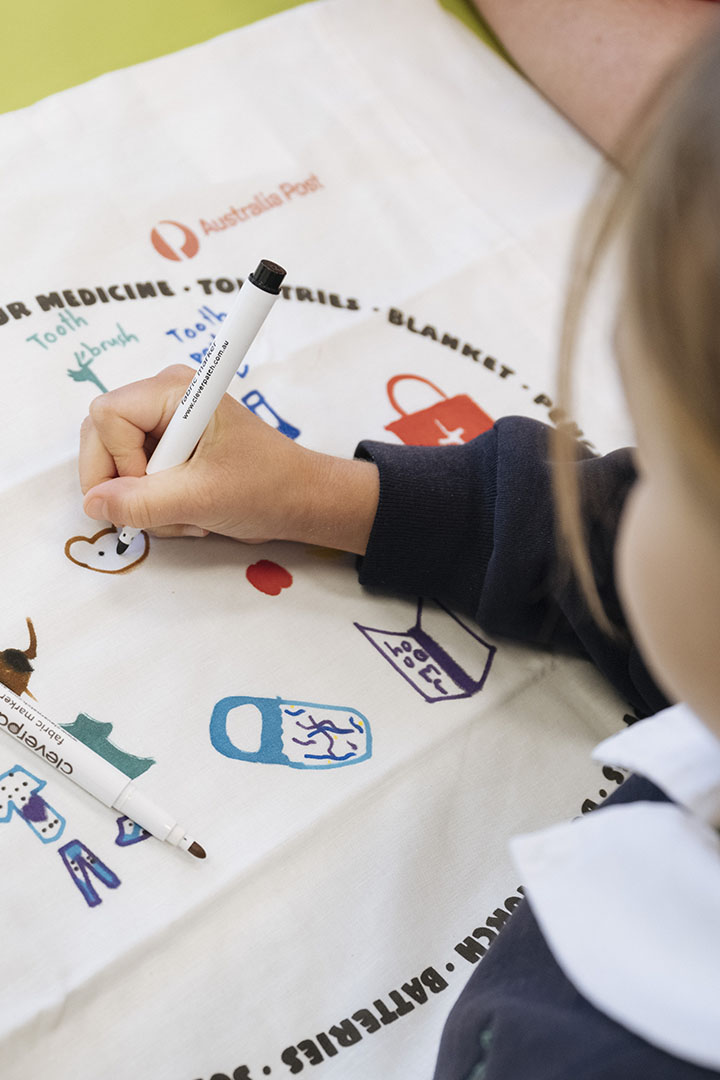
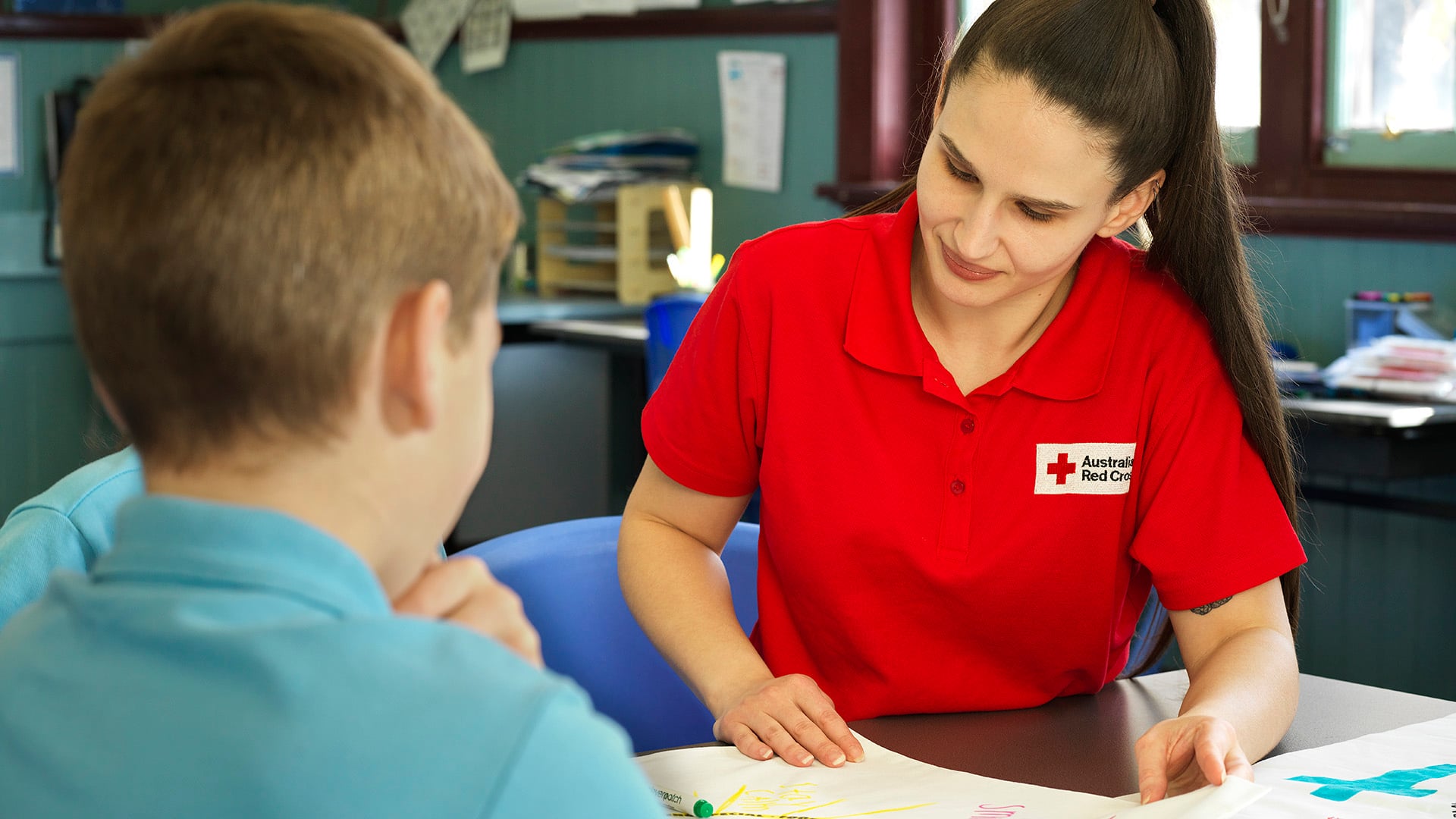
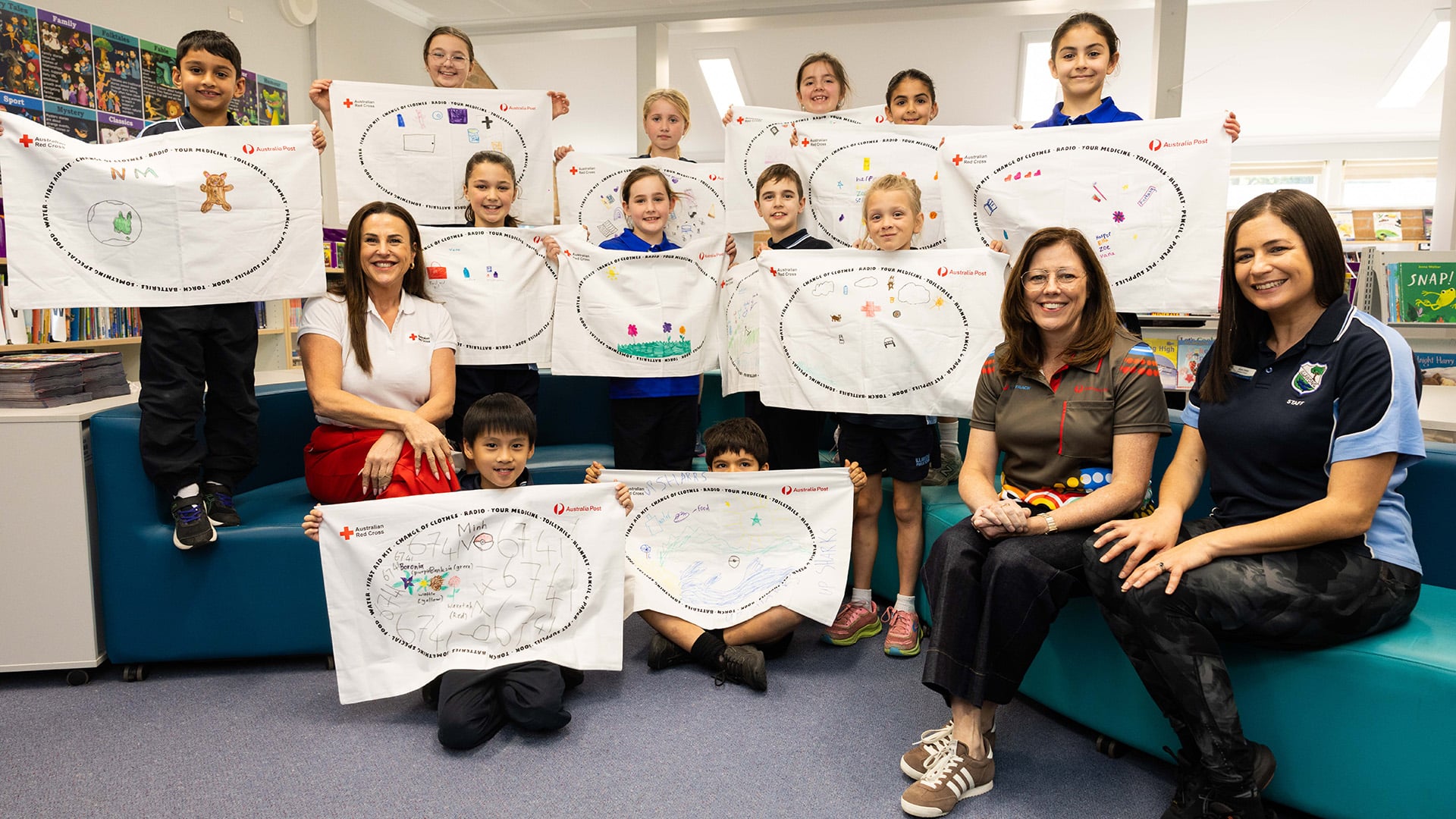
Since 2015, Australian Red Cross has been delivering Pillowcase Workshops in schools across the country, with a special focus on regions that are prone to disaster. The workshops are delivered with the support of Australia Post. In the workshops, grade three and four students learn how to prepare for, cope with and respond to emergencies by focusing on both mental and practical strategies, including a breathing exercise called Breathing with Colour, which can be used to stay calm and present during a disaster.
Students also decorate a pillowcase with the things they’d take if they had to evacuate, which becomes their personalised emergency kit.
“Kids this age can be the ones that really get these conversations about emergency preparedness started in families,” says Joanna, an Australian Red Cross volunteer who has been facilitating Pillowcase Workshops since 2019. “In the workshops, children get the opportunity to take some responsibility by packing their own emergency packs. And the learnings they take home and talk to adults about are really important when it comes to building preparedness.”
In 2020, Bec’s daughter took part in the Australian Red Cross Pillowcase Workshop that was held at her school, decorating her case with special belongings, including those they’d forgotten to take in the 2019 fire. When she got home that afternoon and showed her siblings what she’d created, they asked if they could make their own pillowcases.
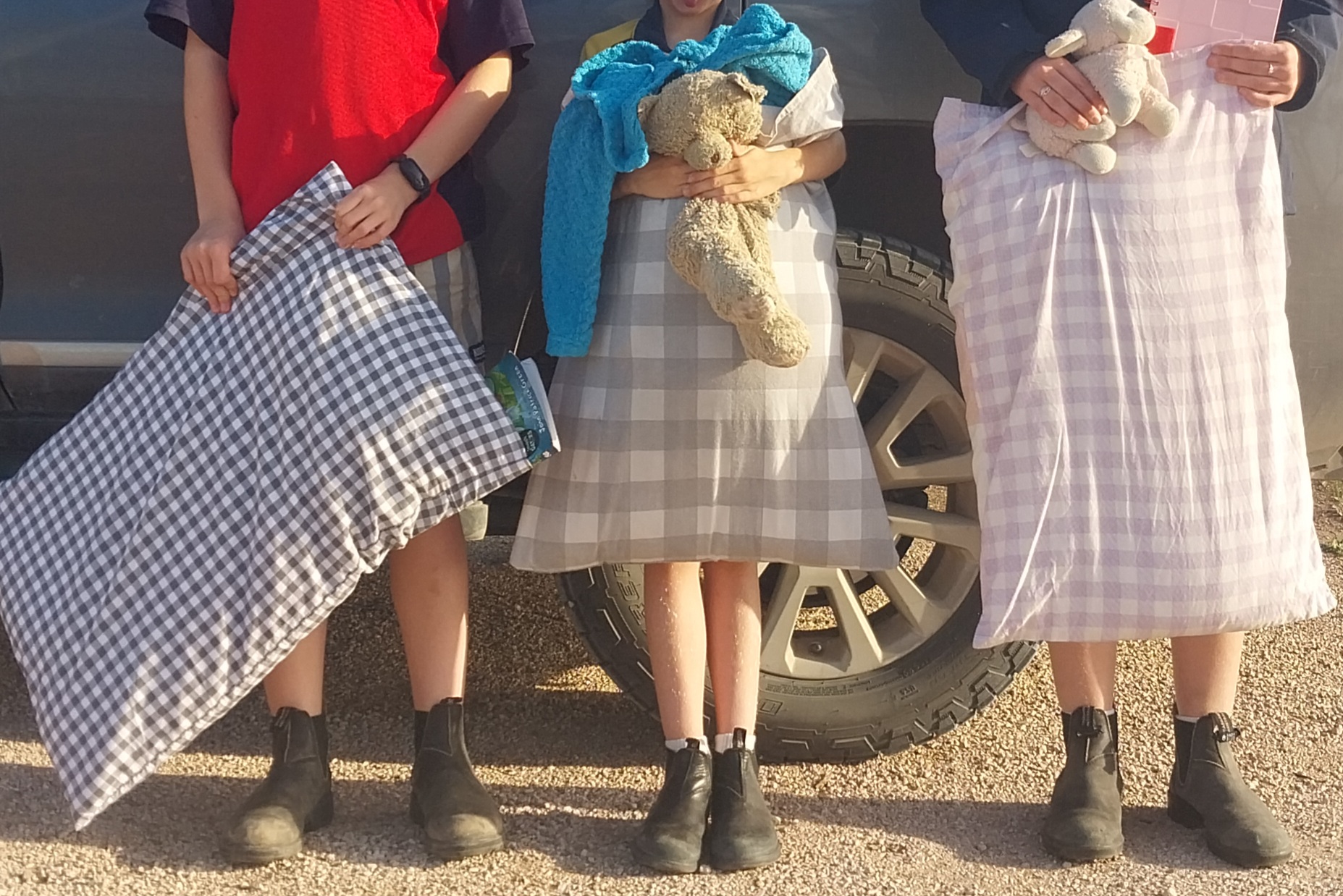
“I adopted the idea to encourage my children to put what’s special and feels safe in their own pillowcases, which I pulled from our spare linen cupboard,” says Bec. “If we had to evacuate again, they could be used alongside our emergency bag which holds the medication, food, chargers and documents, while they had their selections kept safely aside. It gives them a sense of ownership and safety by choosing their own things and what’s important to them, which I had overlooked.”
Before Bec’s children created their pillowcases, the thought of preparing for another disaster was frightening, as it brought up traumatic memories. But with their pillowcases packed, Bec noticed her kids feeling calmer. She also noticed herself relax, knowing she didn’t have to carry the mental and physical load of getting everything ready on her own.
“Ever since the pillowcase idea was introduced to us at school after the bushfire, I used it any day I feel uncomfortable. I can prepare it and it helps me feel comfortable and prepared if anything can happen. It's one of the easiest things to grab and put something special in, while also providing comfort – because it's my pillow,” reflects Bec’s eldest daughter.
“They're able to help me on a practical and emotional level, because we’ve talked about it a lot. And because they’ve been through it, they understand what’s important to them. They each fit only what they can hold, otherwise it’s their free choice,” says Bec. “One time my little boy put in some dog food and another time they put in their snacks. Sometimes they pack their journals, sometimes it’s full of clothes. It’s how they’re feeling about the situation in that moment.”
Over the years, Bec’s children have become accustomed to packing their pillowcases and leaving them at the end of their beds “on an unsteady feeling day”. Her 12-year-old says: “On catastrophic or hot windy days, I just pack my pillowcase because it will help me feel safe if there is another fire.” Asked how it makes him feel, her youngest sums it up in three words: "Comfy. Safe. Useful."
“It has been a support to me, as their mum, because they aren't pulling at me to remember or presume everything that’s precious to them. They each have their own comfort within reach, leaving my hands free or to hold the heavier bags.”
The items her children pack have also changed as they’ve grown older. What Bec’s daughter placed in her pillowcase in 2020 as a nine-year-old is much different to what she packs today, age 14.
“They no longer pack the drawn-on version, they simply put their things in their pillow from their bed,” says Bec.
“I’ve also rewritten our plan each year as they are growing older and becoming more capable of selecting and holding their own belongings. Since 2019, we’ve never been within the danger because we’ve always moved ahead, trying to prevent being in that situation again altogether. We're being proactive and therefore rewiring our experiences as each year passes.”
That wagon by the door has become a fixture of Bec’s home in summer, when the grass around them turns crispy dry and the winds across the gulf blow hot. If a catastrophic day is forecast, Bec’s family don’t risk it – her husband has the farm firefighting unit ready, while she and the kids head into the nearby town.
“Having their pillowcases packed takes the need to give so many instructions away, and I think that’s what helps me most,” Bec observes. “Allowing children choice and normalising being prepared has been a helpful and healing process, with thanks to a such simple concept from Australian Red Cross.”
“Our aim is to have all members of the community develop their resilience and their preparedness, so that they can get through an emergency if they face it,” says Australian Red Cross Emergency Services and School Engagement Officer Karyn Gillard, who heads up the Pillowcase Workshops in South Australia. “Pillowcase may be aimed at young people, but it uses the same concepts and understandings as we use when talking to families and other members of the community about disaster. So that as a community, everyone’s on the same page.”
It’s been six years since her daughter took part in the Pillowcase Workshop, and still, on those severe and catastrophic fire days, Bec uses the phrase: ‘please get your pillowcases ready'.
“‘Pillowcase’ is the code word we use as a less traumatic term than ‘fire’, ‘danger’ or ‘leave’. Our triggering words have now faded, and we have created a new story of what feeling safe is to us.”
The impact of Australian Red Cross Pillowcase Workshops across the country

children have been taught how to prepare for and respond to emergencies through Pillowcase Workshops since the program began in 2015.
Pillowcase Workshops were delivered by Australian Red Cross volunteers in schools across the country between July 2025 and June 2026.
of teachers would recommend a Pillowcase Workshop to their colleague*.
of teachers agree Pillowcase Workshops are highly effective at preparing children for emergencies*.
*n=430 teachers surveyed between 1 July 2025 – 30 June 2026

Australian Red Cross acknowledges the Aboriginal and Torres Strait Islander peoples as the Traditional Owners and Custodians of this land, their ancestors and Elders, past and present.
Learn about our Reconciliation Action Plan and how we can all make reconciliation real.
This website may contain the images, voices or names of people who have passed away.
© Australian Red Cross 2026. ABN 50 169 561 394