

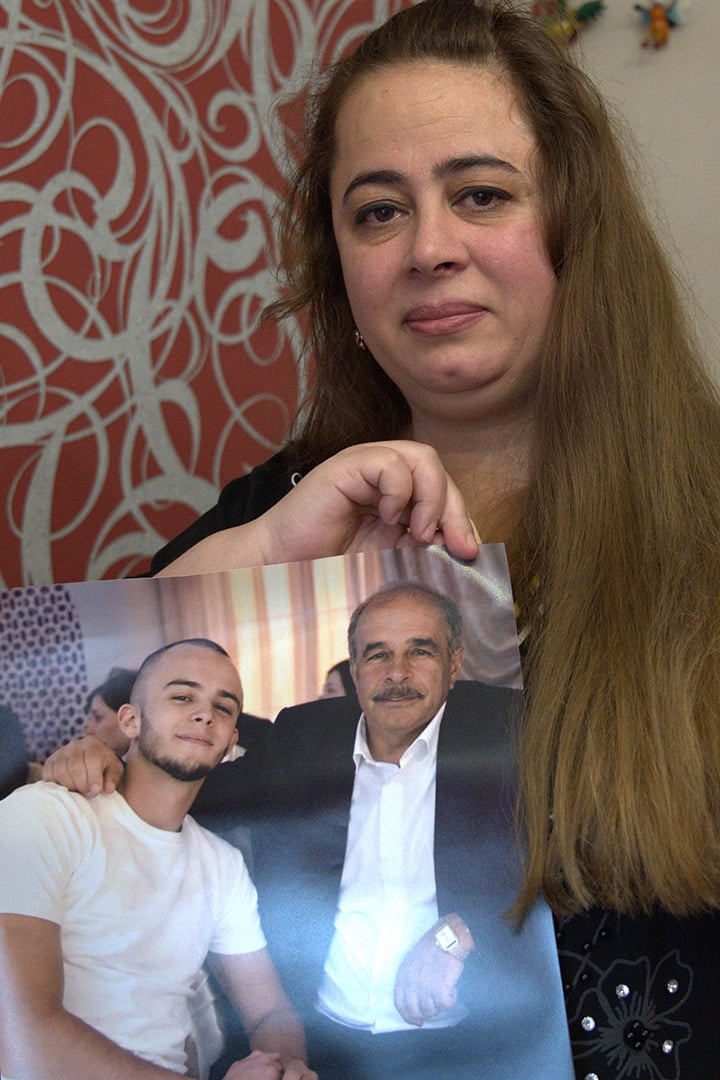
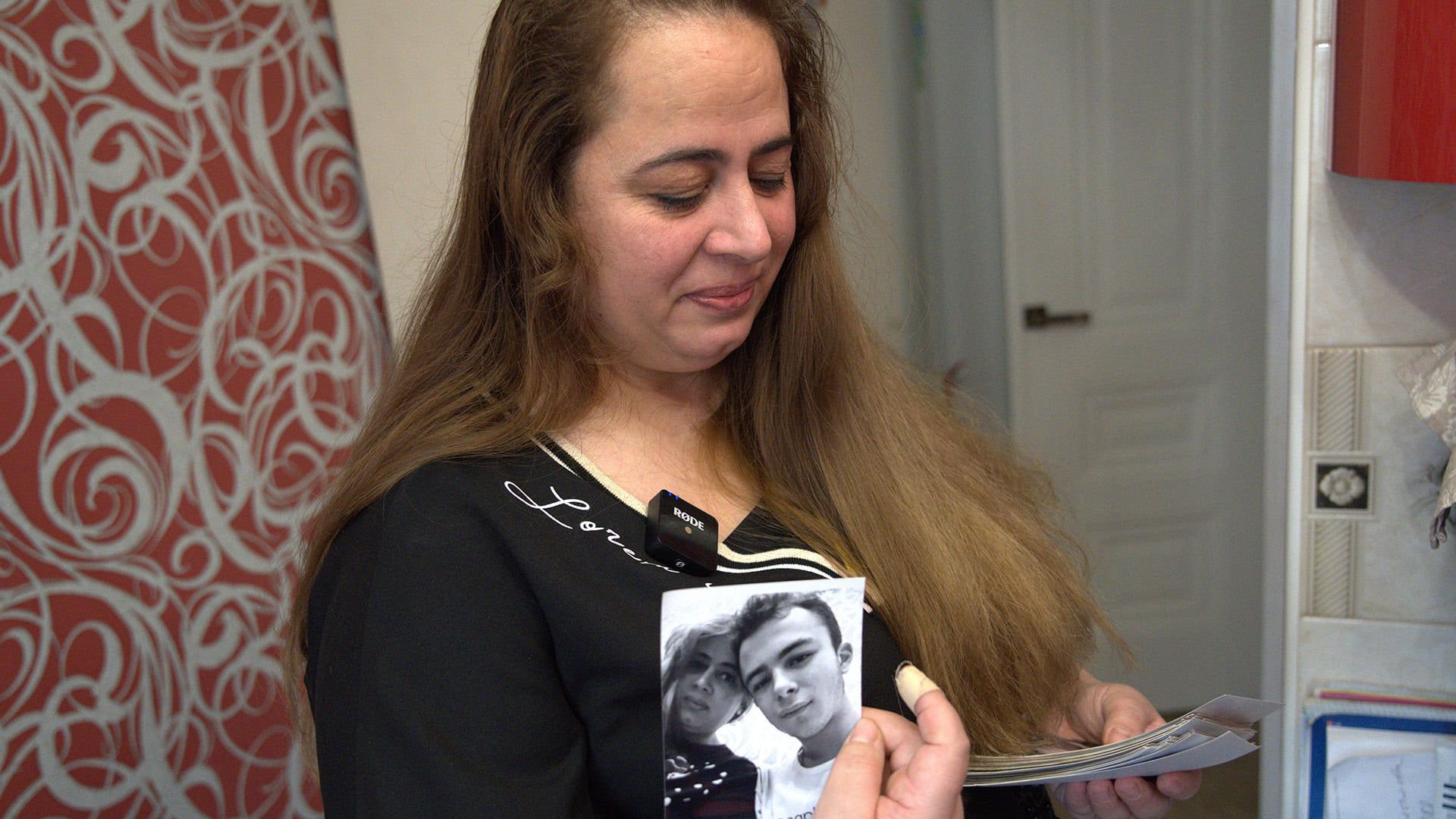
The last time Ainur spoke to her son Ruslan, he told her he was about to take a nap. “When you wake up, call me,” she said to him. That afternoon, Ainur herself took a nap and woke up to two missed calls from Ruslan. “I called back but there was no answer. No dial tone, the phone was off,” she says. “I have never heard from my son again. And no one has ever answered that phone again.”
Like tens of thousands of people across Ukraine, Ainur is living with the heartbreak of a missing loved one. Moving between feelings of grief and uncertainty, Ainur and Ruslan’s father cling to hope that one day he will return home.
“I would say it’s one of the most challenging situations to be in with a loved one,” reflects clinical psychologist and Australian Red Cross Mental Health and Psychosocial Support delegate Rebecca. “Living with uncertainty can be incredibly difficult for families searching for answers."
Based in Ukraine for a year with the International Committee of the Red Cross (ICRC), Rebecca met with hundreds of people carrying the emotional burden of that uncertainty. As a Mental Health and Psychosocial Support (MHPSS) delegate, she travelled between Dnipro in eastern Ukraine and Kharkiv in the northeast, helping to expand and refine support groups alongside ICRC MHPSS field officers and local psychologists.
“From what I understand, community psychology didn’t really exist in Ukraine before 2022. Psychologists typically worked at a university in research or at a hospital in acute mental health wards,” says Rebecca. “Since the war began, there’s been a significant effort to upskill local psychologists and expand access to community-based mental health support. At the same time, there has also been a broader push to promote mental health awareness and reduce the stigma surrounding mental health care.
“Mental health and psychosocial needs will continue long after the war ends. By training more local psychologists through these programs, we can build sustainable support systems and ensure that more people receive the care they need now and in the years ahead.”
In 2025...

people received psychosocial support through the Ukrainian Red Cross Mental Health and Psychosocial Support Program (MHPSS).

countries received the support of Australian Red Cross delegates, from Ukraine to South Sudan.

of Australian Red Cross humanitarian deployments were to active conflict zones.
During her time in Ukraine, one of the support groups Rebecca worked on was for families of missing people – people just like Ainur. Located in safe locations away from shelling, Rebecca and the ICRC Mental Health and Psychosocial Support (MHPSS) field officers created spaces where people could come together, share their pain and connect with others going through a similar experience.
“We call it living with ambiguity,” says Rebecca. (Previously, the term ‘ambiguous loss’ was used, however it was updated to better reflect the circumstances in Ukraine, where many people do return home.) “You can feel quite isolated and like nobody really understands. The support groups for families of the missing are about giving people the tools and permission to continue living with that ambiguity, while creating that network of people who do understand.”
For Ainur, who attended a support group of families of missing people, this network became a lifeline.
“A Red Cross psychologist invited me to receive psychological support. We met every week – I'm so grateful to them,” she says. In the safety of that room, Ainur felt like she could talk about what had happened. “When it builds up, it’s really hard,” she says. “But when you talk about it, someone is listening to you.”
Rebecca also helped establish a second support group for mothers of fallen soldiers, recognising that different experiences of loss required different forms of support.
“These mothers were living with loss rather than uncertainty,” she says. “That certainty, however painful, provides a foundation from which to process their grief. Our group program helped guide and support them on this journey."
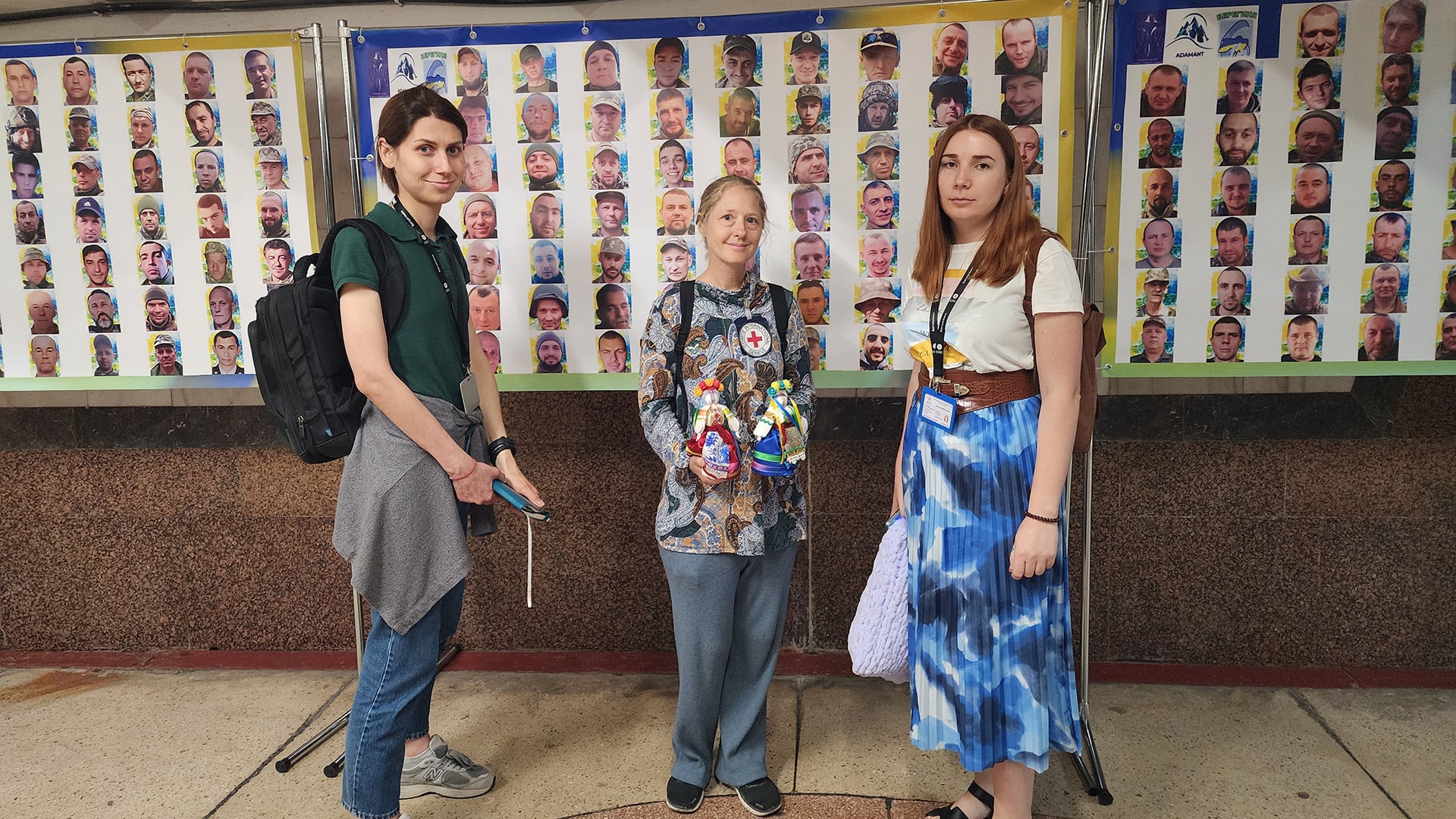
For people living through the conflict in Ukraine, physical safety is always front of mind – especially in areas where drone strikes and shelling can flare up at any moment and temperatures fall below freezing in the winter, when heating and power can be off for hours. But with so much grief, loss and uncertainty among the community, good mental health support is also a necessity.
“We know that conflict impacts people’s mental health, and then that has an impact on society more generally – on peoples’ capacity to maintain relationships and stable employment, while the chronic hyperarousal many experience living in an area of conflict can lead to a rise in substance abuse problems and mental health disorders,” explains Rebecca.
“But with the right support, most people will adapt and develop coping strategies. If people check in with each other and know what support is available, it helps build and maintain social cohesion and connection and prevent the development of more severe mental health symptoms. And I think working across all aspects of mental health – promotion, prevention and treatment – is one of the most important things we do in the Mental Health and Psychosocial Support team.”
While expanding the support groups was a big part of Rebecca’s role in Ukraine, so too was training local psychologists to facilitate the groups while equipping them with the skills and confidence needed to keep them running once Rebecca’s deployment ended.
One of those psychologists was Kharkiv-based ICRC staff member Iuliia. She says Rebecca’s mentorship strengthened both her clinical skills and her understanding of the importance of protecting her own wellbeing while supporting others.
“Because we are constantly involved in supporting families of missing persons who are going through extremely difficult emotional states and need professional psychological support, we spend a lot of our own emotional resources,” says Iuliia. “Rebecca helped me better understand the importance of paying attention to my own emotional resources while supporting others.”
Rebecca says building local capacity was critical to getting people the help they needed. “We need the local staff to be able to implement the programs because they know the cultural nuances and speak the language. International delegates bring additional knowledge and skills into these regions, but it’s a real team effort – I can’t do my job without the amazing local field officers providing the support they do.”
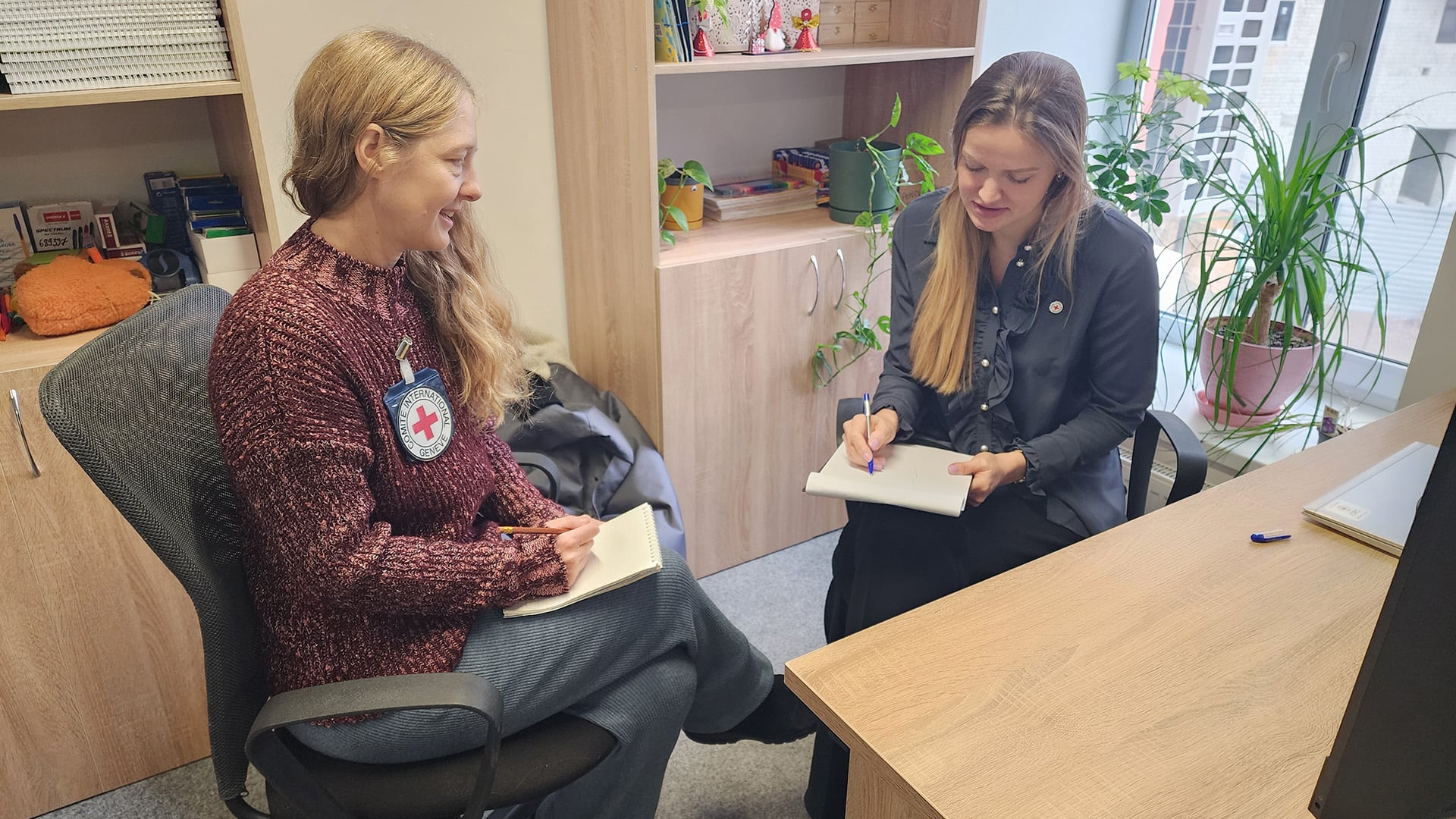
As both a psychologist and someone living through the conflict herself, Iuliia knows how important mental health support in Ukraine remains.
“People have been living in conditions of armed conflict for several years now,” she says. “Many Ukrainians experience constant stress, fear, grief, loss, displacement and uncertainty about the future.” Thanks to the support of organisations like the ICRC, Iuliia points out that many people have developed important self-help and coping skills. But the scale of challenges Ukrainians face still requires enormous attention, she says.
"Even after the armed conflict ends, Ukrainians will continue facing the long-term consequences of trauma, grief and the issue of missing persons. That is why quality mental health support is not only important now but will remain essential for many years in the future."
In cities across Ukraine, the support groups Rebecca and her fellow ICRC MHPSS delegates helped to establish continue to welcome people who have missing family members, as well as those who have lost loved ones to the conflict.
“No one had explained certain things to me before, but [at the support group] I learned a little more,” says Ainur. “I’ve never talked like that anywhere else. You can’t tell passerby on the street, but there you tell them everything... We talk and we cry; we can’t control ourselves in those moments. I think it’s very helpful to get together like this.”
Every day, she continues to call her son’s phone, hoping that one day, someone might pick up.
“I hope my Ruslan is alive,” she says. “He’ll come back.”
Your generosity can help to send Australian Red Cross delegates like Rebecca to areas of conflict and disaster all over the world.

Australian Red Cross acknowledges the Aboriginal and Torres Strait Islander peoples as the Traditional Owners and Custodians of this land, their ancestors and Elders, past and present.
Learn about our Reconciliation Action Plan and how we can all make reconciliation real.
This website may contain the images, voices or names of people who have passed away.
© Australian Red Cross 2026. ABN 50 169 561 394