
Orthopaedic surgeon and Australian Red Cross delegate Dr Herwig Drobetz has deployed to Gaza four times, including twice to the Red Cross Field Hospital in southern Gaza. But his most recent visit in May 2026 felt different.
“My time before was an adrenaline mission, because there were so many injured people being rushed in,” he says. “But this time was more quiet.”
But Herwig is quick to point out the need for care had not disappeared. It had evolved, and in many ways become more complex.
“The needs now are more chronic. There are people walking around with fractures that are not healing properly and wounds that have become infected,” he explains shortly after returning home from his fourth deployment. “The kinds of surgeries we performed were different, but the need for healthcare is still very, very high.”
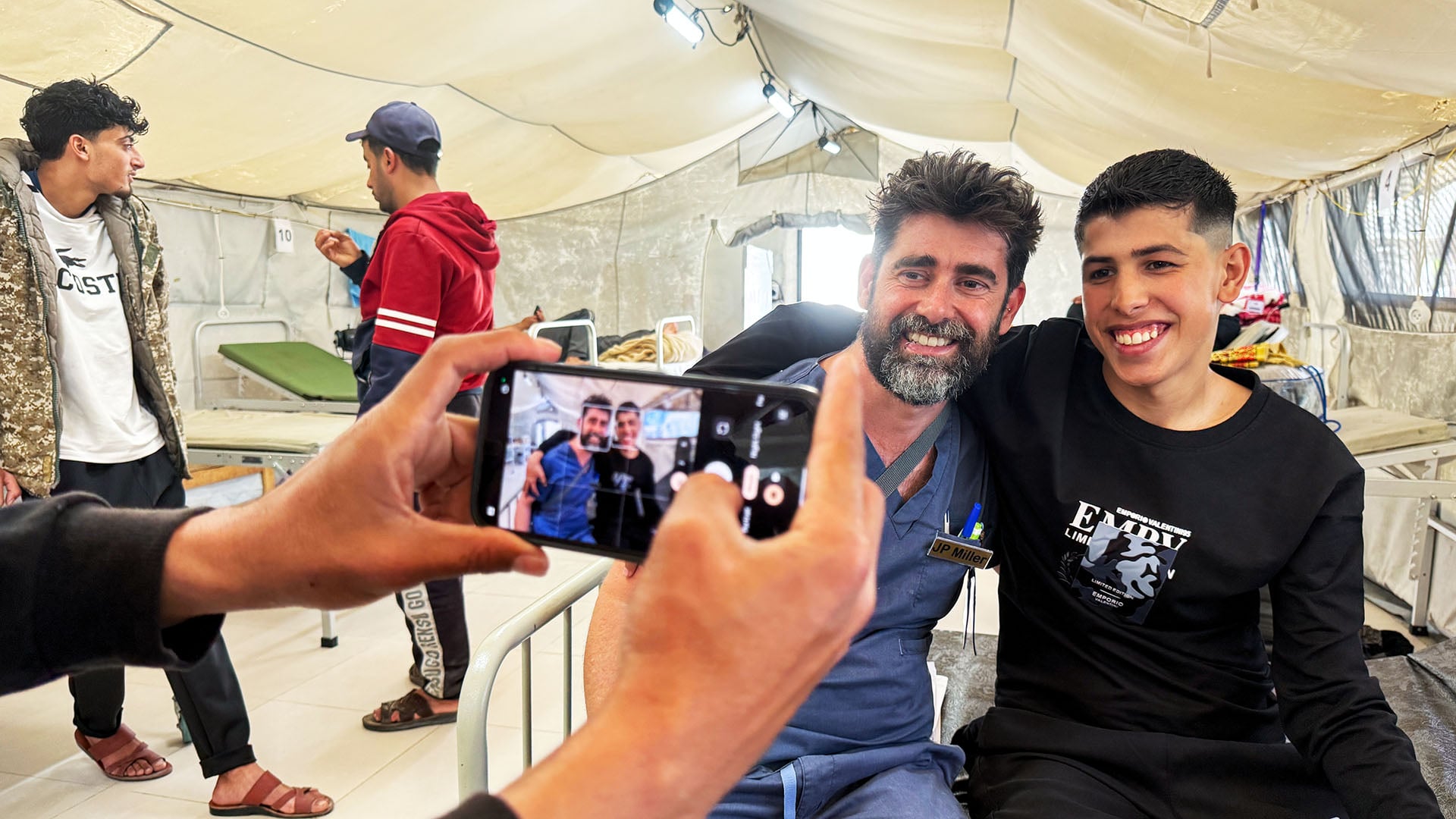
In April 2026, emergency nurse and Australian Red Cross delegate JP Miller embarked on his fifth deployment to the Red Cross Field Hospital in Gaza. Most of the patients he cared for were recovering from scheduled surgeries or residual limb revisions – surgery performed on the remaining portion of a limb following an amputation to minimise pain and resolve any tissue or nerve complications.
“We were treating less people with acute wounds and more elective cases – when I was there last year, there was no real opportunity to do those cases. On the other hand, our outpatient services are still really busy – we probably see 250 to 350 patients a day. And there’s no shortage of public health concerns,” he adds.
“People still don’t have access to clean water; they’re still living in tents. People don’t have all the medications and consumables they require. The healthcare system in Gaza is still in ruins.”
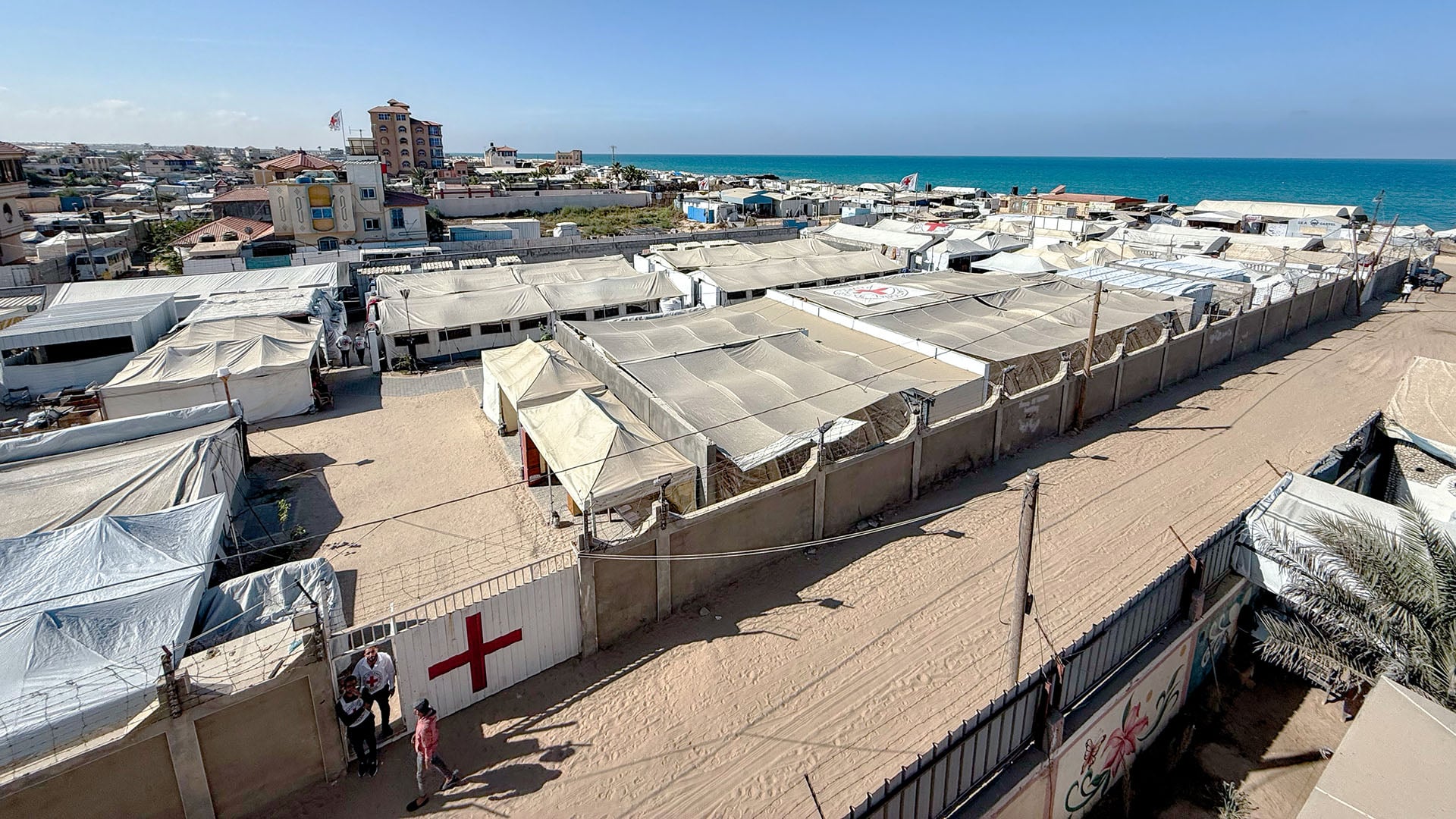
When the Red Cross Field Hospital opened in Rafah in May 2024, it was meant to be temporary. Two years later, it’s become one of the few remaining healthcare providers in southern Gaza. As of May 2026, the hospital has facilitated more than 11,300 surgeries, 250,000 consultations, 19,200 physiotherapy sessions and at least 1,500 blood transfusions, while delivering more than 1,200 newborns.
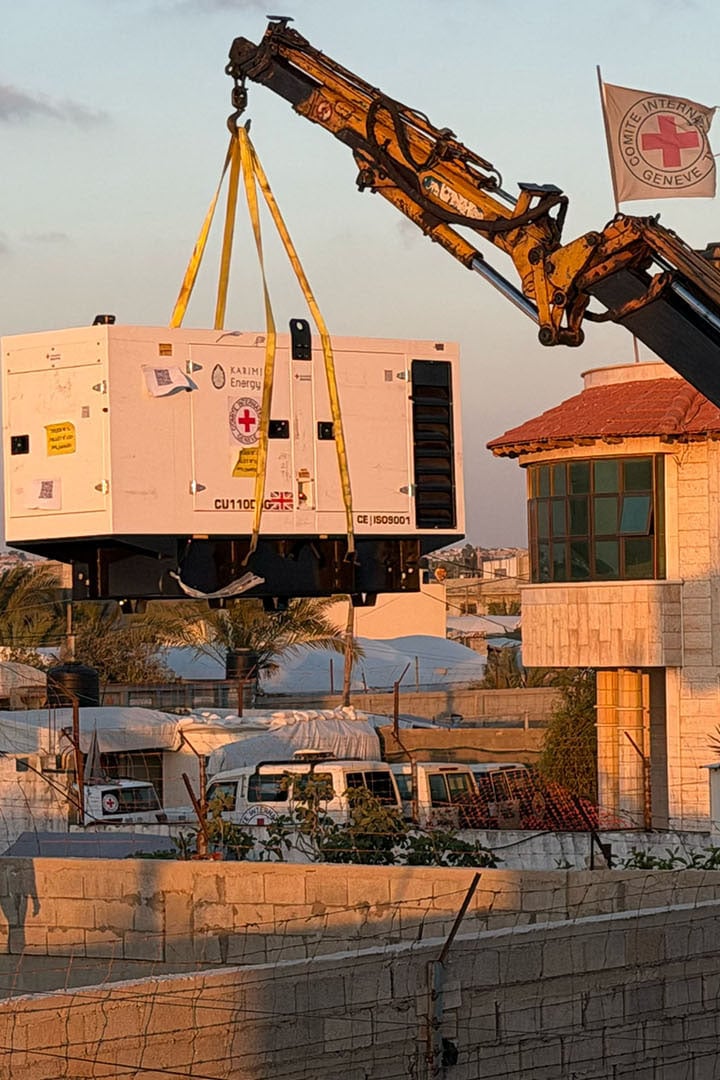
To make sure the hospital can continue providing this level of care today and into the future, in May 2026, following a months-long approval process with relevant authorities, 25 trucks carrying replacement parts and medical consumables for the Red Cross Field Hospital were able to cross into Gaza. On those trucks were new ultrasound and X-ray machines, generators, sterilising machines and bedside monitors for the emergency department.
During this time, the hospital also made concerted efforts to upgrade hospital structures. The paediatric and maternity wards were renovated to reduce overcrowding and improve post-surgical care; 12 beds were added across the hospital and the emergency department moved from a tent into a permanent structure.
In addition to helping improve the level of care offered to patients, these renovations and equipment deliveries will extend the lifespan of the hospital for at least another two years. This is vitally important given the location of the Red Cross Field Hospital – it’s one of the few functioning health facilities in the south of the country and the only hospital in Rafah, so its operation remains essential for communities displaced by the conflict.
“The entry of medical equipment and supplies for the Red Cross Field Hospital is a positive step towards responding to the medical needs of people in Gaza,” says Julien Lerisson, International Committee of the Red Cross Head of Delegation in Israel and the Occupied Territories. “But a single field hospital alone cannot absorb the sheer scale of the needs. That our field hospital has needed to function for so much longer – and is still needed to fill gaps in health services – shows just how dire access to health care in Gaza remains.”
Amir Abu Musa was on his way to a wedding with his family in southern Gaza when he was injured by shrapnel from a nearby explosion. The 13-year-old, who has been displaced within Gaza, was transferred for treatment to the nearby Red Cross Field Hospital.
“I can’t go to school anymore and I don’t get to see my friends. I hope to recover and go back to being healthy, even better than before,” he says from a ward at the Field Hospital. “We hope to live in safety, without rockets, without anything like that, to play with our friends, go to the mosque, go to school and raise birds.”
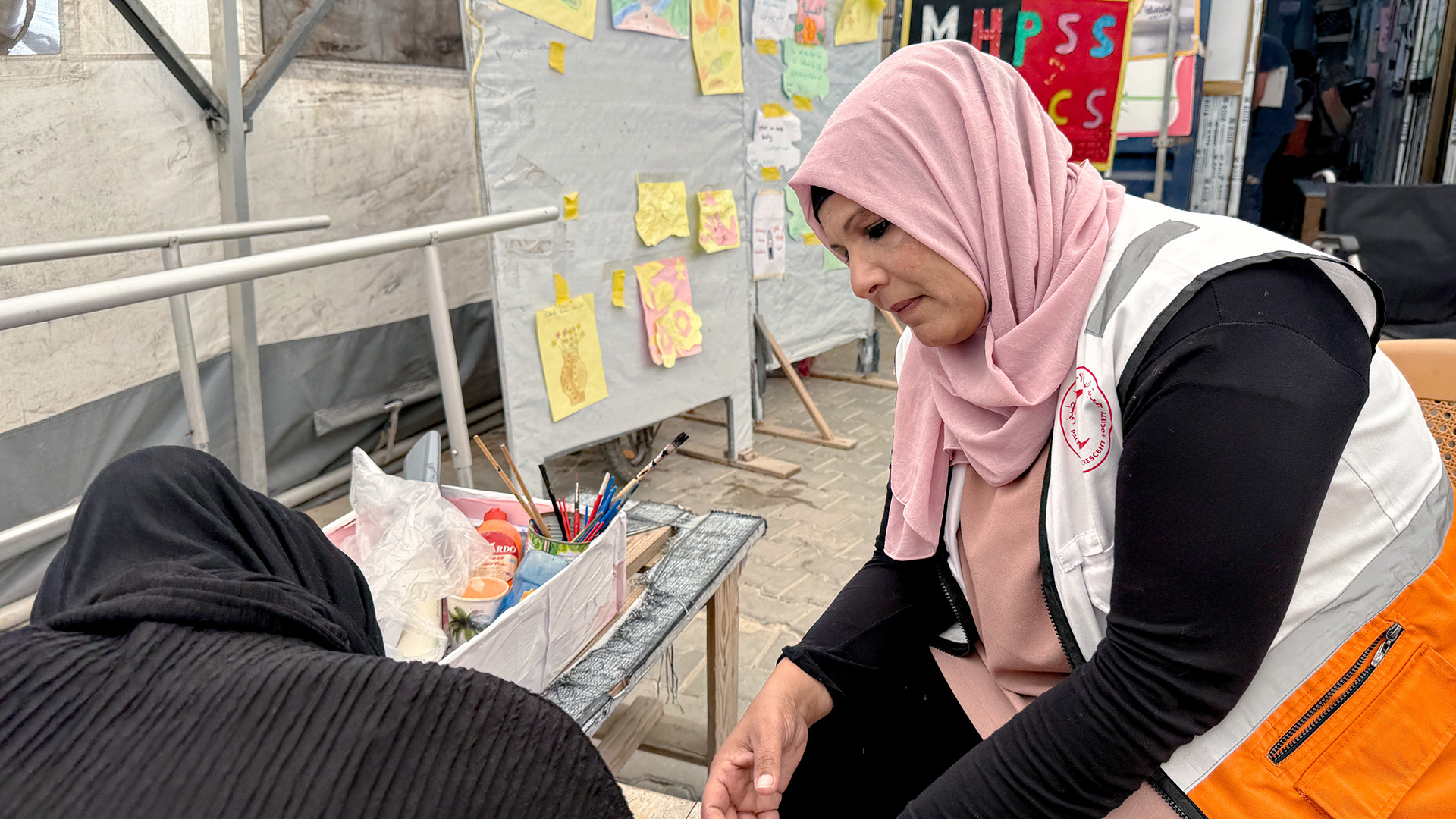
Turkya Abu Krayyem is a psychologist with the Palestine Red Crescent Society (PRCS) who works with patients and their families at the Field Hospital. A lot of the time she is working with children just like Amir, who have been injured and now face the challenge of recovering physically, while processing the trauma of such a devastating event.
“As a specialist, I sometimes think about how [patients who are children with amputations] will move forward with their futures. So, when we’re working with these children, we’re rehabilitating them psychologically, even though the physical injury is gone. But through psychology, we can continue the journey and give some hope in life.”
The Red Cross Field Hospital in Gaza is a partnership between the International Committee of the Red Cross (ICRC) and 16 National Red Cross and Red Crescent Societies from around the world, with Norwegian Red Cross playing a leading role. Alongside its operation, ICRC has also been working to strengthen the capacity of other healthcare services in the area.
Part of this capacity-building has involved setting up a stump revision clinic for patients with amputations in partnership with the local Ministry of Health, which Herwig was closely involved in during his most recent trips to Gaza.
“It’s a multidisciplinary clinic where you have the orthopaedic surgeon together with a prosthetist, a physio, an anaesthetist sometimes and doctors from the Ministry of Health. And you examine patients with amputations that are causing problems and try to decide whether an operation is meaningful for them, or maybe an operation isn’t the best way to help them. And the clinic moves around to a different place every time, so that people don’t have to travel all the way to the Field Hospital to be seen.”
Herwig is frank when discussing the realities of working with patients who are still in pain due to complications from their amputations.
“It’s heartbreaking because there’s five-year-old girls coming in who have lost both legs – and everyone has a heartbreaking story to tell. They didn’t just lose limbs, they lost family members and they’re still under a lot of stress. It can be very sad.”
Despite the realities of nursing and operating in an area devastated by war, both JP and Herwig feel passionately about returning to Gaza to support local teams as they care for the sick and injured.
“I think it’s really important that Red Cross continues to go to Gaza, because it’s basically their connection to the outside world,” says Herwig. Reflecting on the impact of medical care in the region, JP expresses a similar sentiment. “Even small surgeries can be life-changing for people here.”
Supported by Australian Red Cross delegates, the Red Cross Field Hospital continue to provide care in critical times

newborns have been delivered in the maternity ward since the hospital opened in early 2024.

consultations have been conducted at the hospital, providing vital healthcare to sick and injured patients.

Australian Red Cross delegates have deployed into Gaza since October 2023, from nurses to doctors and biomedical engineers.
From Ukraine to South Sudan and Gaza, our delegates travel around the world to support local teams on the ground.

Australian Red Cross acknowledges the Aboriginal and Torres Strait Islander peoples as the Traditional Owners and Custodians of this land, their ancestors and Elders, past and present.
Learn about our Reconciliation Action Plan and how we can all make reconciliation real.
This website may contain the images, voices or names of people who have passed away.
All donations to Australian Red Cross are tax-deductible in Australia. Site protected by Google Invisible reCAPTCHA. © Australian Red Cross 2026. ABN 50 169 561 394