
Elisabeth's story: A life moved by what she couldn't unsee
It started with a single moment
Some moments change a person forever. For Elisabeth, it happened at 19, on a ship anchored off the coast of Haiti. She looked out at people in desperate poverty, frightened and hungry. Later, on the same trip, she arrived in Miami, glittering with wealth. Something inside her broke. “I couldn't speak to anyone for three days,” she recalls. “I couldn't eat; I couldn't sleep. I just sat on the deck with my back to everyone. I thought I never knew the world was like this.”
Her life changed on that trip. There, she made a commitment to being a citizen of the world and doing more for those less fortunate. It led her to work and volunteer in Papua New Guinea, Bangladesh and India.
But when her health made it impossible to keep working in developing countries, she found other ways to honour that promise—volunteering in Australia, making a regular donation to Australian Red Cross, and now, through leaving a gift in her Will.
Get your free Wills guide
A life guided by compassion
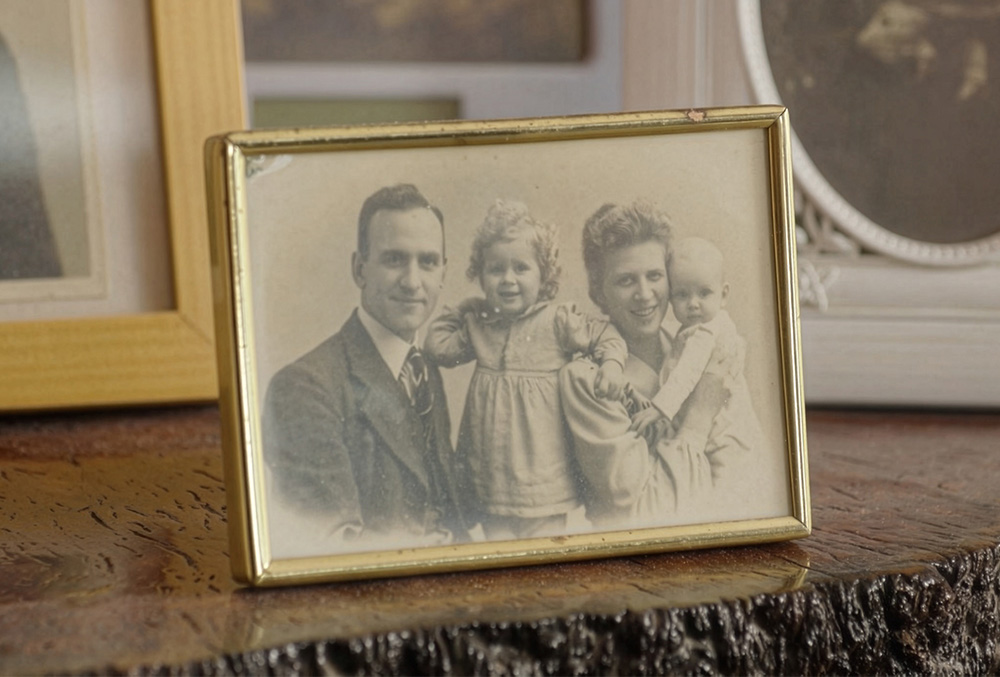
Born in the Netherlands and migrated to Brisbane at age seven, Elisabeth grew up hearing stories of the International Red Cross from her father—a member of the Dutch resistance against the Nazi occupation. He told her thrilling escape stories but underneath them was a moral clarity she absorbed wholeheartedly: we are responsible for one another.
“Do we care about other people? What happens to them? How they're treated? And I find that I do, because of the stories I grew up with from my father, and also because that was how he lived out his faith.”
From early on, Red Cross meant something personal to Elisabeth. It was proof that one person, transformed by what they had seen, could decide to do something about it and change the world forever.
She thinks often about the founder of Red Cross, Swiss businessman Henry Dunant, who witnessed the bloodshed at the Battle of Solferino in 1859 and simply could not walk away. He organised local people to tend the wounded and bury the dead, on both sides. What grew from that act of compassion was the Red Cross movement we know today. Elisabeth finds this genuinely moving. “Henry Dunant used his love and his compassion to bring about an enormous change,” she says. “What could be better than giving money to the organisation whose founder won the very first Nobel Peace Prize?”
“You feel an incredible sense that this is really doing something valuable. And to know that you have brought hope to someone who is desperate for it - wouldn't that be a great feeling?"
What continues to draw her admiration of Red Cross is its fundamental principle of neutrality. “It doesn't matter what side people are on in a war. They all get treated equally if they need help. I love that.” It is the same belief her father held, she says. The one he was willing to risk his life for. And it is what she believes humanity, at its best, looks like.
Elisabeth tried three times to live and work in the developing world—Papua New Guinea, Bangladesh, India. Each time, her health gave out. Eventually, she made peace with the limits of her body and found another way to honour the promise she had made to herself at 19. She would use her skills at home. She would give her money to people who could help the most vulnerable when she could not.
“Red Cross does such a brilliant job in so many ways. It allows my money to do what I couldn't because I wanted to be out there helping people personally after I saw what happened in Haiti.”
A legacy that lives on
When it came time to write her Will, leaving a gift to Australian Red Cross felt, she says, less like generosity and more like logic. “It was an easy thing to put Australian Red Cross in my Will. It made perfect, logical sense and I hope other people do the same.”
The process, she explains, is simpler than it sounds. She sought help from a legal firm, went in with a clear sense of what she wanted, and came out with a “warm glow”, with the knowledge her gift will live on in supporting people here at home, and overseas.
“We experience joy when we use our resources to help those less fortunate,” she says. “It doesn't make sense to give money to people who are already well off. It makes much more sense to help people who really need it.”
For Elisabeth, the legacy she wants to leave can be summed up in one word: compassion. Bringing hope to people who have lost it. Knowing that her gift will live on in work she has always supported—giving hope to someone in conflict, to someone struggling after a disaster, to bring communities together, and to alleviate suffering wherever it is found—doing what she always wished she could do herself.

Australian Red Cross acknowledges the Aboriginal and Torres Strait Islander peoples as the Traditional Owners and Custodians of this land, their ancestors and Elders, past and present.
Learn about our Reconciliation Action Plan and how we can all make reconciliation real.
This website may contain the images, voices or names of people who have passed away.